
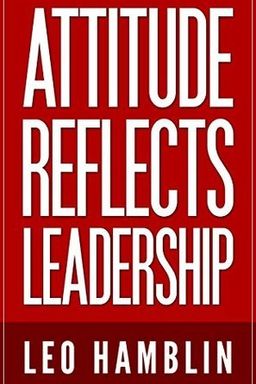
Attitude Reflects Leadership cover

Attitude Reflects Leadership

by Leo Hamblin

Attitude Reflects Leadership reveals the secrets behind exceptional leadership in the modern workplace. Learn to inspire teams, differentiate management from leadership, and harness the power of a positive attitude. Transform your leadership style and unlock potential in others.

The Transforming Power of Attitude

What if the difference between success and failure, fulfillment and frustration, comes down to something you can change today—your attitude? In Attitude 101, leadership expert John C. Maxwell argues that your attitude determines how far you rise as a person and as a leader. It’s the internal compass that sets your direction, shapes your relationships, and defines your legacy. Maxwell contends that while you can’t always control circumstances or other people, you can always choose the attitude with which you meet them—and that choice shapes everything.

Maxwell divides the book into three major parts: the impact of attitude, how attitude is formed and can be changed, and how the right attitude defines your future. He explores how attitudes affect leadership effectiveness, what shapes our perspectives from childhood to adulthood, and how we can intentionally turn adversity into growth. He also examines how failure, success, and leadership are all filtered through the lens of attitude—showing that achievement is as much a matter of mental and emotional posture as it is of skill or opportunity.

Why Attitude Matters

Maxwell opens by reminding readers that attitude is both highly personal and immensely social—it influences your inner life and radiates outward to affect everyone around you. It’s the unseen “advance man of our true selves,” he writes, determining how people perceive us and whether teams succeed or fall apart. He illustrates this through stories, like his high school basketball team, which was brimming with talent but sabotaged by poor team attitudes. The takeaway? Attitude is the invisible difference-maker—a team with bad morale can’t win, and a person with a poor attitude can’t thrive, regardless of talent.

How Attitude Shapes Results

According to Maxwell, the relationship between aptitude and attitude explains why some people with modest talent outperform gifted cynics. Attitude doesn’t just color how we see the world—it determines how we live in it. Drawing examples from leaders like Lou Holtz and Denis Waitley, Maxwell shows that attitude is a multiplier of potential. Great teams are distinguished not only by skill but by shared optimism, teachability, and humility. He goes on to note that attitudes can spread like wildfire—both positively and negatively—much as Roger Bannister’s breakthrough of the sub-four-minute mile inspired countless others to do the same. In other words, one person’s belief can reset an entire group’s sense of the possible.

How Attitude Develops

Maxwell carefully explains that our attitudes aren’t formed overnight. They take shape through a mix of personality, environment, self-image, and experiences. From birth, we absorb messages about who we are and what life expects from us. Parental affirmation, early friendships, and exposure to words of encouragement or criticism all contribute to the belief systems that will later color our adult outlook. But the good news, says Maxwell, is that attitude is not permanently fixed. Unlike physical traits, it can be reworked through conscious choice. This sets the stage for the core argument of the book: attitude is a learned and re-learnable response to life.

The Power (and Challenge) of Change

In later chapters, Maxwell explores how to change and fortify attitudes through deliberate daily choices. He lists eight key decisions that anyone can make to shift their mindset—from evaluating your current mental state and committing to change, to cultivating habits of faith, focus, gratitude, and service. He also warns that desire is non-negotiable: real change begins when you want to change, not just when you need to. This echoes his broader leadership message (similar to insights in his book Developing the Leader Within You): growth always starts on the inside before showing up in results.

The Attitude–Adversity Connection

Maxwell insists that adversity is not merely something to endure—it’s a force that forges stronger attitudes. Borrowing examples from entrepreneurs, athletes, and biblical history, he argues that hardship builds resilience, creativity, and humility. Stories like Joseph’s—from slave to Egyptian ruler—illustrate that people often discover their greatest potential in their lowest moments. Failures, when met with the right perspective, become defining growth experiences rather than final verdicts. This section bridges naturally into Maxwell’s discussion of how failure and success are defined by one’s response, not one’s outcomes.

Redefining Failure, Success, and Leadership

The book’s final chapters bring all these threads together. Failure, Maxwell says, is inevitable—but it’s not the same as being a failure. Successful people “fail forward,” learning from mistakes without letting them define their identity. Success, meanwhile, is not a destination but a journey—the ongoing pursuit of purpose, growth, and service to others. Leadership, finally, is revealed to be less about privilege and more about sacrifice. As one grows in influence, the demand to “give up to go up” increases. Leaders who sustain the climb, Maxwell concludes, are those who continuously choose the right attitude through highs, lows, and losses alike.

In essence, Attitude 101 is both a philosophy and a manual. It challenges you to look inward—to manage how you think, respond, and relate—because the world often mirrors the posture you project. By aligning character, outlook, and purpose, you not only change your results; you change your legacy. As Maxwell writes throughout the book, attitude is not everything, but it affects everything.


How Attitude Shapes Leadership and Teams

John Maxwell begins the book with a personal story that every leader can relate to: his high school basketball team was filled with talent but plagued by ego and division. The result? A losing season and a powerful lesson—the best skill in the world can’t overcome a bad attitude. Through this story, Maxwell defines attitude as the inner disposition that expresses itself in behavior and interaction. It’s not merely emotion; it’s the outward fruit of inward thinking.

The Power of Attitude in Leadership

A team’s success, Maxwell teaches, hinges on the collective mindset of its members. Good attitudes elevate everyone; bad ones drag everyone down. He shares that while talent is critical, attitude acts as the multiplier for performance. Using the analogy of a basketball roster, he quantifies the relationship: great talent plus bad attitudes equals mediocre results, while great talent plus great attitudes leads to greatness. As leadership consultant Denis Waitley once said, “The winner’s edge is in attitude, not aptitude”—a maxim Maxwell builds upon to explain why leaders must monitor morale as closely as metrics.

Contagious Mindsets

Attitude, like emotion, is contagious. One person’s enthusiasm can infect an entire group—but so can one person’s negativity. To illustrate the power of positive contagion, Maxwell recounts the story of Roger Bannister, the first man to run a mile in under four minutes. Once Bannister proved it could be done, others followed within months. His breakthrough changed not physiology but belief. In the same way, when a leader models possibility, belief spreads faster than instruction. However, the reverse is also true: criticism and cynicism compound even faster, often requiring intentional leadership to correct.

Identifying Toxic Attitudes

Because attitudes are invisible yet powerful, Maxwell offers practical guidance for spotting the red flags. He lists several destructive patterns—unwillingness to admit wrong, unforgiveness, jealousy, ego, chronic criticism, and credit-hogging—as “termites of the team.” Each one corrodes unity from within. For instance, the “disease of me,” a phrase borrowed from coach Pat Riley, describes the tendency to prioritize self-importance over team success. Once that mindset spreads, collaboration collapses. Leaders, Maxwell insists, must be vigilant stewards of their team’s emotional climate, courageously addressing poor attitudes before they poison the culture.

Leadership’s Non-Negotiable

Ultimately, attitude is what separates effective leaders from positional ones. “Nothing can stop the man with the right mental attitude,” Thomas Jefferson said—and Maxwell agrees. Skills may open doors, but attitude determines how long those doors stay open. A leader’s positive mindset lifts morale, fosters resilience, and builds trust. Conversely, a leader who tolerates negativity communicates that mediocrity is acceptable. In a Maxwellian sense, leadership is less about authority and more about atmosphere—the emotional tone you set for those you influence. That tone begins and ends with attitude.


How Attitudes Are Formed

Why do some people greet life with confidence and others with resentment? Maxwell answers this by describing attitude as a lifelong construction project shaped by multiple forces—personality, environment, affirmation, self-image, and experience. He maps a timeline of human development, showing how each stage of life contributes a layer to our belief system.

Personality and Temperament

We all start with built-in dispositions. Drawing on Tim LaHaye’s four temperaments—choleric, sanguine, melancholy, and phlegmatic—Maxwell notes that certain personality types naturally incline toward optimism or caution. Yet temperament only sets the starting point; environment becomes the sculptor. For example, a naturally buoyant sanguine child in a negative home may lose confidence early, while a shy melancholic nurtured with affirmation can blossom into quiet strength.

Environment and Early Belief Systems

Our environments, Maxwell emphasizes, are “the greater controlling factor” in attitude formation. Home is where belief systems are first built—where children absorb models of faith, trust, and resilience. He notes that beliefs do not have to be true to shape us; even false ones, if internalized, mold attitudes for decades. This insight parallels Carol Dweck’s work on mindsets: the stories we hear about ourselves become the scripts of our lives.

Words and Affirmation

Maxwell beautifully warns that “sticks and stones may break bones, but words can wound the heart for a lifetime.” He illustrates this with the story of a grown pastor who still recalled being laughed at for mispronouncing a word as a child—a painful memory that haunted and motivated him for forty years. Conversely, encouraging words can sculpt strength, such as the Sunday school teachers in Maxwell’s youth who instilled confidence through warmth and attention. “People don’t care how much you know,” he repeats, “until they know how much you care.”

Self-Image and Experience

Self-image creates the ceiling for our attitude. Using a story about his shy daughter Elizabeth, Maxwell shows how small wins—selling candy bars, overcoming fear—build confidence and reshape how we see ourselves. “We act in direct response to how we see ourselves,” he says, echoing the psychological principle that behavior rarely exceeds self-belief. Positive new experiences, especially when framed by love and encouragement, expand our inner range of possibility.

Peers, Appearance, and Adult Roles

In later stages, peers, physical appearance, marriage, and work life reinforce or challenge prior attitudes. Maxwell reminds parents that peers can powerfully shape self-perception, hence why his own parents opened their home to his friends to monitor and model healthy associations. He also acknowledges that societal pressures—like appearance or income—impact self-worth but insists these influences need not define us. Attitudes remain “under construction” throughout life, and no matter your age or background, you can choose to rebuild with purpose and hope.


Choosing to Change Your Attitude

Can you really change your attitude? Maxwell’s answer is a confident yes—but only if you choose to. Change begins with choice, not circumstance. Borrowing an image from Canadian logging roads—where drivers must select a rut to drive in for twenty miles—he warns that many people are stuck in their attitude “ruts” simply because they stop choosing differently. The act of change starts with evaluation, commitment, and daily reinforcement.

The Eight Choices of Attitude Change

1. Evaluate your present attitude. Identify feelings, behaviors, and thoughts that consistently generate negativity. Be honest but not judgmental—see your “bad attitude” as the problem, not yourself. Clarify it and commit to remove it the way a logger identifies the key log to free a jam.

2. Realize faith is stronger than fear. Maxwell quotes William James, who said people can alter their lives by altering their minds. Believing in your capacity to change is half the battle.

3. Write a statement of purpose. Like a basketball hoop gives aim to the game, a goal gives direction to your growth. Maxwell recommends writing down your attitude goal, signing it, and placing it somewhere visible. Be specific—like David picking five stones to face five giants. Confront one “giant” at a time.

4. Have a burning desire to change. Desire is the fuel that turns intention into transformation. Maxwell’s humorous tale of a frog jumping out of a pothole when chased by a truck drives this point home: people change when they must. Fall in love with the challenge of change, he urges, not just the relief of escape.

5. Live one day at a time. Anxiety lives in yesterday and tomorrow. Today is the only place change can happen.

6. Change your thought patterns. Because feelings follow thoughts, controlling one’s thinking leads to emotional transformation. Maxwell paraphrases Proverbs—“as a man thinks, so he is”—to show that joy and peace are not circumstantial but mental choices.

7. Develop new habits. Attitude is a habit of thought. Replace bad mental routines with constructive ones by reinforcing new behaviors daily and rewarding progress.

8. Continually choose the right attitude. Changing once is not enough; change must be sustained through vigilance. Maxwell describes three phases of habit change—early struggle, middle stability, and late complacency—and warns that even positive habits can regress if untended.


Embracing Obstacles as Allies

In one of the book’s most empowering sections, Maxwell flips a common assumption on its head: obstacles aren’t just barriers to success—they are builders of it. Without adversity, progress stalls. This thinking echoes psychologist Joyce Brothers and modern resilience research: struggle and stress, handled well, create stronger character.

Fail Early, Fail Forward

Maxwell shares the famous “ceramics class” experiment—students graded on quantity ended up producing higher quality than those graded solely on perfection. Their constant iteration made them better. The moral: progress depends on pushing forward through imperfection. Success comes not by avoiding failure but by embracing it as practice.

Seven Benefits of Adversity

  • Resilience: Repeated job loss made workers stronger, not weaker, in a Time magazine study.
  • Maturity: Wisdom grows through failure more than success, echoing William Saroyan’s insight.
  • Bolder performance: Like trapeze artists trusting their safety net, we risk more once we survive a fall.
  • Opportunity: Bernie Marcus’s firing led to founding Home Depot—a setback turned windfall.
  • Innovation: Mistakes often spark invention—from Kellogg’s corn flakes to Ivory soap.
  • Unexpected benefits: Missteps can reveal gifts, as chemist Schönbein discovered with smokeless powder.
  • Motivation: Like the football player who outran a sprinter “for his life,” adversity sharpens desire.

To illustrate this attitude, Maxwell retells the ancient story of Joseph—betrayed, enslaved, imprisoned, yet steadfast. Joseph refused bitterness, trusting that hardship could serve a larger purpose. When adversity strikes, Maxwell advises, measure the obstacle against the size of your dream. Every setback can prepare you for a comeback if met with the right perspective.


Failing Forward: Redefining Failure

Everyone fails. The question is whether you fail backward or forward. Maxwell defines failure not as falling but as refusing to rise again. Through humorist Erma Bombeck’s story—her decades of rejections, personal loss, and eventual success—he illustrates that perseverance and self-respect matter more than flawless records. Like Edison, Van Gogh, or Einstein, achievers reinterpret failure as feedback.

The Seven Abilities of Those Who Fail Forward

  • Reject rejection: Don’t equate failure with worth. People who detach performance from identity stay resilient.
  • See failure as temporary: Even Harry Truman went from debt to the presidency in twenty years.
  • See failure as isolated: Don’t turn one mistake into a global diagnosis. Julia Child’s collapsed soufflé proves failure can be funny.
  • Keep expectations realistic: Hank Aaron’s 0-for-5 debut didn’t predict his record-breaking career.
  • Focus on strengths: Concentrate energy on what works, not what doesn’t.
  • Vary approaches: Like Dick Fosbury’s “flop,” innovation means trying unconventional methods.
  • Bounce back: As psychologist Simone Caruthers says, learn from every outcome—desired or not—and refocus.

Maxwell’s message: failure is not fatal unless you define yourself by it. Grow from it, laugh at it, and move on. That mindset is what allows ordinary people to achieve extraordinary things.


Success as a Lifelong Journey

Maxwell dismantles one of life’s biggest myths—that success means wealth, power, or status. Those are by-products, not definitions. Success, he redefines, is “knowing your purpose, growing to reach your potential, and sowing seeds that benefit others.” When you adopt that definition, success becomes an accessible, lifelong journey rather than a fleeting appointment.

Knowing Your Purpose

Purpose anchors you when external measures fail. Borrowing from Viktor Frankl’s insights, Maxwell insists every person has a unique mission that only they can fulfill. To find it, ask: What do I long for? Why was I created? What strengths and opportunities surround me? The best time to start pursuing it, he reminds, is now.

Growing to Your Potential

Reaching potential requires deliberate growth—focusing on one main goal, committing to continual improvement, releasing the past, and orienting toward the future. Maxwell highlights leaders like Sam Walton, who improved himself daily, and reminds us that “the past is a dead issue.” Growth is not age-bound; it’s direction-bound.

Sowing Seeds for Others

Finally, success finds meaning in service. Quoting Albert Schweitzer, Maxwell writes, “The purpose of human life is to serve and show compassion.” Giving transforms success from self-centered ambition into shared legacy. Whether mentoring a colleague or raising children, sowing into others ensures your life’s fruit continues to grow long after you’re gone. Success, therefore, is not what you gain—it’s what you give.


Leadership’s Highest Attitude: Sacrifice

In his final chapter, Maxwell delivers a sobering truth: leadership is not about privilege, but price. To rise higher, you must give up more. “Leaders have to give up to go up,” he declares, underscoring that leadership is sustained by continual sacrifice—of comfort, ego, and convenience.

The Cost of Climbing

Using corporate and historical examples, from GM’s Tom Murphy to Martin Luther King Jr., Maxwell shows that the higher one’s influence, the greater the personal trade-offs. The President of the United States, he notes, pays with privacy, family strain, and intense scrutiny. King paid with his life. Yet both understood that impact always carries cost.

Sacrifice as a Leadership Mindset

True leadership, says Maxwell, begins when self-interest ends. His friend Gerald Brooks puts it plainly: “When you become a leader, you lose the right to think about yourself.” This doesn’t mean self-neglect—it means your attitude must permanently shift from accumulation to contribution. Great leaders don’t ask, “What can I get?” They ask, “What can I give up for the greater good?”

Every rung up the ladder demands surrender: of time, recognition, and personal ease. The paradox is that each surrender expands a leader’s capacity to serve. The right attitude toward sacrifice transforms giving up from loss into purpose. That, Maxwell concludes, is the ultimate expression of leadership and the final test of a winning attitude.

Dig Deeper

Get personalized prompts to apply these lessons to your life and deepen your understanding.

Go Deeper

Get the Full Experience

Download Insight Books for AI-powered reflections, quizzes, and more.