
Idea 1
Disinformation as the Engine of Authoritarianism
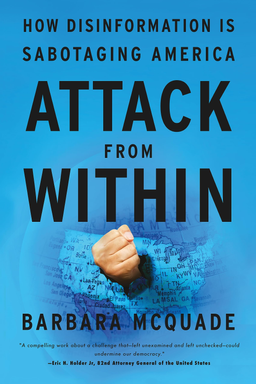
Why do lies seem to spread faster than truth—and why do they so often serve those seeking power? The author argues that disinformation is not about ignorance but control. It’s a deliberate architecture that exploits human emotion, weak institutions, and digital systems to reshape reality. From the demagogues of the 20th century to modern populists, the book reveals a chilling continuity: when leaders use deception as strategy, freedom is the casualty.
A historical toolkit with modern packaging
The author traces an 'authoritarian playbook' that has remained consistent for a century. You see how Stalin’s photo erasures, Goebbels’s Big Lie, or Mussolini’s theatrical rallies mirror modern techniques—emotional appeals, scapegoating, and the destruction of watchdogs. Propaganda does not persuade through reason; it overwhelms through feeling. As Jason Stanley notes, fascist politics uses language not to convey truth but to elicit emotion. Modern rallies, chants, and branding (from MAGA hats to targeted slogans) produce solidarity and direct group energy toward an idealized past or shared enemy.
The emotional and psychological machinery
Disinformation works because it aligns with the way your brain seeks patterns and belonging. Confirmation bias makes you prefer ideas that fit what you believe. The backfire effect hardens false beliefs when someone challenges them. Tribal identity transforms slogans into signals of loyalty. People repeat falsehoods—as with claims of a stolen election—less to assert facts than to prove allegiance. This emotional reward loop explains why persuasion by reason often fails; facts don’t replace belonging.
(Note: This mechanism parallels classic social-psychology findings like the Stanford capital punishment experiment, in which partisans rated 'agreeable' studies as more credible than opposing ones.)
Technology’s accelerant
Social media turned disinformation from rumor into contagion. Bots, algorithms, and microtargeted ads make manipulation scalable. Russian troll farms like the Internet Research Agency created fake American movements; data firms like Cambridge Analytica microtargeted users by personality; algorithms tuned by engagement promoted emotional outrage. Generative AI now lowers cost barriers—deepfakes and AI-authored posts can sow confusion within hours. You live in an ecology where speed beats truth, and the infrastructure rewards intensity over accuracy.
Why America’s openness helps and hurts
The United States is doubly vulnerable: its freedoms, legal structures, and market incentives become vectors for manipulation. The First Amendment protects speech too broadly to easily police political lies; Section 230 shields platforms; Citizens United amplifies dark money. The decline of local journalism erodes trusted referees, while polarization and historical distrust toward government surveillance make coordinated responses politically radioactive. These are the paradoxes of liberty: the same system that defends expression also shields deceit.
Consequences for democracy and security
Once disinformation captures institutions, it degrades rule of law and fuels violence. The 2020 Big Lie led directly to the January 6 attack, dozens of new restrictive voting laws, and harassment of election workers like Ruby Freeman and Shaye Moss. It encouraged militias to see themselves as defenders of liberty while undermining lawful authority. Abroad, America’s chaos became propaganda for autocrats. The result is democratic corrosion from both inside and out.
The book’s mission
This book offers not despair but a diagnostic. By identifying recurring tactics—divide and conquer, gaslight and repeat, demonize the press, glorify violence—you gain the power to name the pattern and interrupt it. The author concludes with a roadmap: teach media literacy, reform digital law, protect elections, reinforce civic ties, and temper fear with empathy. The defense of truth requires as much emotional intelligence as intellectual vigilance. Naming the tactic is the first step in dulling its power.