
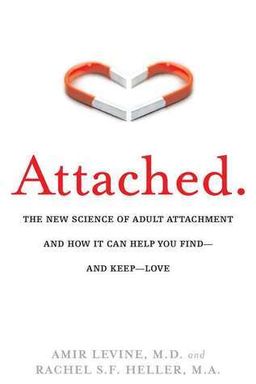
Attached cover

Attached

by Amir Levine and Rachel S F Heller

Attached explores the science of adult attachment, offering insights on how to understand your relationship patterns, improve communication, and find the right partner. Whether you''re in a relationship or seeking one, this book is your guide to building lasting love.

The Science of Attachment and the Quest for Lasting Love

Why do some relationships feel warm and secure while others leave you anxious, uncertain, or emotionally drained? In Attached, psychiatrist Dr. Amir Levine and social psychologist Rachel Heller argue that love is not a mystery to be solved through endless introspection or dating “rules.” Instead, it follows predictable patterns rooted in biology. They apply attachment theory—originally developed to explain how infants bond with caregivers—to the realm of adult romantic relationships. The result is a remarkably practical framework that explains why people behave the way they do in relationships and, more importantly, how you can use this knowledge to build healthier bonds.

Levine and Heller contend that our brains are wired for connection. Far from being a sign of weakness, dependence—our instinct to seek security in another person—is a biological need, not a flaw. The problem arises when two people with clashing attachment needs try to love each other. An anxious partner craves closeness; an avoidant partner fears it. Secures, by contrast, form balanced, trusting, and resilient relationships. The book reveals how understanding your own attachment style, and that of your partner, can transform every stage of romantic life—from first dates to long-term commitment or even breakups.

The New Science of Adult Attachment

Attachment theory began with British psychiatrist John Bowlby and psychologist Mary Ainsworth, who demonstrated that infants react differently when separated from caregivers: some cling anxiously, some withdraw, and some remain calm and trusting. In the 1980s, researchers Cindy Hazan and Phillip Shaver extended this work to adults, proving that romantic bonds trigger the same biological attachment systems. Levine and Heller bridge the gap between laboratory findings and everyday experience. They translate decades of research into a toolkit you can immediately apply to understand your relationship patterns, communicate better, and choose partners who meet your emotional needs.

Why Dependency Is Not a Dirty Word

A key insight of the book is the “dependency paradox”: the more effectively dependent two people are on each other, the more independent and secure they become. In one example, Karen, a contestant on a reality show, blames her need to hold her boyfriend’s hand under stress for losing the competition. Yet Levine and Heller show that her instinct was biologically sound—holding hands literally lowers stress levels. Neuroscientific studies by James Coan reveal that simply holding a loved one’s hand can calm the brain’s fear center. The takeaway? Emotional connection strengthens resilience; self-sufficiency alone can be isolating and counterproductive.

The Three Styles of Love

The authors identify three main adult attachment styles:

  • Anxious: crave closeness and constant reassurance, often fearing abandonment.
  • Avoidant: value independence, feel uncomfortable with too much intimacy, and often send mixed signals.
  • Secure: find intimacy natural, communicate effectively, and create calm, steady relationships.

Your style shapes everything—how you text, handle conflict, interpret silence, or respond to stress. Anxious partners might overanalyze every delay in a reply; avoidant ones might misinterpret a simple request for connection as clinginess. The beauty of attachment science is that once you learn the pattern, the mystery evaporates. As the authors note, “Love is not random—it’s logical once you know the code.”

When Styles Clash

Levine and Heller’s most famous concept is the anxious-avoidant trap, a painful yet common dynamic where one partner seeks closeness and the other retreats. Each reinforces the other’s insecurities—the anxious partner feels rejected and pursues harder, prompting the avoidant to withdraw further. The result is a roller coaster that feels like passion but is really an activated attachment system. The authors show how to recognize this pattern early, avoid mismatched partners, or, if you’re already caught in the trap, learn strategies to move toward secure functioning.

Toward Secure Connection

Ultimately, Attached is a roadmap to developing what the authors call a secure base—a partnership that offers safety without stifling growth. You’ll learn to identify your triggers, practice “effective communication,” and find partners willing to meet your emotional needs. You’ll also see that security is contagious: being with a secure person can make you more secure, too. The book closes with five conflict-resolution principles, showing that healthy love is not the absence of disagreement but the presence of trust.

Core Message

Love is biology, not mystery. Once you understand your attachment system, you can stop guessing, stop chasing, and start building relationships that make you feel safe enough to be fully yourself.

This foundational idea reframes dependency, intimacy, and even conflict as part of your wiring—not as personal failings. Learning to harness that wiring is the key to finding and keeping love that lasts.


Understanding the Anxious Style

The anxious attachment style is marked by a heightened sensitivity to signs of rejection or abandonment. If you often find yourself checking your partner’s messages, replaying conversations, or feeling uneasy when they pull away, this may sound familiar. According to Levine and Heller, these behaviors aren’t irrational—they stem from an overactive attachment system looking for safety. The need for closeness is natural; the suffering arises when your sensitivity isn’t met with reassurance.

The Sixth Sense for Danger

Anxiously attached individuals, like Emily in the book, have what the authors call a “sixth sense for danger.” Emily, a bright psychiatry resident, fell for David, an unpredictable actor who alternated between affection and distance. Her obsession with his texts and whereabouts left her frantic, which her therapist misread as a personality disorder. In truth, her attachment system was on high alert, constantly scanning for threats to the relationship. For people like Emily, one missed call can feel like emotional freefall. This vigilance may look irrational but reflects your brain’s attempt to maintain connection with your ‘attachment figure.’

Activating Strategies and Protest Behavior

When you fear losing closeness, your mind activates strategies to restore it. You might idealize your partner, overthink small gestures, or convince yourself that breaking up would be unbearable. When reassurance doesn’t come, protest behaviors—like ignoring calls, threatening to leave, or using jealousy—emerge to force attention. These actions rarely help; they amplify anxiety and drive partners further away. The key insight is not to suppress neediness but to express it directly through clarity and communication.

Anxious-Avoidant Attraction

Levine and Heller note that anxious people often feel drawn to avoidants. At first, avoidants’ independence can seem alluring—it feels like stability—but soon the emotional distance activates the anxious partner’s fears. The push-pull dynamic mimics excitement, creating what the book calls an emotional roller coaster. However, this pattern isn’t a sign of true chemistry; it’s an activated attachment system mistaking anxiety for love. Recognizing this distinction breaks the cycle.

Finding Fulfillment

The authors recommend three steps for anxious individuals: acknowledge your needs, avoid avoidants, and seek secure partners. In one story, their friend Tamara transformed her dating life after realizing her past obsession with an avoidant man wasn’t weakness but biology. By recognizing this, she stopped chasing emotionally unavailable people and ultimately met a secure partner, Tom. Their stable, drama-free relationship finally allowed her to thrive at work and in love. True intimacy, for the anxious partner, doesn’t mean less closeness—it means finding someone who welcomes it.

Key Takeaway

If you’re anxiously attached, your sensitivity is not a flaw—it’s data. Use it to seek partners who calm your nervous system rather than intensify it.


The Avoidant Style: Keeping Love at Arm’s Length

Have you ever loved someone deeply yet felt suffocated when things got too close? That’s the hallmark of the avoidant attachment style. Avoidants, like Chris McCandless in Into the Wild, prize self-sufficiency and see dependence as weakness. They are the “lonesome travelers” of the relationship world. While independence seems virtuous, Levine and Heller reveal that it often masks an unconscious fear of intimacy.

How Avoidance Develops

Avoidance can arise from childhoods where emotional needs were ignored or inconsistently met. As adults, avoidants suppress their attachment systems to avoid vulnerability. Experiments show they react slowly to words like “loss” or “separation,” proving they push such emotions out of awareness. Yet when distracted by another task, their suppressed fears surface just like everyone else’s. In other words, avoidants don’t lack attachment needs—they hide them, even from themselves.

Deactivating Strategies

Avoidants maintain distance through subtle and overt tactics: they emphasize boundaries, idealize past partners (the “phantom ex”), delay commitment, or focus on flaws to justify detachment. Mike, a character in the book, has been with a loving girlfriend for five years yet fixates on her “imperfections” instead of appreciating her support. Such habits prevent true connection. The authors call these coping tools deactivating strategies—defense mechanisms to keep emotions at bay.

Seeing the Worm Instead of the Apple

One striking metaphor describes how avoidants sabotage love: they focus on the worm instead of the apple. Even when partners behave kindly, they filter out the positives to maintain emotional distance. This pattern ensures dissatisfaction and perpetuates loneliness. Carole, for example, left her boyfriend Bob because he wasn’t “intellectual enough,” only to realize months later how safe and loved she had been. Once distance removed the threat of closeness, her suppressed affection resurfaced—the “phantom ex” effect.

Path to Change

Can avoidants change? Yes, but it requires awareness and intentional effort. Levine and Heller offer eight steps to “stop pushing love away.” They urge avoidants to recognize their deactivating habits, appreciate their partner’s positives daily, and choose secure partners who won’t trigger withdrawal. Avoidants can also use distraction—shared activities like hiking or cooking—to build connection without feeling engulfed. The goal isn’t to abandon independence but to experience connection as strength, not threat.

Key Takeaway

Avoidants aren’t cold—they’re scared. True independence begins only when closeness no longer feels dangerous.


The Secure Style: The Supermates of Evolution

If anxious partners seek reassurance and avoidants seek distance, secure individuals simply feel at home in love. According to Levine and Heller, the secure attachment style represents the evolutionary ideal: calm, responsive, and flexible. Secures trust easily and manage conflict without hostility. They treat partners like allies, not adversaries.

What Security Looks Like

Stan and Janet, a couple from the book, exemplify secure functioning. When Janet misplaced her frustrations and snapped at him, Stan didn’t retaliate. He calmly recognized her stress, responded with compassion, and defused the argument. This ability—to stay engaged yet unthreatened—is the secure hallmark. Research shows secure individuals maintain consistent satisfaction and trust over time and can even buffer less secure partners, raising the overall relationship quality.

The Secure Mindset

Secures assume the best of others. They believe they are worthy of love and that partners are reliable. This outlook allows them to communicate needs openly, forgive easily, and resolve conflicts quickly. They don’t equate intimacy with loss of self—closeness feels enriching, not threatening. Studies of their neural responses reveal that they’re less reactive to threats and recover faster from distress.

Origin and Transmission

Security can stem from warm, consistent parenting, but genetics and adult experiences also play roles. Around 75% of people maintain the same style through adulthood, but relationships can shift attachment over time. Romantic experiences with secure partners often help anxious or avoidant individuals “earn” security. This process mirrors how attentive parents help infants feel safe to explore the world. As psychologist Mary Ainsworth observed, a secure base fosters independence, not dependence.

Why Secures Are So Desirable

A significant takeaway is that security is attractive. While dramas of turbulence might seem thrilling, the “boring” secure partner is actually the key to lasting fulfillment. They call when they say they will, handle emotions responsibly, and encourage growth. This consistency, Levine and Heller argue, is what allows both partners to flourish. As one participant, Tanya, said, “I waste no time with mixed signals—if you don’t respect me, I move on.” That’s the secure mindset in action.

Key Takeaway

Security isn’t boring—it’s freedom. A secure relationship turns love from drama into partnership, giving both people room to grow.


When Attachment Styles Collide

What happens when different attachment styles meet? The most volatile pairing is the anxious-avoidant trap. Like opposite magnets, this duo initially attracts but soon repels. The anxious partner seeks constant reassurance; the avoidant craves solitude. Their behaviors ignite each other’s insecurities in a vicious cycle of pursuit and withdrawal.

Case Studies in Conflict

Levine and Heller illustrate this trap with vivid stories: Janet and Mark’s endless fight over a washing machine masks deeper tension—he craves connection; she avoids it. Susan and Paul’s “romantic” trip to Vermont devolves into an argument over sleeping arrangements because her need for closeness threatens his independence. Kevin and Naomi’s Facebook dispute reveals the same dynamic: she calls when anxious, he withdraws to create distance. These seemingly trivial conflicts represent mismatched intimacy needs, not incompatibility of character.

Why the Trap Feels Addictive

The anxious-avoidant dance creates powerful highs and lows that mimic passion. When an avoidant temporarily shows warmth, the anxious partner’s relief floods the brain with dopamine and oxytocin, reinforcing attachment. When distance returns, the withdrawal feels devastating, prompting further pursuit. Over time, this roller coaster becomes addictive—a chemical loop that confuses stress with love.

Breaking the Cycle

Escaping the trap requires awareness and sometimes radical honesty. Both partners must recognize that their reactions are biologically driven, not moral failings. The anxious partner can practice self-regulation and explicit communication; the avoidant partner can learn to tolerate closeness without panic. Better yet, the authors suggest “priming for security”—surrounding yourself with secure influences, such as supportive friends or role models, to rewire your relational instincts.

Ultimately, the lesson is that polarity doesn’t equal compatibility. You can love someone deeply and still be a poor fit. Healing begins when you stop mistaking tension for connection.


Effective Communication: Redefining Relationship Honesty

At the heart of Levin and Heller’s secure toolbox lies a deceptively simple skill: effective communication. It means expressing your needs clearly, calmly, and without blame. Whether you’re anxious, avoidant, or secure, mastering this art transforms conflict into connection. It’s how you test compatibility, de-escalate arguments, and ensure your needs are met.

Why It Matters

Most relationships break down not from malice but misunderstanding. In one example, Lauren wonders why Ethan won’t touch her after several dates. Rather than spiraling into doubt, she asks directly: “I’m looking for more than friendship. What are you looking for?” His vague response reveals misalignment—he was questioning his sexual orientation. Her clarity saved months of confusion. Similarly, another woman, Tina, broke through her shy boyfriend’s hesitation by simply saying, “Can I have a kiss?” Turning anxiety into honesty creates progress either way.

Five Principles of Communication

  • Be emotionally brave: Say what you truly need. Vulnerability strengthens, not weakens, connection.
  • Focus on your needs, not blame: Use “I feel” statements rather than accusations. (“I need to feel secure when we’re apart.”)
  • Be specific: Vague complaints breed defensiveness; clear examples invite cooperation.
  • Avoid attack mode: Timing and tone matter. Discuss issues calmly, not mid-argument.
  • Be assertive without apology: Your emotional needs are legitimate—voicing them isn’t neediness, it’s maturity.

Beyond Conflict

Effective communication isn’t just a repair tool; it’s a screening mechanism. In early dating, open conversations about expectations can reveal compatibility faster than any “rulebook.” When someone responds with empathy and curiosity, they’re likely secure. If they mock or dismiss your feelings, that’s a red flag. As one character, Jena, discovered, declaring her desire for marriage and kids on date one may scare off some—but it attracted the right partner who shared her goals.

Key Takeaway

When you speak honestly about your emotional needs, you empower both yourself and your partner. Love built on clarity doesn’t just survive—it thrives.


Fighting Fair: The Secure Way to Resolve Conflict

Every couple argues. What defines happy relationships isn’t the absence of conflict but the presence of effective repair. Levine and Heller’s final section, The Secure Way, breaks down five practical principles that secure couples naturally use to navigate disagreements.

1. Show Basic Concern

Security begins with empathy. Frank and Sandy demonstrate this by accommodating each other’s weekend preferences—he loves the outdoors, she’s a city person. They take turns prioritizing the other’s well-being, embodying the idea that your partner’s happiness directly affects your own. In secure relationships, both see themselves as one emotional unit, not adversaries.

2. Stay on Topic

Conflicts escalate when partners generalize (“you always…”). George, for example, defuses his girlfriend’s suspicion with humor and focus. When accused of hiding something, he quickly clarifies and shows transparency, calming her anxious system. Staying on the real topic resolves the issue instead of fueling insecurity.

3. Don’t Generalize or Withdraw

Long-time partners Terry and Alex squabble repeatedly over groceries, yet they keep it contained. They don’t hurl insults or question the relationship itself. For secures, a disagreement over pasta isn’t proof of incompatibility—it’s life. They fix problems instead of rewriting the story of their love.

4. Engage, Don’t Evade

Avoidants tend to retreat during conflict; secures stay present. Whether it’s a silent car ride or a tense holiday, engagement conveys safety: “I’m still here.” This willingness to stay emotionally connected turns potential disconnection into intimacy-building dialogue.

5. Express Feelings and Needs

Rebecca’s story illustrates how protest can derail love. Feeling lonely, she accused her husband of being selfish instead of admitting she missed him. Had she said, “I’d feel better if you came with me; I’ve barely seen you this week,” she would have invited closeness instead of defensiveness. Effective communication, paired with empathy, turns fights into opportunities for connection.

In the end, secure couples fight not to win but to understand. They grasp a simple truth: conflict handled with care becomes intimacy.


Breaking Free and Building Growth

Throughout Attached, one empowering message echoes: attachment styles are stable but not fixed. You can move toward security—whether by choosing better partners, updating your inner narrative, or reshaping your emotional reflexes. Levine and Heller call this putting the science of connection into action.

Creating a Secure Role Model

Start by identifying secure figures in your life—a calm friend, a caring sibling, even the way you treat your pet. Observing how secure people respond to stress, communicate, and forgive can teach you new scripts for love. The authors encourage readers to visualize and internalize these examples, making them a mental blueprint for security.

Reshaping Your Working Model

Your “working model” is your internal operating system for relationships—an inventory of beliefs and behaviors built from experience. By reviewing past relationships through the lens of attachment, you can rewrite the story from one of blame to one of understanding. For example, Georgia and Henry saved their marriage by replacing their daily argument over missed calls with a simple habit: he texted “thinking of you” during the day. A small adjustment, grounded in awareness, transformed their dynamic.

Letting Go of the Past

For those recovering from painful entanglements, the authors provide a compassionate roadmap for healing. Understanding the biological roots of longing helps explain why breakups physically hurt—brain scans show the same regions activated as in physical pain. Learning this turns shame into self-compassion. Through supportive relationships, self-reflection, and time, you can deactivate old attachment patterns and move toward calm connection.

Ultimately, Attached ends on a hopeful note: secure love isn’t reserved for the lucky few, it’s a skill set you can learn. As Dr. Levine writes, “Relationships shouldn’t be left to chance.” Science, empathy, and self-awareness can rewrite your love story.

Dig Deeper

Get personalized prompts to apply these lessons to your life and deepen your understanding.

Go Deeper

Get the Full Experience

Download Insight Books for AI-powered reflections, quizzes, and more.