
Idea 1
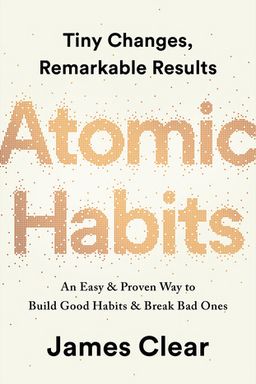
Tiny Habits, Remarkable Results
What if changing your life wasn't about giant leaps, but about a thousand tiny steps? In Atomic Habits, James Clear argues that the difference between who you are and who you want to be comes down to the small, consistent behaviors you repeat each day. The book’s central thesis is simple yet profound: tiny changes compound into remarkable results.
Clear contends that we’ve been looking at personal growth all wrong. We fixate on goals—losing weight, writing a book, saving money—when we should focus on the systems that make those goals inevitable. As he puts it, “You do not rise to the level of your goals, you fall to the level of your systems.” These systems are built from the smallest measurable units of behavior—what he calls atomic habits.
Why Small Habits Matter
Clear opens the book with an unforgettable analogy: imagine improving by 1% every day. It seems trivial at first—how much could that matter? But compounded over time, those minuscule gains make you 37 times better after one year. Conversely, being 1% worse each day leads to decline. Like investing, habits have a compounding effect. This is why top performers—from Olympic cyclists to elite artists—don’t rely on massive transformations. They perfect the small things.
Drawing from the story of British Cycling’s “marginal gains,” he shows how coach Dave Brailsford took a failing team and turned it into a record-shattering dynasty by layering 1% improvements across hundreds of areas. Better bike tires, optimized sleeping conditions, even painting the team truck white to spot dust—all tiny optimizations that compounded into gold medals. For Clear, these micro-improvements form the blueprint for personal mastery.
The Plateau of Latent Potential
One of Clear’s most striking insights is that success often feels invisible for a long time. He calls this the Plateau of Latent Potential—a period when you're working hard but seeing no results. Like ice warming imperceptibly before it finally melts at 32°F, progress often happens beneath the surface. Most people quit before reaching that threshold. The true challenge is not effort, but patience and consistency long enough to trigger compound growth.
This idea mirrors Malcolm Gladwell’s notion of the tipping point and Carol Dweck’s concept of the “growth mindset”—that persistence through apparent stagnation is what separates success from failure. Clear shows that when you trust the process, not the immediate payoff, your small habits eventually make the impossible feel inevitable.
Identity-Based Habits: Changing Who You Are
The real power of habits, Clear explains, is in shaping identity. Goals fixate on outcomes: “I want to lose 20 pounds.” Systems focus on processes: “I’ll eat healthy every day.” But the deepest level is identity: “I’m the kind of person who takes care of my body.” Every action is a vote for or against the kind of person you want to become. You become your habits—through repetition, you embody your beliefs. This echoes Aristotle’s ancient adage: “We are what we repeatedly do.”
When you act in alignment with your desired identity—even in the smallest ways—you reinforce it. Running for two minutes is less about fitness and more about proving you’re an athlete. Writing one paragraph means you’re a writer. Each tiny victory is a vote cast toward your future self.
The Four Laws of Behavior Change
Clear turns decades of behavioral science into an actionable framework known as the Four Laws of Behavior Change:
- Make it obvious – Design your environment to expose good habits and hide bad ones.
- Make it attractive – Harness motivation by linking habits to positive experiences and social expectations.
- Make it easy – Reduce friction. Opt for simplicity and automate behaviors when you can.
- Make it satisfying – Reinforce success with immediate rewards so you enjoy the process, not just the outcome.
If you reverse these laws, you can break bad habits: make them invisible, unattractive, difficult, and unsatisfying. This duality makes Clear’s system one of the most practical and scientifically grounded habit models ever written, building on the foundations of The Power of Habit by Charles Duhigg and B.J. Fogg’s Tiny Habits.
Why Habits Matter
Ultimately, Atomic Habits is about reclaiming agency. Clear reminds readers that you don’t need radical reinvention—you need consistency. When you build systems designed for small, sustainable wins and align them with the identity you aspire to embody, you turn progress into your default state. The book’s closing words sum it up: “Small habits don’t add up. They compound.”
This philosophy transforms more than habits—it reshapes how you view success itself. Instead of chasing outcomes, you devote yourself to becoming the kind of person capable of achieving them. In that shift from results to systems, from temporary motivation to identity-centered mastery, lies the enduring promise of Atomic Habits.