
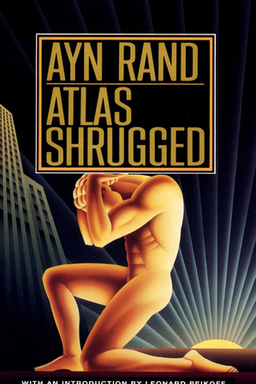
Atlas Shrugged cover

Atlas Shrugged

by Ayn Rand

Atlas Shrugged uncovers a dystopian America where society teeters on collapse amid philosophical battles of capitalism and individualism. Follow unforgettable characters on a journey of resilience, confronting bureaucratic decay and embracing the enigmatic question: ''Who is John Galt?''

The Moral Architecture of Atlas Shrugged

What happens to a society when the most competent people decide to stop working for it? In Atlas Shrugged, Ayn Rand answers by splitting civilization into two moral species: those who create and those who live off creation. The book dramatizes an ethical, political, and psychological revolution—what it calls a "strike of the mind"—where thinkers, inventors, and builders withdraw their sanction from a world that rewards incompetence and punishes production.

Rand builds a sweeping narrative around railroad executive Dagny Taggart and steel magnate Hank Rearden. Through them, you see a tangible conflict between two moral codes: the morality of production and the morality of need. The story asks you a practical question: by what code should you live—the code that measures value by effort and achievement, or the one that measures worth by suffering and claim?

Producers and Looters: Two Moral Economies

The book’s creators—Rearden, Dagny, Francisco d’Anconia, Ellis Wyatt—live by reason, competence and pride. They build railroads, invent alloys, extract oil and coordinate systems. Their opponents, the “looters,” operate by politics, guilt and coercion: James Taggart, Wesley Mouch, Orren Boyle, and their compliant intellectuals like Dr. Pritchett, Bertram Scudder, and Balph Eubank. In boardrooms and legislatures, the looters pass laws—the Anti-dog-eat-dog Rule, the Equalization of Opportunity Bill, Directive 10-289—that criminalize success under the pretense of fairness.

These opposing moralities are not abstract. They determine the fate of industries, railroads, and even marriages. Rearden’s alloy becomes the symbol of technical and moral creation. Dagny’s Rio Norte Line, built of Rearden Metal, is not only an engineering triumph but a statement of principle: trust reason over permission, production over rhetoric. Meanwhile, bureaucrats like Wesley Mouch demand Rearden sign away patent rights “for the public good.” Each demand erodes freedom by trading moral guilt for control.

Collapse as Moral Consequence

Rand shows you that collapse begins in ideas, not factories. When truth becomes negotiable, railroads derail and governments seize companies they can’t operate. The Taggart Tunnel disaster—sending a coal-burning train through an unventilated tunnel—symbolizes what happens when politics overrides fact. Every executive who refuses responsibility—Clifton Locey, Dave Mitchum—illustrates how evading competence becomes deadly. The national paralysis that follows—the "frozen trains," the Minnesota harvest rotting in stations—reveals that infrastructure depends not only on metal and fuel but on the will to think correctly. When that will dies, civilization follows.

The Strike of the Mind

Against this decaying world stands John Galt, the unseen engineer who organizes the withdrawal of the morally and intellectually productive. His “strike” isn’t sabotage but refusal: thinkers deny their sanction to a system that exploits them. They disappear—Hugh Akston flipping hamburgers, Midas Mulligan running a hidden bank, Dr. Hendricks practicing medicine for a private valley. What remains is Galt’s Gulch, a hidden, self-sustaining community where trade is voluntary and property inviolate. The oath engraved above the power generator—“I swear by my life and my love of it…”—summarizes the novel’s moral core: rational self-interest as virtue and the rejection of coerced sacrifice as vice.

Ideas, Love, and Identity

Within this architecture, personal relationships serve as moral testing grounds. Lillian Rearden weaponizes guilt; Francisco destroys his own empire to expose corruption; Rearden learns that moral strength requires self-respect. Dagny’s loves—Francisco, Rearden, then Galt—trace her journey from pragmatic competence to a full moral awakening. Her final choice to join Galt unites love, reason, and work: a life directed by values freely chosen, not imposed by others.

Philosophy Made Literal

Rand fuses philosophy and narrative: when the world demands sacrifice in the name of brotherhood, the novel answers with self-assertion in the name of life. John Galt’s long radio address turns metaphysics into politics. He declares that reason is man’s means of survival, that “existence exists,” and that any code denying the right of a person to live for his own sake is a morality of death. The disaster that follows—Project X exploding, industries failing—is not revenge, but the mechanical outcome of moral law. In Rand’s vision, when causes (mind and production) are repudiated, effects (wealth, stability, culture) vanish.

Through a world collapsing under its own false ethics, Atlas Shrugged argues that a civilization’s health depends on one principle: the sanctity of the mind as the root of all values. If you let the incompetent define morality, they will define existence downward until only ash remains. The book leaves you with one imperative—think, produce, and never sanction the guilty by sharing the moral burden they demand. (Note: like Orwell’s 1984, Rand warns of ideological inversion, but her cure is not collective rebellion; it is individual intellectual integrity.)


Makers and Parasites

The first act of the story pits productive genius against political parasitism. Hank Rearden’s ten-year struggle to forge Rearden Metal, Dagny Taggart’s rebuilding of the Rio Norte Line, and Francisco d’Anconia’s enigmatic sabotage form a triptych showing how competence battles a system built on redistribution and emotional blackmail. Each act forces you to see that moral integrity and practical excellence are inseparable.

Rearden’s Alloy and Self-Ownership

Rearden Metal symbolizes creation as moral act. Its first pour is described like a birth; its properties revolutionize rail and construction. Yet instead of honor, the inventor faces condemnation. The State Science Institute issues vague warnings, fabricating doubt through bureaucratic language (“possible molecular reactions”). Dr. Potter tries to buy him off under "public welfare." Rearden’s steady refusal—“Because it’s mine”—makes ownership a spiritual boundary. He won’t consent to being the looters’ instrument.

Dagny’s Operating Ethic

Dagny embodies managerial artistry. She measures worth by function: can it move trains? When boards drift toward politics, she fires the incompetent, orders Rearden rails, and restarts collapsing divisions herself. Her ethic—competence is morality—turns management into a moral frontier. When she resigns rather than enforce irrational directives, it’s not romantic defiance but clarity about what work means. (In modern terms, she treats project management as moral philosophy.)

Francisco’s Moral Sabotage

Francisco d’Anconia plays a deeper game. His San Sebastian “fiasco” and later the explosion of the D’Anconia Copper empire are not decadence but strategic refusal. By collapsing his assets before nationalization, he denies looters the material they need to persist. His acts teach a cruel algebra of moral consequence: you cannot steal productivity if productivity vanishes. His line—“Brother, you asked for it”—is both taunt and theorem: confiscation leads logically to ruin.

Why Production Becomes Moral Theater

Each enterprise becomes a moral stage. The Rio Norte rebuild proves that voluntary excellence outperforms decreed mediocrity. Rearden’s refusal to sell his rights, Dagny’s clandestine John Galt Line, and Francisco’s self-destruction dramatize one equation: to live rightly, one must refuse the inverted value system that exalts failure. In doing so, they expose how policy labeled as compassion operates as a bureaucracy of coercion.

By contrasting these three creators with their mirror images—James Taggart’s cowardly deals, Wesley Mouch’s manipulations, Lillian Rearden’s emotional blackmail—Rand constructs her essential dichotomy: achievement versus entitlement. For you as reader or worker, the question is unavoidably personal: do you measure pride by what you make, or by how well you conform? The novel insists that only the first measure keeps civilization alive.


Politics of Collapse and Cultural Corruption

Rand’s world crumbles under laws that promise fairness but operationalize decay. Institutions built for truth and competence—rail alliances, scientific institutes, the media—become tools of rationalized plunder. This section shows you how idea corruption translates into broken supply lines and moral fatigue.

Institutional Capture

The National Alliance of Railroads votes to limit competition; the State Science Institute distorts research into propaganda; the press praises seizure as progress. Each mechanism replaces performance metrics with majority votes or political loyalty. You watch “The Anti-Dog-Eat-Dog Rule” outlaw competitive vigor, forcing innovators like Dan Conway’s Phoenix-Durango out. The contrast teaches an operational truth: when policy rewards status over skill, decline is institutional, not accidental.

Intellectual Alibis

Behind the procedures stand intellectual courtiers—Balph Eubank, Dr. Pritchett, and Scudder—who bless ignorance as humility. They flood culture with relativism: art that glorifies incompetence, philosophy that mocks logic, and journalism that sanctifies need. At Lillian Rearden’s party, a great concerto is turned into background noise—symbol of culture’s self-betrayal. This inversion gives the looters a moral cover: if reason is “vulgar,” coercion looks enlightened.

The Science of Betrayal

The State Science Institute’s smear against Rearden Metal crystallizes the theme. Dr. Robert Stadler, once a champion of reason, trades truth for institutional survival. The marble slogan “To the fearless mind” becomes irony. When Stadler allows ambiguous warnings to destroy the Rio Norte Line, you see how cowardice weaponizes respectability. His justification—that the Institute must appease public opinion to stay funded—exposes the fatal compromise between truth and politics.

Consequences and Reflection

This chain of corruption ends not with villainy but inertia: factories idle, scientists quit, ordinary workers stop caring. Rand’s lesson is harsh: a culture that redefines virtue as sacrifice and success as sin invites extinction. If you run teams, systems, or institutions, the warning is practical—truth cannot be delegated to consensus without killing both truth and competence.


The John Galt Line and the Praxis of Defiance

Dagny’s creation of the John Galt Line condenses the novel’s practical philosophy: when systems fail, rebuild them privately through voluntary association. The Line’s conception, construction, and triumphant run showcase how freedom and skill interlock. It’s Rand’s case study in applied independence.

Building Outside Permission

Blocked by bureaucracy, Dagny forms her own company, sells personal bonds, and contracts directly with Rearden for rails of his new metal. Every act is voluntary, negotiated without coercion. Ellis Wyatt invests, Ken Danagger supplies coal, and small investors shoulder risk willingly. In doing so, they create an enterprise immune to looter morality: performance replaces politics as the sign of legitimacy.

Engineering as Symbol

Rearden Metal and Diesel engines unite in a vision of human integration—mind, material, and purpose. Dagny’s first run over the John Galt Bridge, the white fire of rails under speed, becomes an emblem of rational joy. The scene reverses national despair: towns cheer not a policy but a working train. Production becomes spiritual renewal.

Moral Mechanics

Defiance here is precise: Dagny refuses to compel anyone. She tells the union, “Come if you will.” The train runs on voluntary competence—no conscription, no political authorization. Rand contrasts this with the political theater of lawmaking in Washington. The Galt Line’s success exposes the emptiness of the “public good” rhetoric. By building it, Dagny demonstrates that freedom to act productively is self-justifying; it needs no apology.

The episode also foreshadows the eventual withdrawal of all producers. It proves that creativity can survive outside decrees—but also warns how briefly: the same society that cheers the Line will soon regulate it to death. The triumph exists as proof, not permanence: a lucid reminder that liberty functions only among those who respect choice and value.


The Moral Logic of Looting and Directive 10–289

The midpoint of the novel transforms ethics into law. The Equalization of Opportunity Bill and finally Directive 10‑289 codify moral inversion: success is frozen, invention outlawed. What had been cultural decay becomes totalitarian economics. This stage demonstrates how altruistic rhetoric can institutionalize tyranny.

From Fairness to Force

Policies now ban innovation, fix wages, and seize patents as “voluntary gifts.” Bureaucrats like Wesley Mouch and Dr. Ferris rebrand confiscation as patriotism. Owners may neither quit nor sell; workers may not resign. Need becomes currency; competence, a crime. The directive legally freezes creation—the first planned society built on stillness.

Psychology of the Looters

The officials justify theft by moral blackmail. “For social equilibrium,” Potter tells Rearden, “you must give up your rights.” The tactic depends on shame. When Hank relinquishes his patent to protect Dagny from scandal, you see how guilt weaponizes virtue. The looters can only exploit your goodness—never your weakness. Rand calls this the “sanction of the victim”: the oppressor rules only by your consent.

Project X and Weapons of Morality

Ferris and Thompson’s “Thompson Harmonizer,” a weapon of destruction, shows how science decays when detached from ethics. Its demonstration—an engineered explosion under the banner of peace—turns intellect into terror. Dr. Stadler, once idealist, becomes its reluctant mouthpiece. Rand’s warning is clear: progress without moral purpose becomes coercion.

Why Law Cannot Replace Ethics

Directive 10‑289 illustrates that control over economics requires control over minds. By forbidding new ideas, the regime admits dependence on those ideas it can’t generate. For you, the lesson is immediate: any policy that mandates equality of result destroys both liberty and livelihood. Innovation dies not through guns, but through laws that criminalize excellence while praising submission.


Discovery, Vanished Genius, and the Strike of the Mind

Dagny’s discovery of the abandoned motor and her encounter with the vanished philosopher Hugh Akston lead to the revelation of a hidden rebellion. These discoveries connect private despair to cosmic revolt: the mind itself is withdrawing from a world that scorns it.

The Lost Motor as Metaphor

In a ruined factory, Dagny finds a prototype motor that could harness atmospheric electricity—an invention that could save entire industries. Yet the inventor vanished, his notes destroyed. The image crystallizes the theme: innovation cannot survive where genius is unpaid and unwanted. (You can treat this as parable for wasted human capital.)

Signs of Withdrawn Minds

Every subplot reinforces the pattern: engineers disappear, contractors quit, scholars become cooks. Ellis Wyatt burns his wells—“Wyatt’s Torch”—rather than see them seized. Each act of disappearance isn’t nihilism but protest. The industrial world, deprived of intelligence, begins to suffocate literally and figuratively. Trains stall, mines flood, factories idle. Civilization’s pulse slows because its brain has gone on strike.

The Philosophy Behind Withdrawal

When John Galt at last appears, he explains: the strike is moral defense, not vengeance. Producing under coercion is surrender; withdrawal is justice. “We quit when we learned it’s evil to live for others.” The new society they build—Galt’s Gulch—operates by trade alone. Midas Mulligan’s bank runs on private coin; Halley writes music only there; doctors and pilots sell skill for value, not favor. The valley is proof that a moral economy can exist when coercion ends.

Dagny’s partial awakening—discovering the motor, meeting Akston, then finding Galt—links the novel’s scattered mysteries into principle: thought and freedom are interdependent. If one perishes, so will the other. The strike of the mind is both diagnosis and cure.


Reason, Sacrifice, and the Morality of Life

Galt’s three-hour radio speech articulates the philosophical skeleton that has animated the plot. It defines life as moral standard, reason as method, and happiness as goal. Against it stands the “Morality of Death”—religion, mysticism, and state altruism—all based on sacrifice.

Existence Exists

Galt begins with a fact normally taken for granted: reality is objective. Consciousness is your faculty for perceiving reality, not creating it. From this axiom—“A is A”—all ethics follow. To live, you must act on reason: gather facts, form principles, reject contradictions. When politicians or priests tell you that faith trumps evidence, they ask you to trade the tool of survival for submission.

The Standard of Value: Man’s Life

For Rand, good and evil are not mystical; they are conditions of survival. The good is that which sustains life; the evil, that which destroys it. Happiness is moral because it expresses successful living. Thus the virtues follow by logic: rationality, independence, integrity, honesty, justice, productiveness, and pride. Each is a discipline of survival. To refuse pride, as culture teaches, is to renounce life’s moral meaning.

The False Ideal of Sacrifice

What the mystics call “sacrifice” is, in fact, slavery. Galt defines it with precision: surrendering a higher value to a lesser one. To feed another while letting yourself starve is not virtue but moral bankruptcy. The cult of sacrifice in politics—the demand that creators work for others—produces only envy and violence. The novel’s disasters illustrate this truth dramatically: when society glorifies need and loots ability, both perish.

A Code for Living

Galt’s prescription is affirmative: choose reason, embrace work, and love your life. He rejects martyrdom as moral goal. The strike, Dagny’s rebellion, and Rearden’s awakening are applications of this code—self-respect as primary virtue. (In essence, Rand fuses Aristotle’s rational eudaimonia with industrial modernism.) For readers, the moral takeaway is practical: you exist to achieve, not to atone.


Collapse and Renewal

The finale merges philosophy with consequence. After Galt’s broadcast, coercion escalates to absurdity, culminating in torture and system failure. Project X detonates; supply lines vanish; leadership implodes. Out of the wreck, a new order gestates—rooted in free minds and deliberate values.

The Failure of Force

When the regime captures Galt and uses the Ferris Persuader to compel him to serve, the machine breaks down—literally and symbolically. Dr. Ferris cannot repair the circuit without the intellect he seeks to enslave. It’s the novel’s most literal proof that force cannot sustain creation. The mind is non-coercible.

Rescue and Rebirth

Dagny, Rearden, Francisco, and Ragnar rescue Galt from his torturers, fulfilling the promise that the strikers’ moral order substitutes capacity for compulsion. As cities go dark, the valley prepares to return—when the world is ready to rediscover reason. The last image, Galt tracing the dollar sign in the air, equates money with thought and freedom: the emblem of production reborn.

Meaning for You

Rand ends not with apocalypse but with reclamation: a civilization rebuilt on voluntary exchange and truth. If you strip away its drama, the moral blueprint is clear—never choose despair or coercion over competence, never live for another’s permission. The strike ends when the world accepts that mind, freedom, and joy are one continuum—the only sustainable engine of human life.

Dig Deeper

Get personalized prompts to apply these lessons to your life and deepen your understanding.

Go Deeper

Get the Full Experience

Download Insight Books for AI-powered reflections, quizzes, and more.