
Idea 1
Life, Death, and the Fractured Human Will
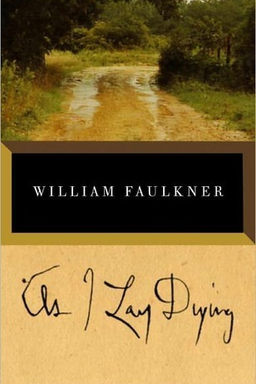
What does it mean to live — and to die — in a world that refuses to make sense? In As I Lay Dying, William Faulkner takes that question and transforms it into a haunting mosaic of human voices, contradictions, and desires. The novel, published in 1930, captures an American South still nursing its postwar wounds and bound by the grit and decay of rural poverty. It follows the Bundren family’s bizarre and grueling journey to fulfill their dying mother’s wish to be buried in her hometown of Jefferson, Mississippi. Their journey is both literal and spiritual — a trek through flood, fire, madness, and decay that exposes not only the land’s rural hardship but also the collapse of family unity, communication, and meaning itself.
Faulkner contends that truth, like life itself, has no single face. Instead, it fractures across human consciousness — each narrator offering their own slant, each silence echoing more loudly than words. Told through 15 different voices and 59 chapters, the book captures the raw confusion of being alive when everything — even death — refuses clarity. Yet within this confusion lies the pulse of existence: raw, humiliating, loving, violent, and absurdly resilient. The Bundrens, poor Mississippi farmers, endure loss not with heroism but with instinct, foolish pride, and stubborn endurance. In that way, they mirror us all.
The Southern Gothic Universe
Faulkner situates the Bundren odyssey in a Southern Gothic landscape — grotesque yet deeply human. The earth itself seems alive: rivers rise in furious judgment; roads blister under the sun; rotten flesh seeps into the fabric of existence. In this world, every act, no matter how small, has moral and cosmic weight. A coffin built lovingly by Cash becomes both a monument to filial devotion and a grotesque symbol of futility. Language, religion, and morality — staples of human guidance — fail the characters one by one. Yet, in this collapse, Faulkner finds poetry. He writes ordinary misery with mythic overtones, showing how suffering binds people as surely as blood.
A Polyphony of Voices
Each Bundren narrator reveals a fragment of truth. Darl, the most self-aware, becomes both the book’s philosopher and its madman, his eerie omniscience a burden that ultimately drives him insane. Jewel, Addie’s illegitimate son, speaks in silence and rage, his love buried beneath violent gestures. Cash, calm and methodical, builds the coffin with mathematical devotion, seeking meaning in carpentry since words elude him. Dewey Dell, the daughter, carries her own secret grief — a pregnancy she cannot confess. Little Vardaman, still half-child, tries to understand death by reducing his mother to metaphors: “My mother is a fish.” And Anse, the patriarch, moves through the novel as both comic and pitiful — forever justifying his failures as the will of God.
Death, Desire, and the Decay of Meaning
For Faulkner, death is not an ending but a transformation of meaning — or its disintegration. Addie’s own posthumous monologue shatters every assumption about motherhood, language, and faith. She reveals that “word and deed are separate,” that life is steeped in deception, and that only acts — not speech — give meaning. Her insight infects the novel itself: each character speaks, acts, and thinks in dissonance. Their voices, crossing like floodwaters, destroy the illusion of unity — whether of family or of truth. In that tension between knowing and not knowing, Faulkner finds the tragedy of consciousness itself.
Why It Matters Today
Reading As I Lay Dying today feels eerily contemporary. Its questions — What does family mean? How do we honor the dead? How can words capture what we feel? — remain unresolved. Like modernist peers such as Virginia Woolf and James Joyce, Faulkner wrestles with the limits of human perception, yet he grounds this philosophical chaos in the red clay of the American South. The Bundrens might sound absurd, but their delusion and determination mirror every human attempt to make sense of loss and purpose. In the end, the novel is not about death’s cruelty, but about life’s persistence: the mule carts keep moving, the voices keep talking, and even madness finds its strange logic in a senseless world.