
Idea 1
Reclaiming the Jewish Keys
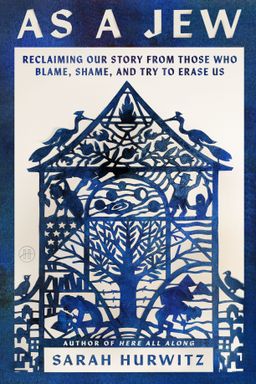
How do you recover a tradition when you’ve been using the wrong map? In this book, Sarah Hurwitz argues that many Jews—and many non‑Jews who think they already know Judaism—carry the “wrong keys” to the Jewish home. We were handed categories shaped by Christian norms, assimilation pressures, and antisemitic distortions, then told to judge Judaism by standards that don’t fit it. The core claim: Judaism is not a thin set of holidays, political positions, or private spirituality. It’s a covenantal people sustained by texts, practices, and obligations that form a distinctive moral civilization.
Hurwitz starts with a confession: she fled her first college Shabbat in panic and shame, then spent years assuming Judaism was either childish ritual or a progressive culture with bagels. Later, in chaplaincy training, she noticed everyone assumed prayer meant spontaneous Christian‑style petitions, and that a “church” was the default sacred space. These are “wrong keys”—habits and language that unlock Christian doors but not Jewish ones. She comes to see how centuries of antisemitic pressure and a modern desire to be a “cool Jew” taught many to edit out the very sources that give Judaism spiritual power: text study, mitzvot, halacha, Hebrew, and peoplehood.
A turning realization
“For so many years, I’d had the wrong keys, and I had been locked out of my birthright without even knowing it.”
What you learn when you switch keys
First, you learn to read Torah differently. It’s not a catechism demanding belief or blind obedience (a frame borrowed from Christian theology), nor just a rulebook. Hurwitz shows you Torah as a covenantal charter for building a just society set apart—kadosh—from imperial cruelty. “Na’aseh v’nishma” (“we will do and then we will understand”) captures a cultural logic: you practice together first; deeper meaning grows through shared doing. “Chosenness” stops sounding like superiority and becomes responsibility—a demanding vocation to model justice.
Second, Judaism becomes a living conversation, not a frozen scripture. After the Temple’s destruction, the Rabbis engineered a revolution: study, argument, and halacha replaced sacrifice. The Talmud, with Mishnah and Gemara surrounded by commentaries like Rashi, is a training ground in “argument for the sake of heaven.” You inherit a culture that prizes chavruta (paired study), ambiguity, and rigorous compassion. The “textline” (to borrow Amos Oz and Fania Oz‑Salzberger) is what Jews carry through exile—words that bind generations.
Seeing the old hate in new clothes
Third, Hurwitz traces how anti‑Judaism morphed into modern antisemitism. Early Christian Adversus Judaeos rhetoric, medieval libels, and Enlightenment racialization congealed into three recurring tropes: Jews as disproportionately powerful, diabolically depraved, and secretly conspiratorial. In the 20th century, Nazis and then the Soviet Union rebranded these tropes into “anti‑Zionism,” equating Zionism with racism and Nazism. You learn to tell principled policy criticism from “political antisemitism,” the ideology that says Jews, via “Zionism,” are the central obstacle to moral progress. (Note: Bernard Harrison and Haviv Rettig Gur help parse this difference.)
Israel, refugees, and hard truths
Fourth, you get a sober, humane account of Israel’s creation and its aftermath. Zionism arose from persecution; many Jewish immigrants were refugees more than settlers. 1948 was a war of survival—and a catastrophe (Nakba) for many Palestinians who fled or were expelled. At the same time, around 850,000 Jews were driven from Arab countries, most absorbed by Israel. The Palestinian refugee issue persists uniquely because of UNRWA’s inheritance rules, unlike UNHCR’s model. Holding both truths—Jewish refuge and Palestinian dispossession—clears space for practical peace rather than abolitionist fantasies.
Practices that humanize
Finally, halacha emerges as compassionate particularism. The Talmud’s “but‑if” hypotheticals train you to imagine real people and their vulnerabilities. Visiting the sick (bikkur ḥolim) isn’t optional; it’s morally urgent. Hurwitz’s chaplaincy stories show how small acts—sitting beside a patient, honoring the dead with ZAKA’s meticulous dignity—carry Jewish theology into the hospital ward.
In this journey, you’ll learn: how Christian defaults and assimilation gave you “wrong keys”; how Torah as covenant and the Rabbinic revolution give you right ones; how to detect anti‑Zionism that smuggles in old hate; why Israel’s history is genuinely complex; and how halacha, peoplehood, and study can rebuild a resilient, “knowing” Jewish life. The invitation is practical: pick up the right keys, enter the house, and help repair it.