
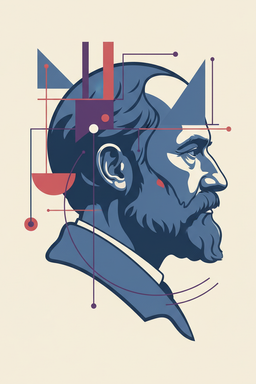
Idea 1
The World as Will: Understanding Life’s Hidden Force
Have you ever wondered why you keep chasing things that never quite make you happy—why you fall in love with the wrong people, crave recognition that fades, or fear missing out even when life seems full? Arthur Schopenhauer, in his monumental work The World as Will and Representation, asked the same questions nearly two centuries ago. His answer was startling: it’s not really “you” who wants all of this. It’s something deeper, older, and far less rational—what he called the Will-to-Life.
For Schopenhauer, life is not the product of reason or divine goodness, but the unfolding of an insatiable natural drive. The universe, he believed, is powered by blind, endless striving—the Will—that manifests through all living beings. This Will is indifferent to your happiness or suffering; it only wants to keep itself going through reproduction, survival, and constant desire. Existence, under this view, isn’t a benevolent gift—it’s a restless, often painful process where satisfaction is always temporary and yearning reigns supreme.
Schopenhauer’s Central Claim
Schopenhauer argued that what we perceive as the “world” is merely our representation—our mind’s interpretation of reality. Behind all appearances lies the Will, a metaphysical force that drives all beings to exist and reproduce. The Will does not think or reason; it simply wants. And because wanting never ends, life itself becomes a cycle of desire and frustration.
He saw this universal striving mirrored in human life. Whether it’s ambition, lust, or curiosity, all our behavior stems from this same root impulse. Our intellect merely serves as a tool for the Will, convincing us that our pursuits are meaningful or chosen freely. Yet in truth, according to Schopenhauer, we’re merely passengers on the Will’s ceaseless voyage.
The Problem of Happiness
Schopenhauer famously declared that the inborn error of mankind is the belief that we exist to be happy. Life, he insists, is not designed for joy but for struggle. Even when you achieve what you want—a promotion, a partner, a prized recognition—the satisfaction quickly fades. The Will moves the goalpost again, sparking new wants and new discontent. This endless treadmill of desire, he believed, explains why elderly faces look etched with disappointment: they reveal decades of hope perpetually betrayed by reality.
Unlike the optimistic humanism of thinkers like Rousseau or the rationalism of Kant, Schopenhauer’s vision is starkly tragic. He considered life as fundamentally suffering, echoing Buddhist teachings that recognize craving as the root of pain. Indeed, Schopenhauer was one of the first Western philosophers to take Buddhism seriously, describing his project as a Western parallel to its pessimistic enlightenment.
Love as Nature’s Deception
One of Schopenhauer’s most provocative applications of this theory concerns romantic love. He argued that falling in love is not the act of free spirits but of nature manipulating two people into reproducing. Love’s drama, he said, is serious because it determines the next generation’s genetic makeup—the Will’s ultimate goal. But this same seriousness ensures our misery: we fall in love not with those who suit our happiness but with those who balance our biological traits to produce “better” offspring.
That’s why, he suggested, passionate lovers often make terrible spouses. The Will’s deception ensures that reason is “excluded from the real resolutions” of desire. Once desire fades—often right after orgasm—human beings find themselves bound to someone who, apart from sex, might be “hateful, contemptible, and even abhorrent.” In that moment of clarity, Schopenhauer imagines, “the devil’s laughter is heard.”
The Human Condition
Watching humanity’s endless striving, Schopenhauer likened us to moles endlessly burrowing through darkness, reasoning beings trapped in animal compulsions. We work, compete, seduce, procreate, and suffer—all for the Will’s persistence. His vision is at once tragic and comic: we seek purpose but are driven by forces we barely understand. That recognition, he believed, is not despairing but clarifying. It cuts through illusion and forces us to see ourselves with humility.
Two Paths to Liberation
How, then, can you live wisely in such a tormented world? Schopenhauer offers two routes. The first is the way of the sage—a rare person capable of renouncing desires entirely, living in quiet, ascetic contemplation. The second, more accessible path is through art and philosophy. Art allows you to step outside the Will’s demands, to see life from a detached perspective. In tragedy, poetry, and thoughtful reflection, you momentarily transcend self-interest and glimpse peace.
For Schopenhauer, great art doesn’t flatter human optimism. It shows suffering clearly and compassionately, helping us bear reality. He especially admired Greek tragedy, La Rochefoucauld’s aphorisms, and Machiavelli’s realism—all works that illuminate the world’s pain without denying its dignity.
Why Schopenhauer Still Matters
In an age obsessed with happiness, Schopenhauer’s pessimism feels oddly liberating. He doesn’t promise fulfillment; he promises truth. His lesson is that to suffer is not personal failure but the fabric of life itself. Yet within that bleak recognition lies compassion—for yourself and others. By confronting the Will rather than denying it, you can live more honestly. You may never conquer the Will, but through understanding, art, irony, and wisdom, you can step aside from its grip—if only for a moment—and find serenity in seeing clearly.