
Idea 1
How Water, Trade, and Religion Forged the Arab World
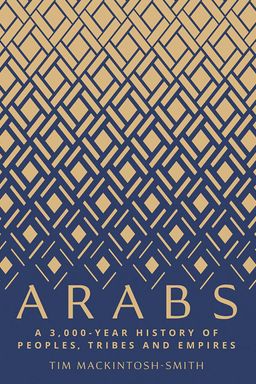
What connects deserts, dynasties, and divine revelation? At first glance, maybe not much—but in the story of the Arab world, they form the backbone of a shared human saga. This sweeping journey across centuries begins not with empires or prophets but with geography and survival. The Arabian Peninsula’s relentless environment—with its scarce water, searing deserts, and isolated oases—forced early peoples to innovate, migrate, and cooperate. Out of that struggle arose a constellation of tribes, traditions, and trade routes that slowly gave birth to one of the most influential civilizations in human history.
The book traces how water scarcity shaped early Arab identities, how trade linked nomads and settlers, and how Islam unified warring tribes into a global force. Through eras of prosperity and upheaval—from the rise of the Abbasid caliphs in Baghdad to the fall of Arab rule in Spain and the confrontations with European powers—the narrative shows how Arab culture continually reinvented itself. Even when political control waned, its influence persisted in language, science, art, and faith.
The Harsh Cradle of Civilization
To understand Arab civilization, you have to start with the land itself. Arabia’s three major regions—the rocky northwest, the arid central plateau, and the fertile south—offered contrasting paths of survival. In the south, rainfall allowed the building of dams and irrigation systems; in the north and central deserts, only constant movement could sustain life. This contrast produced two archetypes: the settled farmers and traders and the nomadic tribes known as Arabs.
From the start, water dictated politics. The south’s agricultural wealth spurred kingdoms and bureaucracies, while nomads in the north and center prized freedom and mobility. As the author shows, these twin patterns—organized authority versus tribal independence—would echo throughout Arab history, from the era of ancient kingdoms to modern nationalism.
Trade and the Exchange of Ideas
Trade knit this fragmented world together. By the first century BCE, southern merchants began carrying frankincense, myrrh, and spices along long caravan routes, bridging Arabia’s ecological zones. With them traveled more than goods: language, stories, and songs. Poetry, the lifeblood of pre-Islamic culture, carried social memory, law, and spirituality long before writing became common. These oral traditions established an early sense of unity through shared expression—what writing would later reinforce.
When empires like Assyria and Persia encountered Arab tribes, they saw them as troublesome raiders. Yet those very clashes helped solidify Arab identity. As others labeled them collectively, Arabs began to see themselves as a people distinct from their imperial neighbors. Outsiders, ironically, helped invent the insiders.
Warriors, Empires, and a Unifying Faith
Warfare advanced as Arabs adapted horses and military innovation. But tribal rivalries kept Arabia divided until contact with the Byzantine and Persian empires provided both external threats and examples of organization. Out of that tension came a new kind of unity—first cultural, then spiritual.
The book presents Muhammad as the culmination of these intertwined histories. Rooted in the commercial hub of Mecca, the Prophet gathered his revelations not in isolation from history but within its flow. Islam’s poetic language, ethical clarity, and call for unity drew upon centuries of cultural evolution. When Muhammad migrated to Medina in 622, his religious vision became also a political reality, transforming a loose confederation of tribes into a community governed by law and faith. Within a decade, Arabia was united under Islam.
Expansion, Golden Ages, and Schisms
After Muhammad’s death, leaders like Abu Bakr and Umar redirected tribal energy outward against the weakened Byzantine and Persian empires. Their conquests sparked the largest cultural expansion of the early medieval world. Yet unity proved fragile. Civil war, nepotism, and grievances led to one of Islam’s defining schisms between Sunnis and Shi‘a—still resonant today.
Under the Umayyads and Abbasids, Arab civilization reached dazzling cultural heights—from the calligraphic splendor of Damascus to Baghdad’s libraries of learning. Mathematics, medicine, philosophy, and architecture flourished as Arabic became the language of global scholarship. But power slipped eastward, wealth bred decadence, and over time, non-Arab influences infiltrated the caliphate’s elite structure. Arab rule fragmented, though its culture diffused widely.
Decline, Survival, and Reinvention
Even as Mongols razed Baghdad in 1258 and new empires rose, Arab influence persisted—carried not by armies but by traders across the Indian Ocean. From Swahili coasts to Indonesian ports, Arabic words, customs, and faith took root. Later, during European colonial incursions, the Arab world found itself both resisting and reinventing under foreign domination. The printing press, canals, and nationalism all transformed Arab societies in unexpected ways.
By the twentieth century, figures like Gamal Abdel Nasser rekindled the ideal of Arab unity amid global tension, only for wars, autocracy, and sectarianism to fracture it again. Yet, as the book argues, even in moments of despair—like the dashed hopes of the Arab Spring—the lessons of the past still hold power. Geography forged resilience, trade fostered connection, and faith built cohesion. Understanding this history, the author suggests, can illuminate how Arab communities might once more turn shared memory into collective strength.
Core Idea: The story of the Arabs is not just about conquests or collapse. It’s a story of adaptation—how geography, commerce, and spirituality shaped one of humanity’s most enduring civilizations and continue to influence global culture today.