
Idea 1
The Minds of Other Animals
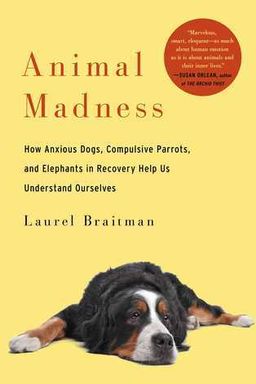
What happens when you treat animal minds as continuous with your own? In Animal Madness, Laurel Braitman argues that emotional suffering is not an exclusively human condition. From self-destructive parrots to anxious dogs, she shows that many species exhibit patterns of distress that mirror human mental illness. Her central claim is simple yet revolutionary: wherever there is a complex emotional system, there exists the possibility of psychological breakdown.
This book asks you to look again at the animals around you — the pets in your house, the elephants in zoos, the gorillas in sanctuaries — and to see in their struggles reflections of a shared vulnerability. Drawing on case studies, neuroscience, history, and first-hand observation, Braitman reconstructs a compassionate science of animal emotion that bridges veterinary medicine and anthropology, biology and empathy.
Shared emotional architecture
Charles Darwin first proposed that human and nonhuman emotions arise from common neurological roots. Braitman traces this lineage through naturalists like William Lauder Lindsay, who described ‘wounded feelings’ in dogs, and neuroscientists such as Jaak Panksepp, who identified primal emotional circuits and even recorded rats’ laughter. Their collective evidence suggests that the mammalian brain runs on shared affective systems — fear, rage, bonding, mourning — that can malfunction under stress.
Recognizing animal suffering
Because animals cannot verbalize, diagnosis depends on behavior over time — changes in appetite, movement, or social relationships that prevent a normal life. Braitman recounts Oliver the Bernese Mountain Dog, who spiraled into obsessive paw-licking, thunder phobia, and destructive separation anxiety after trauma. His case becomes a lens to understand how environmental triggers and developmental experiences combine into pathology, much as they do in humans.
Anthropomorphism as disciplined empathy
The book challenges the taboo against anthropomorphism — projecting human states onto animals. Braitman contends that you can and must anthropomorphize, but with discipline: use imagination to form hypotheses about an animal’s feelings, then test them with observation and biology. This is how good ethologists, zookeepers, and trainers work. Without informed empathy, you risk ignoring suffering; with too much projection, you mistake fantasy for evidence.
History, psychiatry, and ethics intertwined
The narrative stretches from Victorian fears of “mad dogs” to twenty-first century pharmaceutical economies. In every era, human conceptions of animal minds mirrored our own psychiatric fashions — madness became neurosis, then trauma, then biochemical imbalance. The labels changed, but the underlying dynamics of captivity, neglect, and empathy remained. Today’s medicated pets are descendants of those publicly executed zoo elephants; they share a lineage of management rather than understanding.
From care to conscience
Ultimately, Braitman’s project is moral as much as scientific. Recognizing that dogs, apes, and elephants can be anxious, compulsive, or depressed demands ethical action. It means designing environments that support normal behavior, valuing companionship as therapy, and treating emotional pain as real pain. As caretaker, owner, or observer, you gain not just insight but responsibility: to relieve suffering wherever you find it, even across species boundaries.
Core insight
Every animal with a mind has the capacity to lose hold of it. The moral and therapeutic challenge is to help it return.
Throughout the book, Braitman bridges science and story to teach a larger lesson: that mental health is ecological. When you alter an environment, touch, companionship, or structure, you change not only behavior but well-being. Animal Madness reminds you how thin the boundary is between healing animals and understanding yourself.