
Idea 1
Why the World Runs on Anger
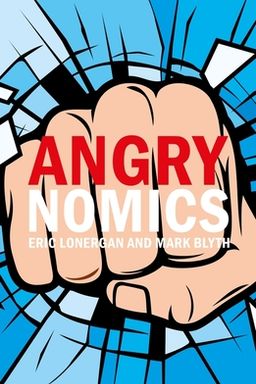
Why does it feel like the world is constantly seething with frustration? Why are politicians, protestors, and commentators all tapping into our collective fury? In Angrynomics, economist Eric Lonergan and political economist Mark Blyth argue that anger has become the dominant emotion of our economic age—and it’s not simply personal discontent gone viral. They contend that our economic system, riddled with inequality, uncertainty, and institutional decay, has created what they call an “angrynomics world.” Understanding this anger, they argue, is the first step to transforming it from a destructive force into a catalyst for reform.
At its heart, the book weaves together the fields of economics, psychology, and politics to answer a pressing question: why are we so angry when societies are wealthier than ever? Through vivid stories—from Iceland’s “Panama Papers” protests to the Yellow Jackets in France and Trump rallies in the U.S.—Lonergan and Blyth show that our anger isn’t random or irrational. It’s a predictable reaction when ordinary people feel unheard, unprotected, and deceived by institutions that once promised fairness.
Two Faces of Public Anger
The authors divide anger into two broad types: public and private. Public anger includes what they call moral outrage—the righteous indignation of citizens confronting corruption or injustice—and tribal anger, the “us vs. them” venom that fuels populism. Private anger, by contrast, manifests as personal stress, fear, and frustration in response to instability, economic insecurity, and technological change. Both forms feed into one another, shaping elections, markets, and the emotional fabric of daily life.
Lonergan and Blyth urge readers to resist dismissing anger as irrational. Public anger can inspire revolutions for fairness—from Iceland’s protests after its banks collapsed to youth-led climate movements. Yet, when cynically manipulated by elites or media, that same fury mutates into tribal rage—dangerous, divisive, and mobilized for political power rather than justice.
From Economics to Angrynomics
Traditional economics assumes people are rational agents maximizing utility. But as Lonergan and Blyth show, this abstraction ignores emotion, uncertainty, and moral judgment—the forces that define real economic life. Modern capitalism, they say, is operating on software that no longer matches the hardware of our global systems. The authors frame capitalism like a computer that periodically “crashes”—1870–1930, 1945–1975, and the 2008 financial crisis being major examples. Each crash exposes the bugs: inequality, wage stagnation, and loss of faith in elites. After each, the system resets with new “software”—Keynesianism post-Depression, neoliberalism after the 1970s—and new political alignments. But today, the patchwork fixes no longer work. The machine is overheating with anger.
Their central argument is that the 2008 crisis didn’t just cause a financial breakdown; it ruptured public trust in governments and institutions. Bailouts for banks, austerity for citizens, and hollow promises of globalization all combined to breed moral outrage. For many, this morphed into tribal rage, giving rise to populists who exploit resentment but offer no real fixes. When citizens feel voiceless and economies feel rigged, “angrynomics” becomes the defining mode of political and economic life.
Why Anger Matters Now
Angrynomics matters because it reframes anger not as an obstacle to progress but as an indicator—a diagnostic tool. If economics is the study of what’s supposed to happen in markets, angrynomics examines what we actually experience: wage stagnation despite growth, unstable jobs despite record employment, climate anxiety amid technological progress. These contradictions explain why even prosperous societies feel insecure and resentful.
Lonergan and Blyth ask: how do we channel anger productively? Their answer requires reimagining economic policy itself. From national wealth funds that spread ownership beyond the elite, to “helicopter money” and dual interest rates that end recessions without austerity, they outline a bold agenda to rebuild systems of collective trust. Anger, they insist, can be a constructive energy—if we direct it toward fairness and shared prosperity, not fear and exclusion.
“We want to listen to legitimate anger—but we must ignore the tribal manipulation of it.”
Over the following key ideas, we’ll unpack how moral outrage and tribal rage differ, how capitalism’s periodic “software crashes” generate angry politics, how private stressors like technology and aging fuel personal anger, and how innovative policy ideas—from national wealth funds to a “data dividend”—might calm a world on edge. Beneath it all runs a hopeful thread: if we can understand the anatomy of anger, we can rewrite the code for an economics that actually works for everyone.