
Idea 1
Rising Through Self-Love: Common’s Blueprint for Wholeness
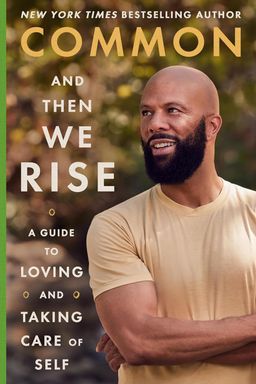
How do you rise when the world tries to weigh you down? In And Then We Rise, Common—artist, actor, and activist—invites readers on a transformative journey of self-love, wellness, and spiritual awakening. He contends that true revolution begins within. To love your community, you must first learn to love yourself. This is not self-love as vanity; it is self-love as discipline, healing, and connection to God. Common’s pursuit of wellness becomes a blueprint for living in alignment—with body, mind, and soul.
The book unfolds through four interconnected pillars: The Food, The Body, The Mind, and The Soul. Each one reflects a stage of elevation that mirrors John Coltrane’s album structure in A Love Supreme: Acknowledgment, Resolution, Pursuance, and Psalm. Common uses this metaphor to map the arc of self-growth, anchored by Black wisdom traditions, spiritual insight, and a deep respect for creative expression. Every act of nurturing self, he says, becomes a prayer of resistance.
From Art to Spiritual Practice
Common grew up in Chicago, surrounded by faith, rhythm, and community, but like many, he had to learn that wellness is not automatic—it’s cultivated. His transformation began not on a stage, but in the kitchen. Experimenting with food led him to reimagine health as love in action. Over time, he discovered that nutrition, exercise, creativity, therapy, and faith all converge as interconnected forms of care. His teachers—Dr. Tracey Rico (a holistic physician), Chef Lauren Von Der Pool (a “Queen of Green”), trainer Yancy Berry, therapist Susan Shilling, and Pastor Touré Roberts—become guides helping him strip away survival habits and move toward thriving wholeness.
At its heart, And Then We Rise argues that self-activism is the foundation of social activism. Healing yourself enables you to serve others without depleting your soul. As Common puts it, “There is no activism without self-activism.” Drawing from thinkers like Audre Lorde, Maya Angelou, and Angela Davis, he situates self-care as a revolutionary act—especially for Black people navigating systems of oppression that have historically demanded self-sacrifice without self-preservation.
The Structure of Inner Elevation
Each section of the book mirrors a spiritual arc. “The Food” explores the relationship between nourishment and purpose—how choosing greens over grease can literally change consciousness. “The Body” turns movement into meditation, showing how physical strength translates to emotional balance. “The Mind” dives into creativity, therapy, and mindset, revealing how expression and introspection sharpen self-understanding. Finally, “The Soul” binds these together through faith—a living connection to the Divine that fuels compassion, love, and endurance.
Common doesn’t preach perfection. He embraces vulnerability, sharing stories of slipping back into unhealthy habits, grieving his grandmother’s memory loss, and confronting emotional pain through therapy. But every misstep becomes part of the lesson—proof that rising is not about constant ascent, but about returning to your highest self each time you fall. His story shows how self-awareness, discipline, and faith converge to make wellness sustainable and soulful.
Why This Message Matters Now
In a world overwhelmed by violence, burnout, and relentless consumption, Common’s message is both timely and radical. He frames self-care as cultural healing, especially within Black communities that have carried generational trauma. His philosophy bridges the spiritual with the actionable: what we eat, how we move, what we think, and what we believe are all acts of divine intention. This isn’t escapism—it’s empowerment. By elevating the self, you elevate the collective. As Maya Angelou’s words echo in his epigraph, “Into a daybreak that’s wondrously clear, I rise.” And Then We Rise is Common’s invitation for you to do the same—one conscious, loving choice at a time.