
Idea 1
Love, Memory, and Democratic Power
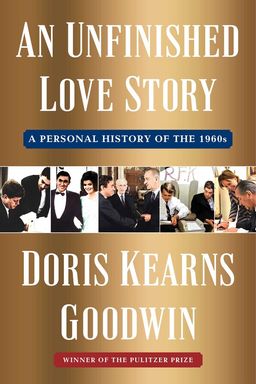
How do private love, public purpose, and the craft of language combine to bend history? In An Unfinished Love Story, Doris Kearns Goodwin argues that you cannot separate the moral and political drama of the 1960s from the intimate partnership that preserved, interpreted, and finally reconciled it. The book traces Richard N. Goodwin’s journey—from brilliant young lawyer to Kennedy aide, Latin America strategist, Great Society architect, and then antiwar insurgent—braided with Doris’s role as spouse, historian, and editor. Together, they turn a houseful of boxes into a talisman of memory, and you see how an inner life of trust, grief, and perseverance becomes a public archive of national consequence.
The core claim is simple yet radical: words can change the world, but they only become power when they travel through relationships—between partners, between presidents and advisers, and between a movement and the state. Goodwin’s pen helps launch the Peace Corps, the Alliance for Progress, and LBJ’s Great Society; his rhetoric helps carry the Civil Rights and Voting Rights Acts; later, his dissent helps break a presidency over Vietnam. You move from the exhilaration of creative governance to the heartbreak of 1968, and you end in a room where friends sing and stories flow as Dick dies, his life’s work safeguarded by the companion who shared it.
From private bond to public mission
You meet Doris and Dick in a five-hour talk at Harvard (1972) that becomes a 46-year collaboration—editing at the kitchen table, retreating to the Concord Library’s Reference Room, trading pages by noon and notes at lunch. Their household is a workshop: children, deadlines, a garage-turned-playroom, then a library refuge. That intimacy supplies the stamina you need to keep faith with long projects, including the late-life excavation of Dick’s boxes—diaries, drafts, memos from JFK and LBJ years—that they finally open together. (Note: unlike transactional accounts of power, Doris centers how affection sustains archival rigor and moral clarity.)
Words into policy—and back again
You watch Dick’s language move from typewriter to law: Sorensen’s tripartite campaign formula becomes Kennedy’s stump speeches; an off-script “New Frontier” riff becomes identity; a 2 a.m. challenge in Michigan catalyzes the Peace Corps; a Fish Room draft becomes the Alliance for Progress announcement at the White House and the Charter of Punta del Este. Later, a 20-minute Ann Arbor commencement becomes the moral frame of the “Great Society,” pared to three memorable Cs—Cities, Countryside, Classrooms. In crisis, a single day’s draft—“I speak tonight for the dignity of man and the destiny of democracy”—becomes LBJ’s “We Shall Overcome” address that helps carry the Voting Rights Act.
Movements, media, and the state
You learn how moral pressure and institutional craft meet. Television remakes politics in the Nixon–Kennedy debates; Birmingham’s hoses force the White House into moral voice; students in Ann Arbor make the Peace Corps irresistible; Dirksen’s pride becomes a bargaining chip to break a 73-day filibuster. Johnson builds a “factory” for law—secret task forces of doers and thinkers, paced messages to Congress, ritual dinners—to convert rhetoric into statutes. (Compare: FDR’s “brain trust” framed New Deal ethos; LBJ’s system engineered legislative throughput.)
The LBJ paradox and a year of trauma
You hold two truths: Johnson is the most effective domestic legislator of his age—civil rights, Medicare, HUD, Head Start—yet Vietnam corrodes trust, drains resources, and shatters his coalition. In 1968 you feel cascading shocks: McCarthy’s New Hampshire surge (crafted in part by Goodwin’s message discipline), LBJ’s March 31 withdrawal, King’s and Kennedy’s assassinations, and Chicago’s police violence that gifts the law-and-order frame to Nixon. (Note: the book’s verdict resists binaries; it resembles later historiography that rehabilitates aspects of LBJ even as it indicts the war.)
Memory as talisman and public trust
The boxes project heals and teaches: riffling drafts and memos softens Dick’s anger toward LBJ and refines Doris’s view of JFK, revealing how inspiration and implementation braided across the two presidencies. As illness arrives, community floods the Goodwins’ Great Room; music, cigars, and old friends convert dying into a civic ritual. Doris then donates thousands of books to the Concord Free Public Library and safeguards the boxes—turning private papers into a public good. You are reminded that history is a stewardship: who keeps the papers, tells the stories, and invites the next generation to learn.
The book’s wager
“We would often exchange pages in the late morning and then go over them at lunch.” That simple, domestic sentence captures a civic thesis: sustained love and careful craft are engines of democratic action.
In the pages ahead, you’ll see how a moral compass forms in youth and fieldwork; how phrases become programs; how movements and presidents co-author reform; how personality and process shape outcomes; how 1968 remade politics; and how memory, curated with tenderness, keeps a hazardous decade legible. Use it to design your own alliances, turn your ideas into practice, and remember that the archives you make today will teach someone tomorrow how to lead.