
Idea 1
Reclaiming Creativity for Its Own Sake
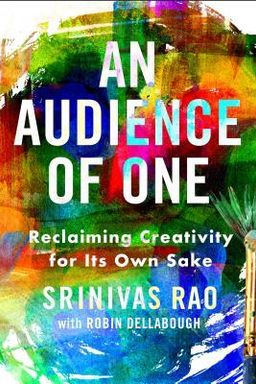
When was the last time you created something purely for the joy of it—without worrying about likes, profit, or recognition? In An Audience of One: Reclaiming Creativity for Its Own Sake, Srinivas Rao invites you to rediscover the sacred pleasure of creative self-expression that exists beyond external validation. He argues that modern culture has conditioned us to pursue creativity as a means to fame and fortune, not as an act of self-understanding or joy. Rao contends that genuine fulfillment comes only when you create for an audience of one—yourself—and that the paradox of creativity is that work made for self-expression often speaks most powerfully to others.
Through his experiences as a writer and host of the Unmistakable Creative podcast, Rao explores how listening—to oneself, to one’s environment, and to others—builds the foundation for authentic creativity. He blends psychological insight, real-life stories, and practical exercises to teach you how to cultivate creative habits, design supportive environments, and silence the noisy expectations of the world.
The Problem with Creating for Approval
Rao begins by describing a familiar trap: measuring creative worth by external metrics—followers, downloads, revenue, or acclaim. This, he says, suffocates originality and turns art into obligation. Just as David Bowie refused to play to the gallery, Rao calls you to resist tailoring your creativity to what sells or pleases others. The more you chase validation, the less creative freedom you feel, resulting in frustration and burnout. We tend to confuse product with process, success with satisfaction.
Instead, creativity for its own sake is the antidote to the anxiety caused by today’s perpetual comparison culture. By separating effort from result—something Rao learned after writing hundreds of thousands of words that few people saw—you tap into a sustainable source of joy. Like Daft Punk, who hid behind masks to keep their art authentic, creators who work without demanding attention produce more meaningful work.
Listening: The Heart of Creativity
Rao structures his book around listening as the mechanism for reclaiming creativity. Listening—to yourself, your environment, and others—awakens awareness and presence. Each type of listening corresponds to a distinct phase in a creative life: listening to creativity helps you reconnect with joy and process; listening to yourself builds intuition and trust; listening to your environment turns external conditions into inspiration; and listening to others fuels collaboration and learning without losing your voice.
In his podcast interviews with hundreds of artists and innovators, Rao observed one consistent truth: creative brilliance emerges when people stop trying to impress and start trying to express. Their art reflects a lifetime of listening and honoring what feels authentic rather than popular.
From Process to Fulfillment
The book’s central argument echoes the philosophy of psychologist Mihaly Csikszentmihalyi’s Flow: joy arises in the process of creation, not its outcome. Rao shows that a daily practice—writing, painting, cooking, coding—creates progress far beyond what sporadic bursts of genius can deliver. He emphasizes that mastery and meaning accrue through deliberate, consistent engagement. You can’t predict when inspiration will strike, but you can create conditions for it by committing to show up each day.
Creativity thus becomes a lifelong conversation with yourself. Every act of creation, Rao says, is a form of listening that reveals who you are becoming. When you create habitually, you build a living archive of your experiences, your body of work. Author Pamela Slim calls this “a portfolio of experiences that add meaning to your life.” In contrast to careers or titles, your body of work defines the legacy of what you’ve made, influenced, and shared.
Why This Matters Now
We live in an era that trades creativity for productivity. Rao argues that information overload has imprisoned creators in a loop of comparison, distraction, and performance. The world tells you to monetize every hobby, turn every side project into a brand, and optimize your art for SEO. This pressure erases play—the very soul of imaginative work. Drawing from Julia Cameron’s The Artist’s Way and his own struggles, Rao insists that reclaiming creativity isn’t about quitting your job; it’s about restoring curiosity as your compass, valuing private creation over public applause, and finding joy in the journey.
By building rituals that protect your creative space, designing environments that nourish concentration, and connecting with communities that encourage rather than compare, you can experience what Rao calls ikigai—the Japanese notion of having a reason to get up in the morning. Creativity becomes not just what you do but how you live. You learn to listen, to silence distractions, and to rediscover the thrill of bringing something new into existence. Ultimately, Rao assures you that when you create for yourself first, others will feel the authenticity and follow naturally. Art made for an audience of one resonates most deeply with the world.