
Idea 1
The Market Built Around Medicine
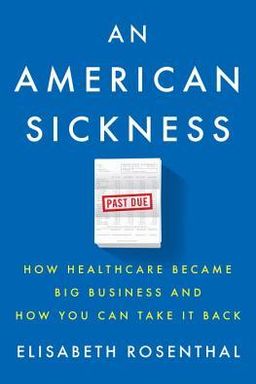
Why does American healthcare cost so much and feel so opaque? The book argues that it’s because medicine has evolved from a social service into a multi-layered market where every actor—from insurers to hospitals to device makers—competes not to lower prices but to capture payment flows. This transformation unfolded across decades, turning what began as charitable, patient-centered institutions into complex profit-seeking systems that thrive on opacity, scale, and distorted incentives.
From charity to commerce
In the early 20th century, hospitals like those run by nuns or civic boards existed primarily for healing and charity. Baylor University’s $6-a-year hospital plan for teachers and the first Blue Cross arrangements aimed to protect families from financial ruin, not enrich providers. But when employer-based insurance became the system’s backbone after World War II wage freezes and IRS tax-rule changes, coverage expanded—and price discipline vanished. Once money flowed through third-party payers, patients stopped seeing real prices, and hospitals, drug firms, and insurers learned to maximize revenue rather than reduce costs.
The insurer’s paradox
Insurers originally existed to protect against catastrophic losses. Over time, they became daily payment buffers—paying for routine visits, drugs, and tests. This insulation from direct pricing let providers inflate charges without pushback. When regulators, through the Affordable Care Act, required medical-loss ratios (forcing insurers to spend 80–85% of premiums on care), companies responded perversely: they allowed provider costs to rise since their fixed profit was a percentage of total spending. This mechanism explains why bills like Jeffrey Kivi’s $132,000 Remicade infusion are paid quietly, folded into premiums, and normalized.
Hospitals reinvented as revenue engines
Hospitals were once community pillars; now they operate like corporations. Providence Health’s transition from nuns to CFOs mirrors the national shift. Granite lobbies replaced wards, and finance departments began “optimization” through chargemasters and facility fees. Consultants taught executives to shift losses into reimbursable codes. Mergers and acquisitions gave big systems—Sutter, UPMC, HCA—monopoly leverage, enabling them to dictate prices. Nonprofit status persisted, but charity care often shrank to a symbolic percentage even as revenues soared. (Note: economists find that consolidation usually raises prices rather than improves efficiency.)
Physicians in the coding maze
Doctors appear independent but are enmeshed in the system. The Medicare-created RBRVS and RVUs system—shaped by the AMA’s RUC committee—rewards procedures over thoughtful diagnosis. Upcoding, productivity bonuses, and physician-owned surgery centers (ASCs) tie personal income to bill-generating behavior. Specialists profit more than primary care, pushing new doctors toward procedural fields. Patients encounter unseen contractors—pathologists, anesthesiologists, and radiologists—who bill separately, sometimes out-of-network, producing “surprise bills” like Lee Schaefer’s $10,000 neonatal add-on.
Pharmaceutical and device games
Drug pricing follows similar logic. Old medicines such as Asacol for ulcerative colitis reemerge as new brands (Delzicol, Asacol HD) after trivial tweaks that reset patents. The 1984 Hatch–Waxman Act intended to balance innovation and competition but instead invited “pay-for-delay” and “product hopping.” Devices like Stryker’s Rejuvenate hip or Edwards’s annuloplasty ring illustrate regulatory gaps: under the FDA’s 510(k) program, products gain approval by mirroring a predecessor—even if that predecessor was recalled. Each part of the system thus monetizes risk and confusion rather than clarity.
A market without price signals
Across these industries, the defining principle holds: when insurance guarantees payment, when hospitals control local monopolies, and when doctors’ incomes depend on billing codes, prices rise untethered to actual cost or value. For patients, that means every “discounted” bill reflects baked-in inflation. The Remicade infusion, the $772 vitamin D test, or the $300,000 cystic fibrosis drug Kalydeco—each reveals a price created not by science, but by market engineering.
What this means for you
This book’s unifying claim is that American healthcare isn’t irrational—it’s rational for the actors who profit from it. That logic explains everything from outpatient facility fees to venture-philanthropy investments. You live inside a market designed to capture payment, not efficiency. Recognizing that structure lets you act strategically: ask for itemized bills, check device safety, question formularies, shop for bundled prices, and join movements for transparency and antitrust enforcement. Reform begins with comprehension—and the courage to ask who benefits from every dollar you spend.