
Idea 1
From Great Refusal to Regime
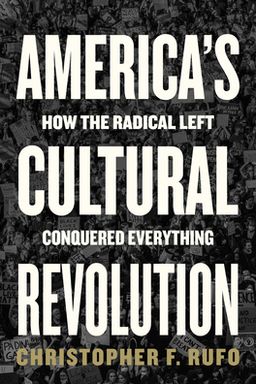
How do radical ideas become everyday rules in schools, offices, media, and government? This book argues that a fifty-year intellectual project—beginning with Herbert Marcuse’s revolt against the "one-dimensional" liberal-capitalist order—migrates from theory into pedagogy, then into law, and finally into administrative power. The result, you’re told, is a diffuse ideological regime that binds universities, media, state, and corporations through a shared language—systemic racism, equity, white privilege—and a machinery of compliance known broadly as DEI.
You watch a genealogy unfold: Marcuse reimagines revolution for affluent democracies and blesses a "liberating tolerance" that suppresses reactionary speech; Paulo Freire turns classrooms into workshops for political awakening; Derrick Bell translates racial pessimism into a legal movement—Critical Race Theory (CRT)—that centers identity and narrative over neutral principles. Their students and admirers then carry the program across institutions through the "long march," building departments, offices, trainings, and budgets that outlast street revolts.
Core proposition
Theory → pedagogy → law → administration becomes the conveyor belt that moves avant‑garde ideas into mainstream rules, enforced less by votes than by bureaucracies.
The Genealogy of Revolt
Marcuse’s One‑Dimensional Man, "Repressive Tolerance," and An Essay on Liberation recast Western affluence as "soft totalitarianism" that neutralizes dissent with consumer comforts. He proposes a new revolutionary subject—white intellectuals allied with urban marginalized groups—since the industrial proletariat is integrated into the system. His call for a "Great Refusal" legitimizes extra‑parliamentary action and selective intolerance of "reactionary" speech. In the 1960s–70s, this logic flows into the New Left, student uprisings, the Weather Underground, and black militancy. When bombs and assassinations fail, leaders pivot from streets to institutions (Rudi Dutschke’s "long march").
The Long March Mechanism
The decisive turn is strategic retreat into universities. Former militants and their sympathizers secure professorships, design new disciplines (ethnic studies, women’s studies, critical race studies), and reshape hiring, tenure, and curricula. Angela Davis embodies this arc—Panther‑adjacent celebrity turned tenured professor and architect of identity‑based scholarship. Over decades, the counterculture becomes counter‑institutions: humanities and social sciences adopt critical frameworks that prioritize identity and power analysis over older civic and canonical approaches. Administrative DEI offices emerge as enforcement arms.
Administration, Media, and Corporations
The book argues that the university’s lexicon radiates outward through generational turnover in newsrooms, sympathetic foundations, and federal agencies. Media uptake is visible in surging usage of terms like "systemic racism" and "white privilege" (e.g., New York Times style shifts). The state embeds these concepts via grants, mandates, and trainings—Treasury, EPA, CDC, DHS—while national labs (Sandia) experiment with white‑men caucuses. Corporations follow suit—Walmart’s "white supremacy system" training, Fortune 100 "racial equity" pledges—creating interlocking incentives that reward ideological conformity. (Note: the book frames this as decentralized coordination, not central command.)
Pedagogy as Political Formation
Paulo Freire’s Pedagogy of the Oppressed supplies the template: classrooms become sites of conscientização—moving students from "reading the world" to denunciation and action. In American districts (Tigard‑Tualatin, Beaverton, Portland, Seattle, Buffalo, Philadelphia), DEI offices operationalize this shift with identity trainings, protest‑themed lessons, and affinity structures. The book contends that the tradeoff is stark: political formation displaces core literacy and numeracy, with weak academic results despite large budgets. (Compare E.D. Hirsch’s knowledge‑rich model as an alternative emphasis.)
Stakes: Law, Policy, and Freedom
Derrick Bell’s "racial pessimism" and interest‑convergence thesis underwrite CRT’s legal and institutional moves, amplified by scholars like Kimberlé Crenshaw (intersectionality), Cheryl Harris ("whiteness as property"), and Mari Matsuda ("words that wound"). Policy endpoints cohere around three pillars: abolition of punitive institutions (police, prisons), redistribution through race‑conscious entitlements and reparations, and regulation of speech judged harmful, often channeled through DEI bureaucracies or proposals like Ibram Kendi’s Department of Anti‑Racism. The book warns these changes reengineer core constitutional norms—speech, due process, property.
Why This Matters to You
If you are a parent, educator, manager, or public official, the argument lands close to home. It claims your child’s lessons, your HR trainings, your news diet, and your city’s public‑safety debates reflect one lineage. The author closes by urging a counter‑revolution grounded in civic renewal: expose the bureaucracy of ideology, restore academic fundamentals, decentralize power, and re‑anchor institutions in liberal‑democratic principles of equal protection and free speech. (Parenthetical note: the book’s critics would argue it overstates coordination and understates persistent inequalities; the author’s rejoinder is that noble ends do not justify illiberal means.)