
Idea 1
Capital, Innovation, and the Making of America
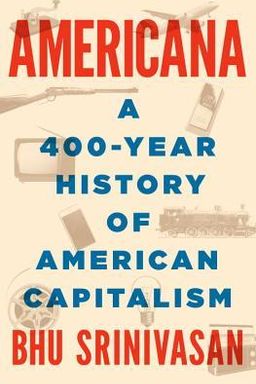
How can you understand America’s economic DNA—not as a straight path of innovation, but as a repeating cycle of capital, risk, infrastructure, and reinvention? This book traces that pattern from the Mayflower to the iPhone, showing how financing, technology, and social ambition combined to build a modern world. Its central claim is that entrepreneurship and capital were never separate from politics, faith, or morality: every breakthrough rested on a financial arrangement, every empire of innovation on a debt, a legal charter, or a social compromise.
Early Risk Capital: Faith Meets Finance
The Pilgrims’ voyage and the tobacco colonies embody the first American tensions between vision and calculation. The Mayflower venture was not pure idealism—it was financed like a modern start-up, with investors, shares, and exit horizons. In Virginia, tobacco created wealth but locked the colony into debt and dependence, illustrating how early capitalism oscillated between opportunity and constraint.
That early model—faith plus finance—established a template: Americans would fund big ideals with speculative money, then struggle over the moral consequences. (Note: this dynamic recurs from the railroad bubble to Silicon Valley.)
Infrastructure and Expansion: State, Technology, and Space
Steam, canals, railroads, and telegraphs unified what had been a scattered geography. The Erie Canal used public debt to prove that infrastructure could pay for itself through tolls; railroads privatized that model under limited-liability corporate charters. The telegraph, running alongside the rails, shortened not just distance but time itself, creating the first real-time economy and paving the way for Wall Street arbitrage, news networks, and nationwide markets.
These systems co-evolved with law: eminent domain, corporate charters, and patents. Government allowed private enterprise to extend its reach while retaining authority over right-of-way, signaling a recurring theme—public power enabling private innovation.
Commodities and Human Costs
As agriculture—first tobacco, then cotton—scaled up, financial instruments evolved to exploit people as capital. Slaves were bought, collateralized, and traded; slave mortgages financed plantations in the same way venture debt fuels start-ups. When Eli Whitney’s cotton gin multiplied output, it also multiplied human suffering, binding the South into a global supply chain that linked enslaved labor to British industry. The economic rationality of slavery—valuation, leverage, and speculation—reveals capitalism’s amoral core: profitability without conscience.
By the Gold Rush, speculation itself became national religion. Gold created liquidity and political fractures, just as the rush to California upset the national balance over slavery. The pattern held: a new commodity transformed credit and geography, then politics followed.
Industrialization and Corporate Scale
From Ford’s assembly line to Carnegie’s steel and Rockefeller’s oil, American inventors learned to industrialize repetition. Ford’s genius was process: turning work into sequences, training labor and management to think in systems. Andrew Carnegie and Thomas Edison extended that mentality to steel and electricity, proving that technical mastery required logistical and financial synchronization. Public backing, tariffs, and later antitrust laws adjusted the boundaries between innovation and abuse.
Industrial scale produced new contradictions—labor revolts at Homestead, yellow journalism defending or attacking corporate power, and muckrakers exposing unsafe food and fraudulent medicine. The state emerged as consumer guardian (Food and Drug Act, Meat Inspection Act), redefining citizenship in economic terms: you had a right not to be poisoned by the market.
Consumption, Credit, and Communication
In the late nineteenth century, department stores like Stewart’s and Wanamaker’s turned shopping into social performance, mail-order catalogs extended mass consumption into rural America, and women gained unseen economic power within households. The same era gave rise to mass media—Pulitzer’s populist papers, Hearst’s sensationalism—and an economy keyed to attention and advertising. You can trace a direct line from department-store display windows to Instagram feeds: visibility became value.
Credit and trust were tied to regulation through crises. The Crash of 1929 exposed fragile confidence; Roosevelt’s FDIC and SEC rebuilt it. In every crisis, a new institution stabilized capitalism’s excesses, ensuring survival rather than collapse.
Standardization and Globalization
The postwar era codified repetition itself as business model: McDonald’s perfected the replicable chain; highways and suburbs made it geographic reality. Retail moved from walkable Main Streets to drive-in discount boxes, and logistics replaced location as the heart of commerce. Mass replication also reached culture: television homogenized taste, brands like Nike globalized aspiration, and Apple redefined value around design and interface—"made in China, designed in California."a0Production went global, but profit stayed local, amplifying inequality and sparking new cultural debates about who owns creation and who bears its cost.
From Fairchild Semiconductor to Silicon Valley venture capital, the United States learned to institutionalize innovation itself: risk pools, fast exits, and equity culture. The Internet boom expanded the cycle yet again—open protocols became speculative gold, bubbles burst, survivors consolidated. Across centuries, the pattern endures: finance enables technology; technology transforms labor and consumption; society rewrites norms to catch up. That recursive rhythm—capital, crisis, reinvention—is America’s deepest engine.