
Idea 1
Jackson’s Transformation of American Power
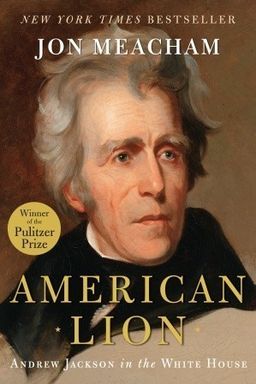
How can you understand a presidency that feels as personal as it is political? In American Lion, Jon Meacham argues that Andrew Jackson remade the presidency by uniting personal passion, democratic rhetoric, and institutional innovation. Jackson saw himself as the people’s guardian—a paternal figure defending both household and nation. His presidency, more than any before, fused family and authority, moral conviction and political control, emotion and strategy. The book offers not only a biography of Jackson but a study of how personal will reshapes public power.
You see this transformation unfold across crises: domestic scandals that redefine social structures, economic battles that recast federal authority, and constitutional showdowns that test the limits of democracy. Meacham presents Jackson as a man torn between tenderness and toughness—one who loved fiercely but governed ruthlessly. His devotion to Rachel and Emily Donelson, his anger over slander, and his defense of honor all translate into policy decisions. Once Jackson imagines the nation as his family, every political struggle becomes a moral one.
Family, Loyalty, and Leadership
From the White House table outward, Jackson builds power through intimacy. After Rachel’s death, the Donelson clan provides emotional and administrative support; his niece Emily hosts, his nephew Andrew manages correspondence. Political and domestic spheres blur. The Kitchen Cabinet—figures like Martin Van Buren, Amos Kendall, and Francis Preston Blair—becomes a surrogate family as much as a governing body. Loyalty is the connective tissue: Jackson rewards devotion, punishes betrayal, and sees friendship as policy. The Eaton Affair proves this fusion dramatic: a social slight becomes a Cabinet crisis, a loyalty test, and the origin of new political machinery.
The Rise of the Popular Executive
Jackson expands the meaning of presidency. Before him, presidents stood as custodians; after him, they lead. His rhetoric—that the president speaks for the whole people—anchors an enduring idea of executive representation. He wields vetoes not as constitutional brakes but as instruments of democratic choice. Meacham’s account of the Maysville Road and Bank vetoes shows Jackson defending national integrity against sectional and financial interests. By doing so, he defines an activist executive and gives later presidents—from Lincoln to Franklin Roosevelt—a model of popular legitimacy.
Conflict and Moral Paradox
Jackson’s vision carries contradictions. His paternal care for the Union coexists with paternalism toward Native Americans that ends in removal. He sees himself as protector even when that protection means coercion—the Indian Removal Act and subsequent treaties become moral and humanitarian crises. Likewise, his defense of national unity against nullification exposes tensions between liberty and authority. In his 1832 proclamation denouncing South Carolina’s nullification, Jackson’s language of family—Union as living bond—turns constitutional argument into moral finality. Yet each assertion of strength leaves wounds across the national fabric.
Democratic Spectacle and Machinery
Jackson changes how you experience politics itself. Barbecues, parades, newspapers, and conventions become the lifeblood of mass democracy. Meacham’s portraits of Blair’s Globe and Kendall’s patronage systems show a presidency that learns to communicate constantly—through print, through spectacle, through loyalty. Jackson’s Hickory Clubs create identity as much as ideology; his tours turn governance into performance. In that sense, the presidency becomes as visible as it is powerful.
Legacy and Reflection
By the end of Meacham’s narrative, Jackson stands as both founder and warning. He preserves the Union during nullification, asserts democracy during the Bank War, and builds a personal presidency that shapes every successor. He also leaves a shadow—Indian removal, suppression of abolitionist discourse, and authoritarian impulses that trouble later generations. Meacham does not ask you to praise or condemn him simply; he asks you to grasp how intimacy and conviction can produce both innovation and harm. Jackson’s story becomes a mirror for modern leadership: how belief, emotion, and loyalty drive decisions that define nations for centuries.
(Note: Historians differ on scope—Arthur Schlesinger Jr. highlighted Jacksonian democracy’s expansion; Robert Remini detailed the structure of his executive power; Meacham invites you into Jackson’s mind itself, to see how personal destiny turns into public institution. It is that fusion—person into presidency—that gives American Lion its enduring power.)