
Idea 1
The Rise of Republican Populism and Polarization
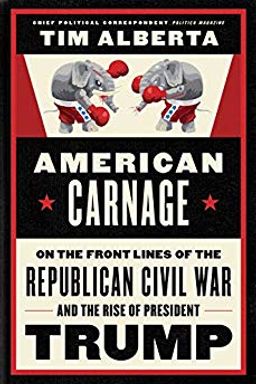
How can a political party transform from a platform of free-market optimism to one fueled by fear, nationalism, and rage? In The 2008 Primaries: Anti-Immigration Sentiment as a Republican Predictor, the author meticulously traces the Republican Party's metamorphosis from the Bush-era establishment to the populist movement that propelled Donald Trump to power. The book contends that the GOP's evolution was not sudden—it was the product of decades of social strain, economic dislocation, and cultural fear crystallizing around the language of resentment.
You’ll see how the fault lines that opened in the 2008 primaries—where immigration, rather than foreign wars or economic collapse, became the right’s defining issue—signaled the beginning of a nationalist wave inside the Republican base. The book argues that the anti-immigrant sentiment expressed by Republican voters wasn’t truly about border control or security, but rather a symptom of lost social status and economic despair. Beneath the slogans and chants lay a deeper story of America’s transformation from industrial power to fragmented service economy—and the deep sense of cultural dislocation that followed.
The Economic Collapse and Its Political Shockwaves
When the financial crash hit in 2008, Republican ideology entered crisis mode. George W. Bush’s $700 billion bailout—known as TARP—was a pragmatic attempt to prevent total collapse. But for many conservatives, it was an unforgivable betrayal of free-market principles. This divide marked the beginning of a populist rebellion within the GOP. Libertarian purists wanted markets to self-correct, while moderates feared social unrest. This ideological battle exposed a new anxiety: Was the Republican Party still conservative, or had it become indistinguishable from the big-government Democrats?
The author shows how this moral panic within the party birthed the grassroots anger that exploded into the Tea Party in 2009—a movement that blended libertarian rhetoric with cultural nationalism. Economic frustration merged with racial fear and anti-elitist sentiment, creating a combustible political identity that would reshape the right for years to come.
Race, Identity, and the Obama Catalyst
Barack Obama’s election was a historic milestone—and for the Republican right, an existential shock. The book details how Obama’s presidency became a mirror onto which conservatives projected their deepest anxieties about race, culture, and belonging. His moderate policies were recast as socialist overreach, and wild conspiracies about “death panels” and “illegal immigrants receiving healthcare” spread through right-wing media outlets. Through these reactions, the author reveals how the GOP’s rhetoric shifted from political criticism to cultural paranoia.
This was not merely ideological opposition—it was identity warfare. “Obamacare” became shorthand for an America that was changing too quickly, culturally and demographically. This psychological shift pulled the right further from Bush’s “compassionate conservatism” and deeper into zero-sum narratives of decline and victimhood.
The Tea Party as a Populist Engine
The Tea Party embodied the fusion of economic libertarianism and cultural conservatism. You’ll watch as wealthy backers like the Koch brothers tried to steer the movement toward fiscal issues—low taxes, deregulation, anti–public healthcare—while its base surged with rage over immigration and cultural change. This uneasy alliance between elite donors and local radicals created a new model of Republican activism: one where political energy was bottom-up, emotional, and anti-institutional.
The book argues that this dynamic laid the foundation for Trump. Like the Tea Party, his campaign blended economic populism with explicit cultural resentment. When Trump declared he would “make America great again,” he didn’t just reference policy—he invoked nostalgia for a social order that felt lost to many white, working-class Americans.
Trump’s Ascent and GOP Transformation
By 2016, Trump’s arrival shattered every remaining norm. He rejected free trade, ridiculed foreign interventions, praised autocrats, and weaponized grievance politics. Where previous Republican leaders had disguised xenophobia behind coded language, Trump shouted it from the podium. His campaign, as the author demonstrates through vivid examples, harnessed the same anxieties that fueled Romney’s 2008 opportunism and the Tea Party’s outrage—only now, unabashedly and strategically.
This culminated in a political realignment patterned along cultural lines rather than economic ideology. The book’s striking analogy—Cracker Barrel versus Whole Foods counties—illustrates the new American segregation: not just red versus blue, but rural versus urban, traditional versus modern. It paints a portrait of two nations living side by side and drifting inexorably apart.
The Polarization and Its Tragic Aftermath
In the final section, the author follows this cultural nightmare to its violent climax in Charlottesville, 2017. By then, Trump’s presidency had turned cultural division into governance. His “both sides” response to neo-Nazi violence captured the moral collapse of the party: Republicans, once built on economic conservatism, were now captive to racial nationalism and identity politics.
Core Argument
The book contends that the transformation of the Republican Party into a populist, nationalist movement was driven not by ideology alone but by deep social wounds—economic insecurity, racial tension, and cultural fragmentation—that politicians exploited to win power.
This work is both a diagnosis and a warning: showing you how populism thrives when the promise of prosperity collapses, and how identity politics can consume ideological principle. The author leaves us with one lingering question: once unleashed, can such a transformation ever be reversed?