
Idea 1
Lost Knowledge and the Story Hidden in Deep Time
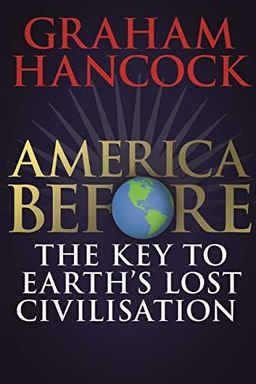
What if humanity’s story is older, richer, and repeatedly interrupted by catastrophe? In his sweeping exploration of archaeology, genetics, mythology, and astronomy, Graham Hancock argues that civilization is not a linear progression from primitive to advanced but a cyclical narrative punctuated by destruction and rebirth. He proposes that a highly sophisticated Ice Age civilization once thrived, that its knowledge survives as fragments—encoded in myth, sacred geometry, and ancient monuments—and that the Younger Dryas cataclysm (~12,800 years ago) erased most of its physical traces. You are asked to weigh evidence from geology, archaeology, and cultural symbolism to see whether consolidated science has been overlooking something essential about our origins.
Challenging Orthodoxy
Hancock opens by dismantling the once-dominant “Clovis First” model that placed the first Americans at 13,000 years ago. Sites like Monte Verde (Chile), Meadowcroft (Pennsylvania), Topper (South Carolina), and Bluefish Caves (Yukon) prove earlier human occupation, while the Cerutti Mastodon site in California—with possible human-modified bones 130,000 years old—blows open the timeline completely. This deep-time evidence redefines migration models: multiple waves, maritime routes, and even brief, ephemeral occupations are all plausible. The result is a portrait of early explorers who were neither few nor simple but the deeply connected ancestors of multiple lineages.
Genetic Revelations
Genomic research revolutionizes this picture. DNA from Denisova Cave exposed new branches of the human family: Denisovans, Neanderthals, and modern humans interbred repeatedly, leaving a complex genetic mosaic. The 24,000-year-old Siberian MA-1 skeleton shows Western Eurasian genes feeding into early Native Americans, while Amazonian tribes like the Surui carry an Australasian “Population Y” signal. Together these findings dissolve old migration models and invite the idea of an ancient transoceanic or circum-Pacific web of populations connecting the Old World and the Americas long before recorded history.
Cataclysm and Renewal
Around 12,800 years ago, the Younger Dryas Impact Hypothesis (YDIH) identifies a cometary bombardment that produced platinum anomalies, magnetic spherules, and global wildfire signatures in sediments. This event, recorded in North American “black mats” and Greenland ice cores, corresponds with abrupt climate cooling, megafaunal extinction, and the erasure of human cultures. For Hancock, this is the historical “reset” that could have wiped out an Ice Age civilization near the North American ice margins—a memory that resurfaced in myths of a lost homeland or flood.
Reconstructing the Forgotten Map
If survivors preserved fragments of their knowledge, where did they encode it? Hancock traces symbolic geometry, astronomical alignments, and sacred cosmologies across continents—from the Ohio Valley’s lunar earthworks to the Mississippi’s solar pyramids, from Amazonian geoglyphs to Andean megaliths, and from Egyptian pyramids to global myths of the sky-world beyond the Milky Way. He views these similarities not as coincidence but as inheritance—a shared “sky-ground religion” rooted in consciousness exploration, death rites, and cosmic order. Whether through monumental geometry or ayahuasca-induced visions, the same archetypes resurface: serpents, portals, ladders, and the Milky Way as the path of souls.
A Moral Dimension
This inquiry ends where it began—with ethical reflection. The same cosmic mechanisms that devastated the Ice Age still sweep through the solar system today: the Taurid meteoroid stream remains a real celestial threat. Hancock draws the moral from myth and science alike: arrogance, ecological exploitation, and neglect of cosmic hazards doomed our ancestors once and may do so again. The task before you, he insists, is not to romanticize a lost civilization but to recover its wisdom—its humility toward nature, its integrated worldview, and its respect for the heavens—before history repeats itself.