
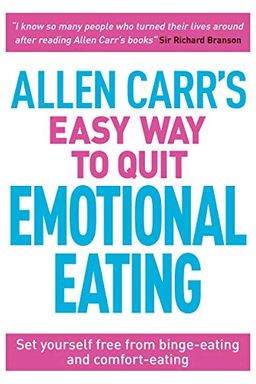
Allen Carr''s Easy Way to Quit Emotional Eating cover

Allen Carr''s Easy Way to Quit Emotional Eating

by Allen Carr

Allen Carr''s Easy Way to Quit Emotional Eating exposes the mental traps behind compulsive eating and offers a proven method to overcome them. By addressing psychological roots and reframing your mindset, it empowers you to break free from cravings and embrace a balanced relationship with food.

Freedom from Nicotine: The Mindset Behind Allen Carr’s Easy Way

Why do we cling to a habit we know is slowly destroying us? This is the haunting question at the core of Allen Carr’s Easy Way to Stop Smoking. Carr argues that smokers aren’t weak-willed or reckless—they’re trapped in a carefully constructed illusion built by nicotine addiction and cultural brainwashing. The key to freedom, he insists, isn’t discipline or misery, but insight. Once you understand how the illusion works, the desire to smoke dissolves.

Carr’s central contention is revolutionary in its simplicity: quitting smoking is easy once you realize there’s nothing to give up. The real battle isn’t physical but psychological. Our brains have been tricked into believing that smoking relieves stress, boredom, or tension. The moment we recognize that these beliefs are false, the cigarette loses its power. Through self-awareness, reframing, and a specific mindset shift, any smoker can walk away from nicotine without willpower or withdrawal agony.

Reframing Addiction as Illusion

Carr challenges every common assumption about smoking. Most smokers see cigarettes as stress relievers, social lubricants, or even as a comforting companion in tough times. But Carr dismantles this perception. He shows that the sense of relief after lighting up isn’t genuine calm—it’s merely the end of mild withdrawal symptoms created by nicotine itself. Smokers are like people scratching an itch caused by the very thing they keep applying. Once this cycle is exposed, the illusion collapses.

According to Carr, understanding this mental trap is the foundation for quitting. You don’t need patches, gum, or e-cigarettes—what you need is clarity. Like seeing a magician’s trick revealed, the moment you understand how the illusion works, its spell is broken forever.

The Two-Step “Easy Way” Method

Carr distills his philosophy into two deceptively simple steps: commit fully and rejoice. First, make a clear decision—this is your final cigarette; you are done. Second, instead of mourning the loss, celebrate the freedom. This reversal of perspective turns the entire quitting experience from one of deprivation to liberation. He warns against the typical phrases like “I’m giving up smoking,” which imply sacrifice. Instead, the right mindset is, “I’m done poisoning myself. I’m free.”

This idea aligns with modern behavioral and cognitive psychology, which shows that meaning-making and self-talk shape outcomes (similar to the insights in James Clear’s Atomic Habits or Carol Dweck’s Mindset). Carr was decades ahead of his time in identifying mindset, not chemical dependency, as the core of habit transformation.

Why Quitting Feels Hard—But Isn’t

Carr provides an empathetic but blunt explanation for why smokers find it difficult to stop. The problem isn’t nicotine itself—it leaves the body within a few days—but the mental association that smoking equals relief. Years of cultural cues, advertising, and personal reinforcement have etched this belief into the subconscious (which Carr calls the “Sleeping Partner”). The fear of discomfort, stress, and social pressure keeps the smoker trapped long after the drug is gone.

Carr’s Insight:

“Smokers don’t smoke because they want to; they smoke because they are afraid of what will happen if they don’t.”

His process reorients that fear. Once you see smoking for what it truly is—an expensive, health-destroying illusion—there’s nothing left to fear. By replacing dread with gratitude for your regained freedom, you no longer feel deprived. This is what makes it an easy way: it dismantles desire rather than fighting it.

The Journey Beyond the Last Cigarette

Carr doesn’t leave readers at the decision point; he prepares them for the days and weeks ahead. He reframes withdrawal not as suffering but as healing—proof that your body is clearing poison. When you experience cravings, it’s not the body begging for nicotine—it’s the fading echo of brainwashing losing hold. Rejoicing in that process turns discomfort into satisfaction. Within roughly three weeks, most people reach the “moment of revelation,” a spontaneous realization that they no longer crave cigarettes at all.

Carr ends with a broader call to compassion and advocacy. Once free, ex-smokers become living examples that quitting doesn’t require suffering—it requires understanding. He urges readers to share this truth, not by lecturing but by embodying calm confidence. The best proof that the Easy Way works is how relaxed ex-smokers feel around cigarettes—they pity smokers, not envy them.

Ultimately, Allen Carr transforms quitting from a grim act of willpower into a joyful act of liberation. He doesn’t just help people stop smoking; he dismantles one of the most pervasive psychological traps of modern life. The Easy Way isn’t about restraining yourself from pleasure—it’s about waking up from an illusion that there was ever pleasure to begin with.


Unmasking Nicotine Addiction

Allen Carr begins by redefining nicotine addiction as primarily psychological, not physical. Smokers believe the drug relaxes and comforts them, but nicotine’s actual physiological effect is minimal and short-lived. Within minutes of smoking, nicotine levels drop, producing mild restlessness—what smokers interpret as anxiety or stress. Lighting another cigarette relieves that restlessness, creating the illusion of calm. Thus, the gratification smokers feel is merely the temporary cessation of withdrawal discomfort caused by the previous cigarette.

A Trap Disguised as Relief

Carr likens nicotine to a sly parasite that convinces you its survival equals your comfort. Once nicotine embeds itself into your bloodstream, it constructs a cycle—withdrawal, relief, withdrawal again. The longer this loop continues, the more entrenched the psychological dependence becomes. Yet, as Carr emphasizes, the biochemical addiction fades quickly—usually within three weeks. What lingers is the conditioned belief that smoking is somehow necessary for coping with life’s stressors.

He illustrates this through everyday scenarios: the businessperson reaching for a cigarette before a tough call, the bored commuter lighting up at a bus stop, or the nervous student taking a cigarette break before an exam. Each act seems to bring relief, but in fact, it only resets mild withdrawal. Addiction isn’t sustained by nicotine’s strength—it’s sustained by your misunderstanding of it.

Acceptance as the First Step

Carr stresses that genuine change begins with acceptance. You must acknowledge that you are addicted—not weak, but deceived. This acceptance prevents you from underestimating the trap. Many “casual smokers” claim they can stop anytime, yet panic when cigarettes run out. By embracing the truth of addiction, you strip nicotine of its mystique and power. In Carr’s framework, denial sustains the dependence; clarity breaks it.

As he puts it, “Smokers are not weak—they are enslaved by a monster they can easily kill, once they see it for what it is.” Freedom, therefore, begins not with resistance but with recognition.


The Brainwashing Behind Smoking

If nicotine is the poison, then brainwashing is the delivery system. Carr dedicates significant attention to exposing how social, psychological, and cultural conditioning sustain smoking. From glamorous movie smoking scenes to seductive advertising campaigns, society has sold cigarettes as symbols of sophistication, rebellion, and confidence. Even parents or role models who smoke inadvertently legitimize the habit in the subconscious mind, or what Carr calls our “Sleeping Partner.”

The Role of the Sleeping Partner

Carr describes the subconscious mind as a silent accomplice. It absorbs repeated messages—smoking equals relaxation, maturity, or reward—and then subtly controls our impulses. The conscious mind may wish to quit, but the Sleeping Partner whispers convincing lies: that you’ll be miserable without it, or that “just one” won’t hurt. To overcome this, you must reprogram the subconscious through deliberate awareness. Every time you feel tempted, you remind yourself: “This feeling isn’t pleasure, it’s withdrawal.”

Carr compares this process to de-hypnotization. You remove years of false associations implanted by culture and habit. Once the illusion disappears—once you see smoking as filth, not fascination—the desire vanishes on its own.

The Cultural Hypnosis

From James Dean to glossy cigarette ads, cultural images have turned addiction into identity. Carr points out that even awareness campaigns can backfire, emphasizing how difficult quitting is instead of showing that freedom is natural. He insists that we must stop portraying smokers as helpless and start portraying them as misinformed—but capable of rapid recovery once the lies are unlearned.

By reframing smoking as deception rather than indulgence, Carr empowers the reader. You stop fighting against a craving and instead laugh at a con. Once you stop believing the lie, the con collapses—and so does the need to smoke.


Debunking the Myths That Keep You Smoking

Carr systematically dismantles the myths that form the backbone of smoking’s psychological hold. Each myth—such as cigarettes relieving stress, aiding concentration, combating boredom, or promoting relaxation—is exposed as a half-truth fueled by dependence. Through simple explanations and relatable stories, he proves that smoking makes every one of these problems worse, not better.

Stress and Relaxation

Many smokers, like Carr once was, believe cigarettes calm nerves. In truth, nicotine increases heart rate and tension. Carr describes the classic example of a businessman anxious before a call. The first puff seems soothing—but it’s only easing the irritation of mild withdrawal. The more he smokes, the more easily stressed he becomes. In short, smoking doesn’t relieve stress; it manufactures it.

Boredom, Concentration, and Confidence

Carr calls boredom “a frame of mind, not a symptom of nicotine deprivation.” In fact, cigarettes sap your energy, dull your focus, and amplify fatigue by reducing oxygen supply. As for concentration and confidence, these too are illusions. Non-smokers concentrate for hours without help; smokers lose focus when their nicotine level dips. Confidence that depends on poison, Carr argues, is counterfeit. True confidence begins when you no longer need a cigarette to feel composed.

The Myth of the Social Smoker

Perhaps the most powerful myth is that smoking is social. Carr highlights that smokers increasingly feel isolated—stepping outside at parties, hiding their habit, apologizing for the smell. Smoking, he concludes, isn’t sociable; it’s self-punishing. Once these illusions collapse, quitting ceases to feel like sacrifice—it becomes an act of self-respect.


The Frame of Mind That Makes Quitting Easy

Carr argues that quitting isn’t about resisting temptation—it’s about changing perspective. The Easy Way works because it shifts you from a deprivation mindset (“I miss smoking”) to a liberation mindset (“I’m thrilled to be free”). This single cognitive shift transforms quitters into non-smokers mentally before they’ve even stubbed out their last cigarette. As he phrases it, “The moment you decide to quit, you are already a non-smoker.”

Commit Without Caveats

Step one is commitment. Carr warns against half-measures like “cutting down” or “waiting for the right time.” Delaying equals feeding the monster longer. The nicotine monster—the internal voice of addiction—thrives on indecision. Your task is to commit absolutely: no more cigarettes, no substitutes, not even one puff. Each “just one” breathes life back into the monster.

Rejoice—Don’t Mourn

Once you make the decision, celebrate it. View quitting not as losing pleasure but as reclaiming control. Carr instructs readers to repeat phrases like “I’m free” or “It’s marvelous never to smoke again!” The repetition reinforces the subconscious that quitting equals gain, not loss. This principle echoes modern neuroplasticity research (as seen in Norman Doidge’s work) showing that mindset and repetition can rewire habits.

Embracing the Withdrawal Period

Carr reframes withdrawal as “the body healing.” The discomfort is minimal and primarily mental; recognizing this prevents relapse. During the three-week phase, he recommends rejoicing each day as progress. The discomfort, he says, “is not a punishment—it’s proof of your freedom.” Once this mindset is locked in, the process ceases to feel like endurance and becomes an affirmation of health and choice.


Avoiding the Pitfalls: Triggers, Substitutes, and Doubt

Carr anticipates the common pitfalls that make other methods fail. The major threats to success are substitutes, social pressure, and doubt. Each of these, he shows, stems from the same root: believing that smoking provided something valuable.

Substitutes: The Trap in Disguise

Nicotine patches, gum, and e-cigarettes reinforce addiction rather than cure it. They tell your brain that nicotine is still needed, prolonging dependency. Carr’s blunt assessment: “You can’t wean yourself off poison by taking smaller doses.” The only solution is zero nicotine and a clear mind. This insight separates Carr’s program from pharmaceutical or behavioral substitutes, focusing instead on full psychological release.

Just One Puff Syndrome

The idea of taking “just one cigarette” is the most dangerous relapse trigger. Carr compares it to taking one sip after years of alcoholism—it reawakens the chemical craving and the mental illusion simultaneously. Every relapse begins with permission for one puff. Avoiding this requires vigilance and conscious rejoicing whenever temptation arises—celebrate saying no as proof of mastery.

Confronting Doubt and Social Pressure

Carr identifies two main causes of failure: influence from others and having a bad day. Both test your mindset. At parties, when friends light up, remind yourself that they’re trapped where you used to be. On stressful days, remember that smoking never solved a problem—it only paused your awareness of it. Each moment of doubt is not a weakness but a mirror: do you still believe smoking helps? If not, there’s nothing to crave.

Carr’s closing advice is practical: discard cigarettes entirely, face social events confidently, and never wait for a perfect time. Freedom isn’t future tense—it’s the moment you stop believing you’ve lost anything.


The Moment of Revelation and Life After Smoking

Carr describes the climax of his method as the “moment of revelation.” This is the sudden realization, often within three weeks, that you are free—and you no longer desire smoking. It’s not something you can force or schedule. It happens when your mindset has fully shifted from deprivation to celebration.

Recognizing the Revelation

Most ex-smokers experience a spontaneous moment: they pass a smoker, smell the smoke, and feel… nothing. Or even better, they feel pity rather than envy. This emotional neutrality is the ultimate proof that nicotine’s illusion has dissolved. The relief isn’t chemical—it’s existential, a sense of peace knowing you’ve reclaimed autonomy from a force that once dictated your behavior.

Helping Others Escape

Carr then turns the focus outward. Once you are free, he argues, you have a moral opportunity to help others still trapped. But rather than proselytizing, show empathy and quiet confidence. By embodying the Easy Way’s calm and joy, you inspire others to believe freedom is possible. He cautions non-smokers not to judge or pressure smokers—peer shaming reinforces guilt, which fuels the addiction cycle. Instead, compassion and example work far better.

Lasting Vigilance

Carr closes with a “final warning”: never assume you can have one cigarette. Addiction’s door reopens instantly. True freedom isn’t fragile, but it requires respect. Like maintaining sobriety or mindfulness, staying free relies on awareness and gratitude—not fear. As long as you remember that smoking offers nothing, temptation loses all power.

In the end, Carr’s Easy Way isn’t only about quitting smoking—it’s about breaking the deepest psychological pattern of self-deception. The same clarity that ends nicotine addiction can illuminate any habit fueled by illusion. You don’t fight the craving; you outgrow it.

Dig Deeper

Get personalized prompts to apply these lessons to your life and deepen your understanding.

Go Deeper

Get the Full Experience

Download Insight Books for AI-powered reflections, quizzes, and more.