
Idea 1
Unmasking Evil: Race, Identity, and Moral Awakening in *All the Sinners Bleed*
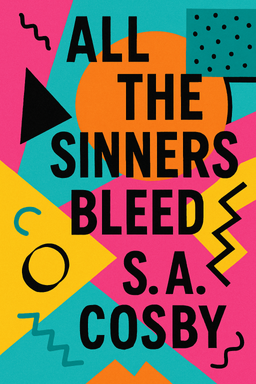
What happens when a man tasked with upholding justice must confront the darkness within his own community—and within himself? In *All the Sinners Bleed*, S.A. Cosby explores this haunting question through the story of Titus Crown, the first Black sheriff in Virginia’s Charon County. A year into his tenure, Titus faces an unimaginable crime that shatters not just lives, but the fragile illusions binding his county together: a school shooting that leads to uncovering a serial killer who operated for years under everyone’s noses.
Cosby’s novel isn’t just a crime thriller—it’s a raw meditation on race, morality, justice, and redemption. He contends that evil rarely hides behind monsters; it wears familiar faces and uses the masks of respectability, faith, and patriotism to conceal its rot. For Titus, a man who represents both law and progress in a deeply divided southern county, the journey is as spiritual as it is procedural. In pursuing an external killer, he must also face his inner ghosts: guilt from his days at the FBI, unhealed grief from his mother’s death, and the impossible responsibility of being a bridge between Black and white communities in a place steeped in racist history.
The Fragile Balance Between Good and Evil
The book opens with violence—a school shooting perpetrated by a young Black man, Latrell Macdonald, who is gunned down by Titus’s own deputies. Latrell’s final words suggest coercion and hidden guilt: he did terrible things under threat to his younger brother. From that moment, Titus is drawn into a moral labyrinth where the lines between victim and villain blur. The investigation unveils the horrific crimes of Jeff Spearman, a beloved white schoolteacher who was secretly a pedophile and serial killer. The revelation shakes Charon County to its core, challenging the racist assumptions many citizens hold about innocence and evil.
Cosby uses this discovery to force readers—and Titus—to examine how communities construct their myths of morality. The white townspeople refuse to believe Spearman capable of sin, while Black residents, represented by Pastor Jamal Addison, see Titus as a betrayer who must choose sides. But Titus refuses to play to either narrative; for him, the truth lies not in allegiance but in confronting the full ugliness of human nature.
Masks, Secrets, and the Faces We Show
Throughout the novel, masks serve as both literal and metaphorical symbols. The killers wear leather wolf masks while committing their crimes, but Titus recognizes that everyone in Charon County wears a mask—himself included. He changes his speech patterns depending on who he’s addressing, switching between his ‘country voice’ and his ‘sheriff voice.’ This duality echoes sociologist W.E.B. Du Bois’s concept of “double consciousness”—the tension of viewing oneself through both personal integrity and the distorted lens of racial expectation.
Cosby connects these layers of deception to the broader theme of identity. Titus’s struggle to belong—to both enforce justice and embody fairness—mirrors the very contradictions of Charon County itself: a place that celebrates its Confederate past while pretending not to see the rot beneath its traditions. When Titus later topples the town’s Confederate statue in the closing scene, that act symbolizes the breaking of masks—his final rejection of false idols and acceptance of moral complexity.
A Mirror to America’s Shadows
Cosby situates the novel’s violence within America’s ongoing racial reckoning. Titus must confront the hypocrisy of a county that calls him “our sheriff” while still treating him as an outsider. His dual identity—Black man and lawman—becomes a metaphor for living in a country where justice is aspirational but never impartial. The book echoes themes from works like James Baldwin’s *The Fire Next Time* and Toni Morrison’s *Beloved*, which challenge readers to recognize that progress requires unflinching confrontation with collective guilt.
At its heart, *All the Sinners Bleed* tells you that justice is not a clean binary. It demands reckoning with the unbearable truths we hide—from others and from ourselves. Whether it’s Titus’s FBI secret, the town’s historical racism, or the hidden atrocities beneath the willow tree, every revelation cuts closer to the truth that moral purity is a fantasy. What matters is acknowledgment, accountability, and the courage to act, even when no side feels safe.
Why These Themes Matter
Cosby’s story forces you to question how much of your identity is shaped by other people’s expectations—and how often justice is constrained by the masks society forces you to wear. If you’ve ever felt the pressure to be the ‘right kind’ of person in the eyes of others, Titus’s journey will resonate deeply. His courage lies not in perfection but in persistence—the refusal to stay silent, even when truth scorches everything around him.
Ultimately, *All the Sinners Bleed* argues that redemption does not come from denying evil but by naming it. Titus Crown’s story reminds us that healing—whether personal or communal—begins when we stop pretending the past is clean and start facing what still festers in the dark.