
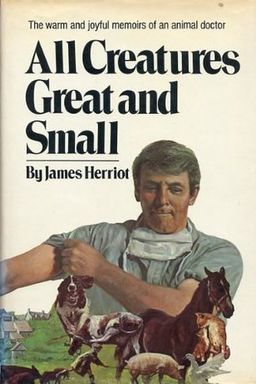
All Creatures Great and Small cover

All Creatures Great and Small

by James Herriot

All Creatures Great and Small offers a charming, semi-autobiographical tale of James Herriot''s early veterinary career in 1930s England. Filled with humor, warmth, and vivid storytelling, it celebrates the bond between humans and animals, the joy of community, and the personal growth that comes from unexpected challenges.

The Heart and Humor of a Yorkshire Vet

Have you ever wondered what it's like to live your calling, even when it means being knee-deep in mud—or worse? In All Creatures Great and Small, James Herriot (the pen name of Alf Wight) invites you into the practical, hilarious, and deeply human world of a rural veterinarian in the Yorkshire Dales of the 1930s. Herriot’s narrative isn’t just about animals—it’s about people, relationships, and the courage it takes to live meaningfully through both joy and hardship.

Herriot contends that veterinary life is far more than medical knowledge. It’s a calling that requires resilience, humor, empathy, and an acceptance of imperfection—qualities anyone pursuing a vocation can relate to. Through the countless episodes he recounts, Herriot shows how life’s most quietly profound moments often arise in barns, farms, or even in the company of a spoiled dog named Tricki Woo.

A Life Among the Dales

The Yorkshire Dales become a character of their own—a rugged, beautiful backdrop that mirrors the toughness and warmth of its people. Herriot arrives as an anxious young graduate, unsure whether he belongs in this rough but charming world. Through scenes of births, deaths, and laughter, he learns that being a good vet—and a good person—depends as much on heart as on skill. His first encounters with Siegfried Farnon, his mercurial employer, and the eccentric townsfolk set the tone: nothing in this world is predictable, but it is all vividly alive.

The Practice of Compassion

Herriot’s barn-side adventures showcase both the physical reality and emotional gravity of veterinary work. When he struggles in a freezing barn to save a calf, it’s not only a test of endurance; it’s a testament to perseverance against odds. The calf’s revival is a metaphor for the small miracles that make life worth living. The same compassion that drives Herriot to save livestock also carries into his quiet service to elderly pet owners like Mr. Dean, whose love for his dog runs deeper than words.

Humor as Human Resilience

Herriot’s work is often thankless and exhausting, but his humor keeps despair at bay. Scenes with Siegfried’s irreverent brother Tristan, or with the wealthy and naive Mrs. Pumphrey and her overindulged Pekingese Tricki Woo, highlight how laughter serves as a coping mechanism. Even amidst chaos and absurdity, Herriot maintains a sense of wonder, reminding you that joy coexists with fatigue in any life of service.

Love, Growth, and Belonging

Threaded through the humorous and heartbreaking episodes is Herriot’s evolving relationship with Helen Alderson. Their courtship, filled with awkward dates, muddy roads, and genuine affection, parallels Herriot’s growth from insecurity to contentment. By the time he marries Helen, it’s clear that the Dales have claimed not just his livelihood but his heart. The bond between man, community, and nature is complete.

Across these intertwined stories, Herriot’s memoir becomes a reflection on vocation, empathy, and the grace found in simplicity. It reminds you that life, at its most meaningful, isn’t glamorous—it’s a patchwork of kindness, mistakes, laughter, and small triumphs. Whether you’re healing animals or navigating your own daily struggles, Herriot’s world offers a reassuring truth: love, humor, and dedication can make even the coldest Yorkshire night feel warm.


A New Beginning in the Dales

When James Herriot steps off the bus into the rolling green hills of Yorkshire, he’s not stepping into a glamorous dream job—he’s entering a world that will test every assumption he’s made about what it means to practice medicine and live well. As a newly qualified vet in the 1930s, opportunities are scarce and the pay modest, but the Dales offer something rarer: purpose and belonging.

An Unexpected First Impression

From the moment Herriot meets Siegfried Farnon at the ivy-draped Skeldale House, nothing goes as expected. He anticipates a stern or eccentric boss, but instead finds a mix of brilliance and baffling inconsistency. Farnon is as kind as he is exasperating, often changing his mind mid-sentence. Yet, there’s a warmth beneath the bluster that hints at the deep friendship to come. Herriot’s introduction to rural clients—farmers with thick dialects, strong opinions, and deep skepticism—also teaches him that his university knowledge means little if he cannot earn their trust.

Learning on the Job

Herriot’s initiation is fast and messy. His first patient, a lame horse, becomes a test of both skill and nerve. With Siegfried watching, Herriot diagnoses and treats the animal’s infected hoof correctly—earning tentative respect. But his next challenge, being knocked headlong into a dung channel by a cow, reminds him that veterinary life is equal parts humility and humor. As he gains experience, he learns that success in this field requires adaptability more than precision. The countryside teaches him through trial and error what textbooks could not: patience, intuition, and perseverance.

By the end of those early days, when Siegfried casually offers him four pounds a week plus board, Herriot realizes that the work may be unpredictable and rough, but it offers the priceless reward of meaning. The Dales, once a temporary stop, begin to feel like home.


The Grueling Majesty of Veterinary Work

Veterinary practice in rural Yorkshire is not for the faint-hearted. Herriot’s vivid recounting of the freezing barn where he battles to deliver a calf makes you almost feel the numbing cold and the strain of the cow’s contractions around his arm. The scene captures both the brutality and the beauty of his calling—the intersection of nature’s indifference and human compassion.

A Test of Endurance

Herriot’s work in that icy barn shows his resilience. With the farmer’s anxious family watching and an interfering uncle comparing him unfavorably to ‘Broomfield,’ Herriot faces both physical exhaustion and public pressure. Every failed attempt chips away at his confidence. Yet, his persistence prevails, and when the calf is finally born—seemingly lifeless—Herriot refuses to quit. His patience and intuition lead to a miracle of revival. This moment, humble but profound, becomes one of his favorites throughout his career.

The Ethics of Care

That scene crystallizes Herriot’s philosophy: success isn’t measured by ease but by integrity. Whether he’s helping a poor farmer or attending to a beloved house pet, his empathy never fluctuates. In later stories, from the dying old dog Bob to the pampered Tricki Woo, Herriot’s moral compass remains steady. Compassion isn’t selective; it’s universal. He respects every creature simply for being alive.

Through such moments, Herriot reveals that true vocation isn’t glamorous—it’s demanding, unpredictable, and often goes unnoticed. But in the quiet satisfaction of reviving life, even for a moment, lies the heart of the human spirit.


Tricki Woo and the Comedy of Class

If the Yorkshire barns show Herriot’s grit, Barlby Grange shows his gift for humor. Mrs. Pumphrey and her adored, overfed Pekingese, Tricki Woo, provide some of the most memorable comic relief in Herriot’s world. Their relationship is both absurd and endearing, highlighting class divides with good-natured wit.

The Cult of Comfort

Mrs. Pumphrey’s indulgence of Tricki—feeding him rich cakes, giving him sherry, and writing ‘thank-you’ letters under his name—reflects the excesses of the upper class. Yet, Herriot never mocks her cruelty; his satire is affectionate, not scornful. In contrast to his muddy farm calls, these visits offer him warmth, luxury, and plenty of comic respite. Tricki’s illnesses, the result of excess rather than hardship, contrast beautifully with the farm animals’ struggles for survival.

Laughter as Connection

Herriot learns that humor bridges divides. His professional visits to Barlby Grange blur into friendship through shared absurdity. The gifts he receives ‘from Tricki’—boxes of kippers and tins of tobacco—symbolize mutual fondness, if not delusion. Years later, when Tricki is hospitalized and rehabilitated through genuine exercise and routine, it’s as if both he and his owner rediscover authentic joy beyond pretense. Herriot’s wry storytelling reminds you that sometimes, the most humane thing we can do is to laugh together.

In these episodes, Herriot’s humor becomes moral insight: compassion and comedy are twin tools that help him survive the chaos of life and the contradictions of class.


Eccentric Colleagues and Country Chaos

The Skeldale House isn’t just Herriot’s workplace—it’s a living, breathing comedic ensemble. Between Siegfried’s mercurial moods and Tristan’s mischief, the household embodies the constant tension between ideals and reality. Working with them teaches Herriot that wisdom often wears the mask of chaos.

Siegfried and the Pursuit of Perfection

Siegfried Farnon is brilliant, compassionate, and hopelessly inconsistent. One moment he scolds Herriot for being wasteful with drugs, the next he does exactly the same thing himself. Yet beneath his contradictions lies depth—a man driven by genuine moral purpose and love for his community. His contradictions serve as life lessons: self-belief doesn’t require perfection, only integrity.

Tristan and the Art of Levity

Tristan, Siegfried’s younger brother, balances the seriousness of veterinary work with irreverent humor. Perpetually failing exams and getting ‘sacked’ by his brother only to be rehired, he represents youthful resilience and playfulness. Herriot’s interactions with him mirror a core message: work is vital, but laughter makes it bearable. In modern workplace terms, Tristan would be the team’s morale officer—the one who reminds you to breathe.

Together, Siegfried and Tristan teach Herriot two sides of the same coin: take your duties seriously, but never take yourself too seriously. The dynamic trio transforms Skeldale House into a microcosm of human nature—flawed, funny, and unshakably kind.


Love and Life Beyond the Practice

Amid births, deaths, and endless muddy drives, Herriot finds something unexpected: love. His relationship with Helen Alderson, the capable young farmer’s daughter, becomes a story of patience, humility, and quiet perseverance. Their love grows organically, rooted in shared values rather than dramatic romance.

Love Born of Shared Ground

Their courtship begins awkwardly, full of mishaps like a dinner outing that turns into a fiasco when the dance they expect doesn’t exist. But these experiences reveal Helen’s humor and grounded resilience. She isn’t impressed by charm but by sincerity. Herriot’s bumbling yet honest demeanor wins her heart slowly, mirroring the rhythm of rural life itself—steady, deliberate, real.

Finding a Home

After missteps and misunderstandings, Herriot seeks her out again, finally proposing with Siegfried’s encouragement. Their marriage isn’t portrayed as an ending but a continuation—a partnership within the greater fabric of the Dales. In loving Helen, Herriot also learns to love Yorkshire more deeply. Their union represents what the book celebrates most: a life rich not in glamour, but in grace.

Through their story, Herriot reminds you that love—like healing an animal or braving a cold night—demands patience, persistence, and a spirit that never gives up.

Dig Deeper

Get personalized prompts to apply these lessons to your life and deepen your understanding.

Go Deeper

Get the Full Experience

Download Insight Books for AI-powered reflections, quizzes, and more.