
Idea 1
Living at the Intersection of Blackness and Queerness
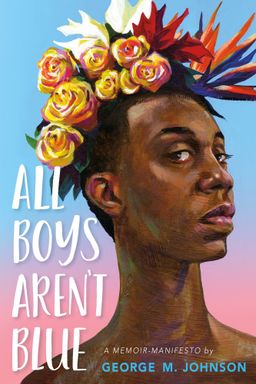
When you think about who you are, how many boxes do you check to describe yourself? In All Boys Aren’t Blue, George M. Johnson invites you to question those boxes altogether. The memoir-manifesto intertwines queerness, Blackness, masculinity, and survival, exploring what it means to grow up in America when the world insists you must hide parts of yourself to remain safe. Johnson contends that self-definition is the most radical act of empowerment, especially for those who live at the intersection of multiple marginalized identities.
This story isn’t just about discovering sexual identity—it’s about reclaiming agency over every layer of self. Through personal memories ranging from childhood in Plainfield, New Jersey, to college years and early activism, Johnson reveals how systemic oppression, family, and culture shape identity. He wants you to see how being both Black and queer is not an anomaly or contradiction, but a full, intertwined truth. His lessons become a blueprint for living out loud in one’s entirety, embracing heritage, sexuality, and humanity simultaneously.
Identity as a Political Act
Johnson declares that identity cannot be divorced from politics. Growing up, he was told to suppress his feminine traits and fit society’s mold of a respectable Black boy. But through his reflections, he uncovers that both race and sexuality are politicized identities—their very existence challenges norms built to preserve white, heteronormative dominance. To openly claim and celebrate one’s queer Black identity becomes a revolutionary stance. His memoir turns into a manifesto precisely because it demands recognition of lived experiences that history often erases.
Family as Healing and Foundation
A critical theme in Johnson’s narrative is family—his grandmother Nanny, his mother, his brothers, and cousins form the emotional backbone of his life. Despite societal homophobia, his family rooted him in love and resilience. Nanny raises him with fierce compassion, teaching survival and self-worth through everyday lessons. His family’s acceptance becomes a counter-narrative to the tragedy so often associated with queer coming-of-age stories. Yet Johnson also shows how generational fear and respectability politics lead some relatives to silence or misunderstanding. Through this tension, he explores how Black families carry both wounds and possibilities for liberation.
The Power of Storytelling
Storytelling, for Johnson, is activism. He frames his life as art and resistance—sharing stories of childhood trauma, first love, sexuality, and loss not to shock but to affirm that these experiences deserve space in literature. He draws on Toni Morrison’s call to write the book that hasn’t been written yet, crafting a narrative that allows queer Black youth to see themselves authentically. The truth-telling is intentional, ranging from the softness of family care to the violence of homophobia. His words remind you that power lies in visibility; writing becomes an act of survival.
Why This Matters to You
Johnson’s memoir challenges everyone—queer, straight, Black, white—to reimagine empathy and identity. It invites you to ask who gets to tell their story, who gets to be seen, and who is still silenced. In confronting his own trauma and transformation, Johnson builds bridges across experiences. He shares not only how hate, silence, and systemic oppression wound but also how love and storytelling heal. What you glean from his journey isn’t simply how to accept yourself—it’s how to help construct a world that makes room for everyone to be whole.