
Idea 1
Alibaba’s Journey: From Humble Beginnings to Global Disruptor
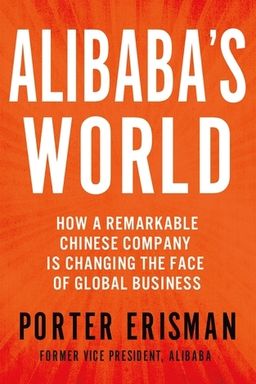
What does it really take to turn a dream into a world-changing enterprise? Alibaba’s World by Porter Erisman invites you to travel inside one of the most remarkable transformations in business history—the rise of Jack Ma and a scrappy group of friends who built Alibaba from a small apartment in Hangzhou into a global e-commerce powerhouse. Erisman, an American who joined the company in its early days, tells this story from the inside, capturing both its chaotic energy and enduring wisdom. The book isn’t just about one company’s triumph; it’s a study in vision, leadership, culture, and resilience.
Erisman argues that Alibaba’s success wasn’t about having the best technology, the most money, or the smartest executives—it was about harnessing human belief, grit, and a distinctly Chinese approach to business in an age that demanded imagination. Jack Ma’s journey challenges the myth that only Silicon Valley can innovate, showing instead how emerging markets can skip the incremental steps of the West and leapfrog into the future. For entrepreneurs, leaders, or anyone chasing a dream against the odds, Alibaba’s World is both a case study and a manifesto.
The Power of a Visionary—Jack Ma’s Story
The story begins with a question that shaped Jack Ma’s life: “Why not me?” Born into poverty during China’s Cultural Revolution, ridiculed for his looks, and twice rejected from college, Ma learned to rely on creativity rather than credentials. His early days as an English teacher, talking with tourists around West Lake, opened his eyes to the world beyond China. When he first saw the Internet in the mid-1990s, typing “beer” into a search engine and discovering that China had no online presence, he saw his mission crystalize—to connect China’s small businesses to the world through the web.
From those humble roots, Alibaba became far more than a technology play. It was a social experiment—a bet on ordinary people’s ability to dream big. Erisman portrays Ma not as a tech genius but as a relentless teacher and storyteller who used parables, martial arts metaphors, and moral vision to keep his team united when money ran out. While Western entrepreneurs worshiped numbers and scale, Jack championed character, values, and persistence. “We will win because we are young and never give up,” he told his early employees—and they believed him.
The Chinese Context: Leapfrogging Development
Erisman introduces readers to the concept of China’s “great leapfrog”—a nation catapulting from an underdeveloped economy to a digital powerhouse without passing through the same stages as the West. Just as China skipped landlines and jumped straight into mobile phones, Alibaba helped millions of businesses skip traditional retail and jump into e-commerce. This story defies the stereotype that China only imitates others. In fact, Alibaba’s ecosystem—combining retail, financing, logistics, and entertainment—became a model now studied by companies like Amazon, PayPal, and Google.
As Erisman points out, China’s messy, unregulated markets provided both the greatest challenges and the greatest opportunities. When Western observers dismissed e-commerce in China because of its lack of credit cards or logistics, Jack saw an opportunity to innovate from the ground up. Through services like AliPay (a trusted escrow system) and Taobao (a marketplace where customer service included real-time chat), Alibaba didn’t just adapt to China’s environment—it reshaped it.
Leadership through Chaos
At its heart, Alibaba’s rise is a parable about leadership under uncertainty. Erisman paints vivid scenes of the company’s early chaos—no org charts, no clear roles, and barely enough electricity to keep computers running. Yet out of this disarray came a team culture deeply committed to Jack’s dream. The leaders who survived Alibaba’s early years weren’t the slick MBAs from multinationals but the scrappy believers who could thrive amid uncertainty. Erisman likens their philosophy to Taoism: move with the flow, adapt to change, and treat crisis as both danger and opportunity.
Jack’s favorite sayings—“Today is tough, tomorrow is tougher, but the day after tomorrow is beautiful” and “Be as fast as a rabbit but patient as a turtle”—capture this paradox. The company’s DNA blended lightning-fast execution with marathon endurance. This mindset helped Alibaba outlast the Internet bubble, survive a scandal, and defeat corporate giants like eBay who underestimated local competition.
A Global Mirror: What Alibaba Teaches the World
Erisman closes the book by arguing that Alibaba’s rise signals a power shift in global business. For decades, innovation flowed from West to East; now, the current is reversing. Entrepreneurs from Lagos to Mumbai study Alibaba’s model to create their own digital ecosystems. The book challenges Western assumptions about expertise, showing that values like humility, adaptability, and perseverance can outmatch even the most sophisticated systems. As Alibaba’s IPO in 2014 became the largest in history, Jack Ma told CNBC his favorite character was Forrest Gump: “No matter what changes, you stay you.”
In the end, Alibaba’s World isn’t just about business success. It’s about the human capacity for reinvention. Erisman invites you to see in Alibaba’s story your own battles with doubt, failure, and the audacity to dream bigger than anyone expects. This isn’t a tale reserved for tech visionaries—it’s a reminder that in any market, era, or life, extraordinary change begins when ordinary people decide not to quit.