
Idea 1
Alexander and the Invention of Global Kingship
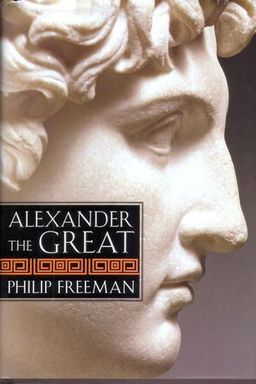
How does one man change the shape of three continents? In this book’s tapestry of war, politics, and cultural transformation, you discover how Alexander of Macedon converts his father’s local revolution into a global system of conquest and governance. The core argument is that the Macedonian experiment—from Philip’s institutional engineering to Alexander’s ambition—creates the first prototype of world kingship: a ruler who blends military innovation with mythic self-fashioning to bind diverse peoples under one command.
The Inheritance of Revolution
You cannot understand Alexander without first seeing what Philip built. In a single generation, Philip II remakes a mountain kingdom into a disciplined state. He invents a new army—the sarissa phalanx—where long pikes and light armor replace traditional Greek hoplites, and he fuses infantry with cavalry in coordinated maneuvers. He also discovers the power of fiscal and diplomatic engineering: gold from Crenides (Philippi) funds a professional force, and marriage alliances knit neighboring tribes into a network of clients. By the time Alexander inherits power, Macedonia possesses not just soldiers but an integrated system of logistics, politics, and propaganda.
Education and Character Formation
Raised amid discipline and philosophy, Alexander combines battlefield toughness with intellectual curiosity. Aristotle’s tutelage at Mieza gives him habits of observation: studying medicine, animals, and geography. Leonidas and Lysimachus train him to endure hardship and imagine heroism through Homeric myth. The Bucephalas episode—where the boy masters a horse by noticing its fear of shadows—becomes emblematic: observation, insight, and control replace brute force. From early governance at sixteen to his fascination with Achilles and the Iliad, Alexander grows into a commander whose pursuit of kleos (glory) fuels a life's ambition beyond limits.
From Crisis to Command
Philip’s assassination at Vergina creates chaos, but Alexander’s response is surgical. He secures the army, eliminates rivals like Attalus, and moves swiftly against Greek rebellion. By razing Thebes and sparing Athens, he demonstrates calibrated ruthless pragmatism. The League of Corinth becomes his instrument of legitimacy—transforming a Macedonian kingship into a Panhellenic crusade against Persia. This moment defines his leadership style: immediate military credibility joined with political theater.
War as Innovation and Transformation
As campaigns unfold from Granicus to Gaugamela, Alexander refines Philip’s military system into a global instrument. He uses speed, surprise, and logistics as weapons—engineer corps build roads, pontoon bridges, and siege mounds while cavalry and phalanx combine in unprecedented synchronization. At Tyre, the seven‑month mole project proves that persistence and engineering replace luck. At Gaugamela, audacious flanking maneuvers win against impossible odds. You see audacity as planning: he bets empire on timing and geometry, not numbers.
Conquest and Governance
Victory brings new dilemmas: how to rule conquered peoples. Alexander evolves from warrior to administrator—reinstating Ada in Caria, letting Persian satraps retain office, and founding Alexandrias to anchor control. He becomes master of cultural fusion: Egyptian coronation at Memphis, divine consultation at Siwa, and tolerance toward Darius’ captured family show how religion and magnanimity serve politics. His empire becomes an administrative hybrid—Greek civic institutions intertwined with Persian bureaucracy.
Cultural Fusion and Crisis
You then watch ambition turn inward. Adopting Persian robes and rituals, Alexander tests his court’s loyalty and cultural patience. The proskynesis controversy, Philotas’ execution, and Cleitus’ murder reveal how integration collides with Macedonian pride. The Susa mass weddings and the training of eastern youths are visionary attempts at cross‑cultural elite formation—but they ignite backlash. The Opis rebellion exposes the flaw: his soldiers admire conquest but resist transformation.
Limits of Expansion
In India, ambition meets geography. At Hydaspes, storms, elephants, and the defiance of Porus teach adaptation, while the mutiny at Hyphasis reveals morale as a physical boundary. Nearchus’ coastal voyage extends vision into maritime logistics. Yet by the Gedrosian march, exhaustion and nature reduce triumph to tragedy—speed and surprise no longer suffice against desert and flood. Alexander’s endurance becomes a lesson in the price of relentless ambition.
Death and Legacy
Alexander’s death in Babylon in 323 B.C. fractures the empire. Generals like Ptolemy and Seleucus partition realms, but his experiment endures culturally. Greek cities flourish across Asia; Hellenistic art and learning merge with eastern traditions. His legacy is double-edged: the diffusion of civilization entwined with violence and instability. You sense the paradox—heroic vision spawns hybrid cultures and imperial wars alike.
Core Insight
Alexander does not merely conquer; he invents a model of dynamic empire where culture, speed, and charisma substitute for bureaucracy. His life demonstrates how vision can create unity and chaos at once—the blueprint for world leadership and its inescapable fragility.