
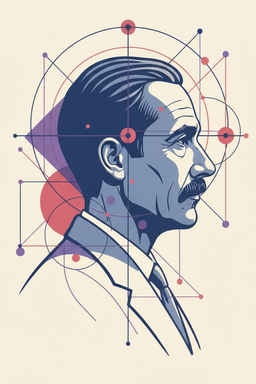
Idea 1
Living with the Absurd: Camus’s Philosophy of Existence
Have you ever faced a moment when life itself seemed strangely hollow—when the routines of work, love, or ambition suddenly felt meaningless? Albert Camus built his entire philosophy around that haunting question. In his novels and essays—most famously The Outsider and The Myth of Sisyphus—Camus argues that life has no inherent meaning. We are thrown into an indifferent universe, and yet we continue to search for purpose as if the cosmos owed us an explanation. His answer? Not resignation or despair, but courageous acceptance and passionate living. Camus invites you to recognize life’s absurdity and still find reasons to go on.
Camus’s philosophy is grounded in what he calls the absurd—the tension between our longing for meaning and the silent void of the world. When we realize that no divine plan or universal logic explains our existence, we face the fundamental question: if life has no meaning, why live at all? His essay The Myth of Sisyphus begins with an unflinchingly direct statement: 'There is but one truly serious philosophical problem, and that is suicide.' But instead of endorsing despair, Camus insists that the very recognition of absurdity gives us a new liberty. Once you admit there isn’t a cosmic script to follow, you are free to invent one yourself.
Rejecting Nihilism
Unlike other thinkers of existential crisis—such as Nietzsche’s call to will new values or Sartre’s insistence on radical freedom—Camus remains firmly humanistic. He rejects nihilism and religious consolation alike. For him, both faith and philosophical despair are ways of escaping reality. Instead, his goal is to live 'lucidly'—to stay awake to the absurd, to know that your efforts will likely be forgotten, but to live and love anyway. This paradoxical rebellion lies at the heart of Camus’s thought: you find dignity not by escaping absurdity but by confronting and embracing it.
The Outsider and the Shock of Indifference
Camus’s ideas come alive through his fiction. The Outsider introduces Meursault, a man who feels no connection to others or to the world’s moral codes. When he casually kills a man on a beach and later shows no remorse, society condemns him not just for the act but for his indifference. Camus explained, 'Meursault doesn’t play the game: he refuses to lie. He says what he is, he refuses to hide his feelings, and immediately society feels threatened.' Meursault’s honesty exposes how much of life is performance, how deeply society depends on shared illusions. His alienation reflects what sociologist Émile Durkheim called anomie: a breakdown of shared values and meaning.
Meursault’s story isn’t about cruelty; it’s about lucidity. He sees through the false comforts of religion, sentimentality, and moral conformity. He embodies what Camus considered heroic: someone who faces the bleakness of life without pretending it’s otherwise. When Meursault declares that he would like his execution to be greeted 'with cries of hatred,' he accepts the universe’s indifference absolutely. That chilling honesty, Camus believed, is the beginning of freedom.
The Philosophy of Revolt
What happens after you accept life’s absurdity? For Camus, the next step is revolt, not resignation. In The Myth of Sisyphus, he turns to the Greek myth of Sisyphus, condemned to roll a boulder uphill only to watch it roll back down for eternity. Sisyphus’s plight mirrors ours: endless effort with no ultimate result. Yet Camus ends his essay with a startling statement, 'One must imagine Sisyphus happy.' That simple line captures his philosophy of endurance. Meaning doesn’t come from cosmic order—it comes from the defiant act of living fully despite knowing there is no final purpose.
Camus’s revolt is an active engagement with life: he calls it a 'lucid invitation to live and create, in the very midst of the desert.' Whether through art, love, or simple pleasure, human beings can affirm life even when reason tells them it’s meaningless. The act of creation becomes our rebellion. Living passionately and ethically, despite futility, becomes our gesture of freedom.
Finding Joy in the Ordinary
Camus’s defiance doesn’t just take philosophical form—it becomes sensual and joyful. His writings celebrate sunlight, friendships, sport, and the Mediterranean sea. In works like 'Summer in Algiers,' he praises 'the warmth of the water and the brown bodies of women,' reclaiming the simple beauty of physical life after centuries of asceticism. For Camus, the body itself is an argument for life. Every swim, every dance, every breath of summer air is a small rebellion against despair. He famously said, 'If there is a sin against life, it consists perhaps not so much in despairing of life as in hoping for another life and in eluding the implacable grandeur of this life.'
This sensual humanism set him apart from many of his contemporaries. He was, in his own way, a philosopher of joy. His appeal lies not in grand metaphysics but in inviting you to notice what still makes life worth living even after illusions have fallen away—the taste of coffee, the feeling of sun on skin, the companionship of others, the moral integrity of fair play on a football field.
Why Camus Still Matters
Camus speaks directly to a tension most people experience today. In a world stripped of religious certainty and saturated with distraction, we can feel both free and lost. His philosophy gives that condition a name—absurdity—and a response—lucid revolt. You don’t need to believe in eternal meaning to live well. You can accept the universe’s blank indifference and still choose laughter, love, and courage. That is Camus’s enduring challenge: live fully, even when life makes no sense. In doing so, you transform absurdity from a curse into an opportunity—to embrace existence for its own sake, fiercely and beautifully.