
Idea 1
The Interlocking Oppressions of Race, Gender, and Class
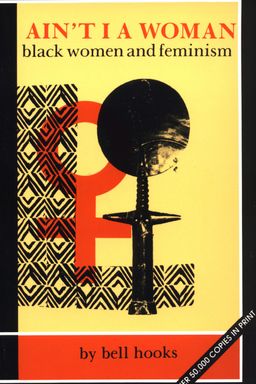
What happens when society refuses to see you clearly—when your identity as both Black and female makes you invisible in conversations about race and gender alike? In Ain’t I a Woman: Black Women and Feminism, bell hooks answers this question with a searing exploration of how racism and sexism have intersected to marginalize Black women for centuries. She argues that Black women’s experiences cannot be understood by looking at race or gender alone; rather, the two are inseparable forces that have produced a unique and often overlooked form of oppression.
Hooks contends that U.S. society, rooted in white supremacist patriarchy, devalued Black womanhood from the earliest days of slavery onward. Black women’s bodies were both exploited for labor and sexual control and vilified as undeserving of protection or respect. Even within abolitionist and feminist movements, they found themselves erased or exploited: white feminists focused on their own oppression while Black male activists often reproduced patriarchal structures within liberation movements. Hooks compels readers to recognize that this marginalization wasn’t accidental—it was systemic, a byproduct of racist capitalism designed to divide and dehumanize.
The Legacy of Slavery
To understand why Black women’s experiences have been silenced, hooks looks back to slavery. During this period, both racism and sexism were institutionalized. Patriarchy taught white men to see women as inferior, while racial ideology defined Black people as subhuman. Black women, occupying both categories, were marked as doubly degraded and therefore exploited both economically and sexually. They worked in the fields, were denied basic femininity, and became victims of systemic rape—a form of control designed to strip them of autonomy and agency. Enslaved women’s strength in survival became a stereotype later twisted against them: white America would praise their resilience only to deny their suffering.
Internal Divisions and Isolation
Hooks further explores how both Black and white movements failed to address Black women’s needs. In the Black liberation movement, women were often told to be supportive and silent so that Black men could "reclaim their manhood." In the feminist movement, white women often erased racial difference, using the term “woman” to mean only white and middle-class women. As a result, Black women were alienated from both movements—forced to choose between racial loyalty and gender solidarity. This forced duality, hooks argues, continues to shape how Black women experience political and social life today.
Why This Matters Now
Hooks’s insights remain profoundly relevant. She calls for a redefinition of feminism as a movement for the liberation of all people, not just white women seeking equality with white men. Genuine liberation, she says, requires confronting the imperialism of patriarchy and acknowledging how capitalism, racism, and sexism are intertwined. Her work asks each reader to examine the myths they’ve inherited about femininity, strength, and race—and to see that the struggle for justice can’t be selective. If one link in the chain is broken, she insists, the whole chain fails.