
Idea 1
Ambition and Control in Modern China
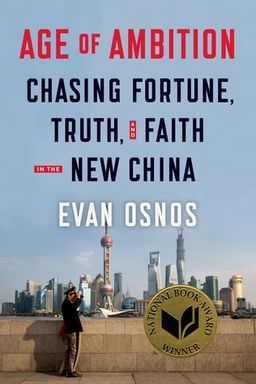
What happens when a society unleashes unstoppable ambition inside an unyielding system of control? In Age of Ambition, Evan Osnos traces how China’s explosive rise since the late 1970s intertwines prosperity, censorship, pride, and search for meaning. The book’s core argument is that China’s transformation produces a new contradiction: the freedom to pursue dreams of wealth and education alongside a rigid political boundary that limits speech and civic participation.
Economic liberalization without political freedom
Reform begins with Deng Xiaoping’s bargain—“Let some people get rich first.” Markets open, entrepreneurship flourishes, and ambition spreads faster than any ideology could contain it. Yet political pluralism remains frozen. Deng’s formula gives the Communist Party legitimacy through prosperity, not revolution. Millions migrate from countryside to factory towns; figures like Lin Yifu and Gong Haiyan embody mobility from obscurity to success. But beneath the economic surge lies a managed system—the hukou restrictions, selective censorship, and Party oversight—that reminds citizens how far aspiration can go before hitting invisible limits.
The culture of aspiration
Material success breeds new psychological hunger. Consumption becomes self-expression, with English fluency, designer goods, and foreign schooling as marks of arrival. Li Yang’s “Crazy English” movement and phenomena like Harvard Girl capture how ambition turns inward—remaking identity rather than just income. You buy smartphones and Ivy League coaching not only to gain skills, but to declare your personal worth. The market sells identity, and you willingly buy it.
Information control and the Internet paradox
As the web expands, so does censorship. The Central Propaganda Department evolves from issuing ideological slogans to managing data flow. The “Great Firewall” blocks dissent, yet online space breeds both criticism and nationalism—the fen qing (“angry youth”) defending China against foreign slights. Videos like Tang Jie’s viral 2008 montage show how citizens, not the state, can manufacture patriotism. You discover that technology amplifies both rebellion and loyalty, making control messier and more diffuse.
Dissent and truth-seeking
Artists and intellectuals become the conscience of the age. Ai Weiwei, Hu Shuli, and Han Han each bend creative tools toward social critique—art installations, investigative journalism, and satire. Liu Xiaobo and Charter 08 mark the hard edge of dissent, punished by imprisonment and censorship. When Liu wins the Nobel Peace Prize, his empty chair symbolizes the cost of truth-telling. The state’s choreography of silence—black screens, banned search terms—shows how tightly narrative control is linked to legitimacy.
The new public sphere
Meanwhile, citizens forge alternative public life through Weibo and viral outrage. The Little Yueyue video forces moral reckoning; Chen Guangcheng’s sunglasses campaign transforms isolation into national empathy. Protest patterns shift toward modest symbolic acts rather than mass revolutions—"strolling protests" or shared hashtags. The government adapts with legal crackdowns and online paid commentators. Public space becomes a negotiation over visibility.
Inequality and spiritual longing
As wealth divides, the moral dimension returns. The Ant Tribes and diaosi youths struggle with stagnation and humiliation amid soaring housing costs. Religion and philosophy—Christianity, Buddhism, Confucianism, and civic ethics—reemerge to fill the “spiritual void.” Figures like Reverend Jin Mingri in Beijing’s Zion Church and scholars like Li Ling and Michael Sandel offer frameworks beyond material gain. Faith and thought become refuges from the exhaustion of ambition.
Core takeaway
China’s story is no longer just about growth—it’s about meaning. Economic miracle meets moral reckoning; ambition becomes both empowerment and strain. The Party’s enduring challenge is not managing GDP, but managing desire: a people who have learned to dream, speak, and seek truth faster than their politics evolve.
As you move through the book, keep one image in mind—the “birdcage economy.” The bird inside is free enough to fly, but only within the cage. The size of the cage—and who gets to stretch it—defines China’s modern drama of ambition and control.