
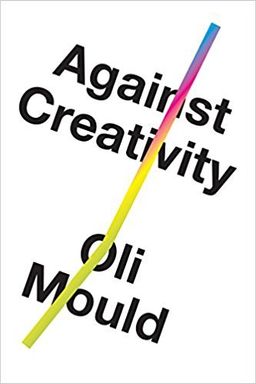
Against Creativity cover

Against Creativity

by Oli Mould

Against Creativity by Oli Mould critiques the modern obsession with creativity, revealing its entanglement with capitalism and exploitation. This thought-provoking book urges readers to embrace genuine innovation that transcends profit-driven motives and champions diverse human experiences, inspiring a transformative approach to creativity.

Creativity as Capitalism’s Greatest Myth

Have you ever been told to “be more creative” — at work, in school, or even in your personal life — as if creativity were the magic key to success? In Against Creativity, geographer and cultural critic Oli Mould argues that this mantra, so ubiquitous in modern culture, hides something sinister. Far from being a liberating force, creativity has been hijacked by capitalism, privatized, and weaponized against us. What once meant the human power to imagine new worlds now means the ability to make profit from the old one.

Mould’s thesis is bold: the contemporary cult of creativity—celebrated by governments, corporations, and entrepreneurs alike—has become capitalism’s favorite disguise. Creativity is no longer about revolutionary imagination, about conjuring something impossible or alternative. It’s become, as Mould points out, a system of “producing more of the same.” And by convincing us that creativity is inherently good and universally accessible, capitalism has closed off our collective imagination to anything truly transformative.

From Divine Gift to Marketable Skill

To understand how this happened, Mould traces the history of creativity itself. In ancient times, creation was divine—the realm of gods shaping the universe. During the Enlightenment, humans claimed that creative power for themselves: the craftsman, scientist, and artist became icons of progress. But as industrial capitalism matured, creativity was commodified. Art became a luxury product, the artist a ‘genius’ serving wealthy patrons rather than the collective community. The Industrial Revolution and later the rise of mass media consolidated this separation between ‘high art’ and popular culture, privatizing creativity as a class-bound skill.

By the late 20th century, creativity was fully repackaged as an economic resource. When Britain’s Labour government under Tony Blair launched the concept of the creative industries in 1997, it turned art, design, media, and culture into economic sectors to stimulate growth. Now every job—from nursing to fast-food service—was recast as “creative work.” The result, Mould argues, is a culture where creativity’s meaning is hollowed out. Being creative no longer means imagining something outside capitalism; it means improving capitalism’s efficiency.

How Capitalism Captured Creativity

Mould borrows from theorists like Marx, Foucault, and Deleuze to describe how capitalism’s creativity co-opts dissent. Any force that threatens it—be it progressive art, countercultural movements, or political protest—is absorbed, branded, and sold back to us. When Pepsi released its infamous 2017 advertisement featuring Kendall Jenner “solving” police brutality with a soda can, it wasn’t an anomaly; it was capitalism’s logic on display. Rebellion itself becomes just another market aesthetic.

This process mirrors what Luc Boltanski and Ève Chiapello call “the new spirit of capitalism”: the system’s uncanny ability to absorb critique. Capitalism seduces dissent by offering fame, comfort, or “creative freedom.” The result is a society where we mistake performative individuality for true creation and where “being creative” means adjusting within constraints rather than breaking them. Creativity, once a force for emancipation, now sustains the very inequalities it once sought to overcome.

Why This Matters Now

Mould’s argument matters because it exposes the moral stakes behind a word that seems harmless. When governments tell teachers, nurses, or factory workers to “be more creative,” they often mean “do more with less.” When tech companies celebrate “innovation,” they often mean new ways to extract value or data. When cities rebrand themselves as “creative hubs,” they often displace the poor and reward real estate speculators. Creativity has become a moral obligation—an imperative to continually reinvent ourselves for economic gain.

Yet Mould doesn’t reject creativity itself. Instead, he argues for rescuing it from capitalism’s grip. True creativity, he insists, must once again be collective, resistant, and radically imaginative—it must allow us to think impossible thoughts, not merely profitable ones. As he writes in the book’s closing metaphor, inspired by Lewis Carroll’s White Queen, we must “practice believing impossible things before breakfast.”

The Map of the Argument

Across five thematic chapters and a sweeping conclusion, Mould explores how creativity manifests across society:

  • Work: How neoliberalism turns flexibility into precarity, replacing stable labor with the myth of the “creative worker.”
  • People: How marginalized and diffabled bodies—those society disables—reveal the real potential for creative ways of being.
  • Politics: How austerity and spectacle replace genuine democratic creativity with media manipulation and reality-TV politics.
  • Technology: How algorithms, big data, and the sharing economy create an illusion of participation while deepening collective exploitation.
  • The City: How gentrification masquerades as “creative placemaking,” erasing communal life for sanitized cultural branding.

Each sphere of life—work, body, politics, technology, and city—has been colonized by a rhetoric of creativity. But Mould insists that within each, alternatives still flicker: cooperative labor networks, radical disability movements, community activism, hacker ethics, and art-based resistance. They represent what he calls the “impossible” creativity that still fights to exist outside market logic.

Ultimately, Against Creativity challenges you to see beyond creativity’s capitalist costume. It asks whether the world’s most celebrated virtue has become its most effective weapon of conformity—and whether you might rediscover creativity’s radical power in the collective, the marginal, and the impossible.


Work: The Precarious Myth of Creativity

One of Mould’s sharpest interventions is his critique of what he calls “relentless creativity” at work. Inspired by the open-plan offices of places like BBC’s MediaCityUK and the seductive rhetoric of Silicon Valley, modern workplaces sell us the illusion of freedom. Bright colors, beanbags, and foosball tables promise collaboration—but as Mould discovers, they often mask heightened competition and surveillance. One BBC manager even told him that creative workers are “like peacocks” who must constantly show off to survive. The result? A culture where performance replaces purpose and visibility replaces value.

The Rise of the Creative Class

Much of this culture traces back to the urban theorist Richard Florida, whose 2002 book The Rise of the Creative Class transformed economic policy worldwide. Florida claimed that creativity is the engine of prosperity, and that cities and businesses must attract the “creative class”—tech workers, artists, designers, scientists. For him, everyone can be creative, but only some turn it into wealth. This seductive argument led governments to chase “creative” industries as solutions to economic decline.

Yet Mould exposes the contradictions: Florida’s creative class remains overwhelmingly white, male, and privileged; it thrives on gentrification and inequality. Meanwhile, other workers—from nurses to sandwich makers—are told to “creatify” their roles without gaining better pay or security. A nurse job ad in Liverpool even asked applicants to be “highly creative.” Creativity has become a moral demand rather than a reward, enforcing overwork while disguising austerity as innovation.

Flexibility as Exploitation

In the name of agility, corporations have dismantled labor protections. Mould shows how “agile” management—supposedly empowering workers—really means control disguised as freedom. Freelancers face unstable incomes, academics juggle multiple contracts, and creative workers compete for exposure instead of wages. The “freedom” of working anywhere, anytime, becomes permanent precarity. As sociologist Douglas Spencer notes, capitalism now merges living and working so totally that leisure itself becomes labor.

Even our homes have been colonized. Remote work blurs domestic and professional life, turning bedrooms into offices and family time into unpaid labor. Mould calls this “domicide”—the destruction of home as sanctuary. He provocatively compares it to earlier acts of displacement, showing how neoliberalism privatizes not only space but time and emotion too.

Against Antisocial Creativity

Mould drives home the point with the story of the UK’s National Health Service. When hospitals are told to be “flexible” and “creative,” what that really means is: save money at any cost. After debt-inducing privatization schemes, hospitals cut staff and care while demanding “innovation.” Creativity here is antisocial—it erodes collective labor and treats patients as customers. Yet within this harsh system, Mould finds a kernel of “true creative work”: doctors and nurses who collaborate beyond profit, embodying communal rather than commercial creativity.

True Creative Work

In resistance, Mould highlights global examples of cooperative work models—the recuperadas (worker-reclaimed factories) in Argentina, the Mondragon co-operative university in Spain, community cafés in Manchester. These collectives flatten hierarchies, democratize management, and redefine success as mutual care rather than growth. He calls this autogestion—workers mastering their own conditions of existence. In such spaces, creativity reclaims its collective soul, producing social value instead of shareholder returns.

When Florida urges everyone to “unleash their inner entrepreneur,” Mould replies that we must “release our inner revolutionary.” Work, he insists, will remain exploitative until creativity is used not to boost profit but to imagine entirely new ways of working—egalitarian, cooperative, and truly human.


People: Learning from the Margins

In Against Creativity, Mould turns from workplaces to bodies. If capitalism celebrates only certain kinds of creativity—the white, male, able-bodied innovator—it simultaneously silences others. The chapter “Marginal Creativity” flips this hierarchy, suggesting that those deemed ‘disabled,’ ‘different,’ or ‘unproductive’ may in fact model the most radical creativity of all. Through their distinct ways of perceiving the world, they expose capitalism’s narrow definition of the human.

Lizzie Magie and the Stolen Idea

Mould opens with the forgotten story of Lizzie Magie, creator of The Landlord’s Game (1903), designed to teach Henry George’s anti-monopolist tax ideas. Her game was later plagiarized by Charles Darrow and sold as Monopoly, turning a feminist socialist critique into a celebration of capitalist victory. For Mould, this reversal reveals the mechanisms of creative appropriation: the erasure of marginal creators, especially women, by systems built to reward profit over ethics. Creativity, he says, has always been gendered and classed.

Neoliberal Individuality vs. True Connection

Building on theorist Arthur Koestler’s notion of “bisociation” (the meeting of two frames of reference), Mould argues that real creativity comes from unexpected connections—between bodies, ideas, and experiences. Neoliberalism, however, turns these collisions inward. It teaches you to look only to your “inner entrepreneur,” cutting off the social relations that make invention possible. This atomization privileges the already powerful and turns creative failure into personal fault rather than structural critique.

Diffability: Creativity Beyond the ‘Normal’ Body

Mould’s most radical proposition is his concept of diffability—the idea that disabled or neurodivergent bodies don’t lack ability but express different capacities for knowing and sensing the world. A blind architect like Chris Downey experiences the city through smell, sound, and sunlight, offering urban insights sighted designers overlook. Deaf culture creates spaces—vibrating dance floors, sign-language performances, “aroma DJs”—that transform what ‘sound’ even means. Synaesthetes like Jack Coulter paint the colors they hear; others, like Dr. Joel Salinas with mirror-touch synaesthesia, literally feel others’ pain, modeling “radical empathy.”

These examples aren’t romantic metaphors; they’re political. Each diffabled experience destabilizes the capitalist ideal of the “productive” body. When society insists on “normalizing”—curing deafness with cochlear implants, or turning difference into dysfunction—it suppresses the creative plurality of human existence. Instead of “disability,” Mould suggests we think in terms of Deaf gain: what society might learn from non-normative ways of being.

Empathy as Creative Resistance

For Mould, empathy is the missing link in today’s model of creativity. True creativity requires the capacity to see—and feel—the world as others do. That’s why diffability challenges capitalism’s obsession with efficiency and self-optimization. It opens space for care, mutual understanding, and collective transformation. Yet even empathy gets commodified: when brands like Smirnoff or Disney celebrate “inclusivity” to sell products, diversity becomes another marketing aesthetic. The point, Mould cautions, is not representation but redistribution of creative power.

Ultimately, Mould invites you to unlearn the myth of the “perfect creative self.” The truly creative act, he suggests, is to embrace imperfection, vulnerability, and interdependence—to find your own “disability” and explore how it changes your world. In difference lies imagination; in marginality lies innovation.


Politics: Austerity and the Spectacle

In modern politics, creativity has become another performance. Drawing on Guy Debord’s Society of the Spectacle and Erving Goffman’s theory of performance, Mould’s chapter “Austere Creativity” shows how politics has morphed into reality TV—dramatic, superficial, and hollow. From Donald Trump turning The Apprentice mantra ‘You’re fired!’ into a campaign slogan to politicians competing like contestants in televised debates, democracy has become a stage show. Image trumps substance, and creative performance replaces political imagination.

The Reality-TV President

Trump’s rise, Mould argues, exemplifies capitalism’s creative politics. He played public life like a game show, collapsing boundaries between entertainment and governance. This isn’t limited to the U.S.: leaders worldwide perform authenticity for likes and retweets. When power becomes a brand, politics stops being about ideas and starts being about visibility. Citizens, meanwhile, act as audience-voters, delivering emotional reactions instead of informed choices.

Drawing parallels to Debord, Mould explains that the “pseudo-stars” of government sell us myths of choice while obscuring structural inequality. Politics becomes not a forum for collective creation but a consumable spectacle that reproduces capitalist realism—the belief, as critic Mark Fisher put it, that “there is no alternative.”

Austerity as Creative Ideology

After the 2008 financial crash, governments worldwide imposed austerity—not to fix economies but to discipline society. In the UK, institutions like libraries and hospitals were told to “do more with less.” Communities volunteered to run shuttered public services, rebranded as “community creativity” under David Cameron’s “Big Society.” What looked like empowerment was actually the transfer of responsibility from state to citizen, public wealth to private hands.

Mould calls this the most deceitful form of neoliberal creativity. It reframed cuts as innovation and privatization as participation. Corporate sponsorship—like BP funding the Tate—masked exploitation with art. Those unable to compete were labeled uncreative. As sociologist Raquel Rolnik reported to the UN, welfare reforms such as the UK’s ‘bedroom tax’ forced thousands into “tremendous despair,” yet the rhetoric still demanded cheerfulness and creativity in response.

Resisting the Aesthetic of Austerity

Despite grim conditions, resistance emerges in creative forms that capitalism can’t easily absorb. Activist groups like UK Uncut used art, music, and occupation to protest benefit cuts and corporate tax evasion. Greek “urban solidarity spaces” created alternative economies based on time banks rather than profit. Bolivian schools experimented with sortition—random democratic selection—challenging hierarchical politics itself. Such initiatives, Mould argues, show that creativity can be political when it invents forms of life capitalism can’t commodify.

In the final reckoning, Mould declares that creativity is never neutral. It either reinforces the status quo or imagines ways beyond it. Austerity’s deceptive optimism—the idea that scarcity breeds innovation—must be replaced by a creativity of solidarity: one that organizes collective power rather than prettifies systemic harm.


Technology: Algorithms and Artificial Creativity

In “Algorithmic Creativity,” Mould takes us deep into Silicon Valley—the new temple of creativity. Here, he argues, innovation has become synonymous with automation, data extraction, and algorithmic control. Companies like Google, Facebook, and Uber promise empowerment but deliver dependency. Their creativity is not about making the world freer; it’s about designing systems that monetize every click, movement, and thought.

From Silicon Valley to Algocracy

Mould contrasts Silicon Valley’s agile “hacker” ethos—celebrated by leaders like Mark Zuckerberg—with older bureaucratic models of work. The mantra “move fast and break things” embodies capitalism’s accelerating hunger for novelty. Yet the casualties are public accountability and democratic oversight. The Valley functions as what Friedrich Hayek imagined: a decentralized network of autonomous players, each pursuing self-interest. The result, however, is not freedom but what Mould calls algocracy—rule by algorithms that learn, decide, and predict faster than we can.

Examples abound: machine learning that ‘predicts’ crime (and reinforces racial bias), AI art that sells Rembrandt replicas, and Google’s AdWords turning every word into a priced commodity. “Data is the new oil,” Mould reminds us—but it’s oil refined from our lives. As Timothy Wu writes in The Attention Merchants, our desires have been outsourced to code. Algorithms promise creativity while erasing difference, feeding us individually tailored worlds that isolate rather than connect.

The Sharing Economy: Privatizing What’s Ours

The so-called “sharing economy” extends this logic into daily life. Apps like Uber, Airbnb, and Deliveroo market themselves as platforms of creativity and autonomy; in reality, they exploit labor and property without owning either. Workers shoulder risk while companies harvest profit. The sociologist Marcel Mauss once showed that ‘the gift’ builds social bonds. By contrast, digital sharing monetizes generosity itself: every spare room, unused hour, or idle car becomes a profit source. What used to be social exchange is now financial transaction.

Yet Mould notes potential in the same technologies. Open-source software, 3D printing, and digital fabrication could decentralize production—if removed from corporate control. Quoting Adam Greenfield’s Radical Technologies, he imagines how community fabrication could replace mass consumption, reshaping economies around need rather than greed. Still, as long as creativity follows capital, these liberatory potentials remain captured.

Agonistic Technology

Echoing theorist Zeynep Tufekci, Mould insists that we cannot outsource morality to machines. His response is “agonistic creativity”—technologies designed for friction, disagreement, and democratic control. True creativity in tech would allow us to disconnect as easily as we connect, to build systems with “exit routes” rather than endless engagement. This, he argues, would return technology to society as a tool for collective imagination rather than personal optimization.

Mould ends with a moral challenge: when creativity becomes code, humanity must reclaim responsibility. If algorithms shape attention, labor, and desire, then being creative today means resisting their scripts—building, hacking, and imagining otherwise.


The City: Gentrification and Artwashing

Cities, Mould argues, are where capitalism’s “creative” logic is most visible. From London to Miami, “creative city” policies promise vibrancy, diversity, and growth. In practice, they produce gentrification, displacement, and cultural erasure. The result is what he calls “concrete creativity”—urban development that uses art and culture as camouflage for inequality.

The Wynwood Walls: A Creative Mirage

The redevelopment of Miami’s Wynwood district epitomizes this process. Real estate developer Tony Goldman transformed a Puerto Rican working-class neighborhood into an outdoor art gallery, plastering murals over warehouses to attract tourists and tech entrepreneurs. Mould notes how this “curated creativity” replaced the community it pretended to celebrate. Street art, once subversive, became corporate décor. The same story repeats in cities worldwide: branding urban renewal as “placemaking,” while pushing out residents who can no longer afford to live there.

From New York’s SoHo to London’s Shoreditch, creative districts follow the same script: subsidize artists, attract investors, then replace both with luxury housing. Even London’s “Borough of Culture” competition, launched by Mayor Sadiq Khan, rewards boroughs that best market their “creativity.” It’s austerity wrapped in festival bunting—a competition for cultural survival under neoliberal rule.

When Art Becomes Artwash

Mould dissects the phenomenon of artwashing—the use of art to disguise corporate or political damage. Fossil fuel sponsorships of museums, redevelopment schemes like London’s Balfron Tower, and hipster bars that ironically mimic poverty all turn culture into cover. Artists offered temporary spaces in condemned housing unwittingly legitimize evictions. As activist Rab Harling revealed, many were later displaced while their art helped market the same luxury conversions that priced them out.

Yet resistance exists. Groups like Space Hijackers use performative protest—turning Tube trains into discos, or staging “Foxtons Hunts” of real estate agents—to expose gentrification’s absurdity. Others, like the Boyle Heights Alliance Against Artwashing in Los Angeles, disrupt gallery openings to defend working-class neighborhoods. London’s Long Live Southbank campaign even saved a skate park from redevelopment by blending art, activism, and collective planning. These movements prove that creativity can oppose, not serve, capitalist urbanism.

Reclaiming the City

For Mould, the answer isn’t abandoning art but reconnecting it to community. Following David Harvey’s call for “the right to the city,” he envisions urban creativity rooted in solidarity, not speculation. Cities must foster spaces that are collectively owned, where culture is lived rather than consumed. True creativity, he concludes, comes from instability—from collaborations among those capitalism tries to divide.

In the fight against gentrification, being creative means imagining cities as commons again. It means using art to expose injustice rather than decorate it—a creativity of cracking concrete, not polishing it.


Impossible Creativity: Believing in the Unreal

In his conclusion, Mould turns to Lewis Carroll’s Through the Looking Glass and the White Queen’s habit of believing “six impossible things before breakfast.” For him, this whimsical image captures what genuine creativity must reclaim: the ability to imagine impossible worlds. Capitalism, by contrast, tells us there are no impossibilities—only profitable innovations. To resist, we must relearn how to believe the unbelievable.

Two Moonshots

Mould contrasts two “moonshots”: President Kennedy’s 1961 challenge to land a man on the Moon, and Google’s corporate “X” lab, proudly calling itself a “moonshot factory.” The first was collective and public; the second is privatized and profit-driven. Although both required imagination, only one invited humanity to dream beyond individual gain. Today, giant leaps are no longer societal triumphs—they’re trademarks.

Six Impossible Alternatives

Across his book, Mould identifies six “impossibilities” we must dare to practice:

  • Work without exploitation: Cooperative, self-managed, and communal labor structures.
  • People without normalization: Valuing diffability as creative strength.
  • Politics beyond despair: Participatory democracy and local activism that bypass state apathy.
  • Technology with ethics: Designing code for democracy and morality, not surveillance.
  • Cities without gentrification: Public spaces governed by collaboration, not profit.
  • Creativity against capitalism: Art and imagination that make the ground beneath capital unstable.

Each “impossibility,” once practiced, destabilizes capitalism’s grip on creativity. Together they outline a vision of social transformation grounded in imagination, empathy, and resistance.

Believing to Create

Mould ends not with despair but with a call to action. The system that tells us there’s “no alternative” is the one most threatened by people daring to imagine one. Against the slow violence of precarious labor, privatization, and gentrification, he insists that we must practice impossibility daily. Creativity, reclaimed, means making the unreal real—through co-operatives, empathy, protest, or art.

As with the White Queen’s morning ritual, Mould urges us to start small but dream expansively. To be truly creative is not to innovate within the rules but to invent the rules anew. Only then can we “believe impossible things” into being—and rebuild creativity as a collective force for freedom.

Dig Deeper

Get personalized prompts to apply these lessons to your life and deepen your understanding.

Go Deeper

Get the Full Experience

Download Insight Books for AI-powered reflections, quizzes, and more.