
Idea 1
Getting Over Yourself: The Ego and Enlightened Living
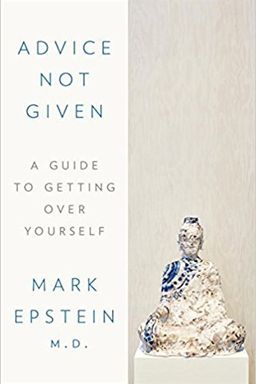
Why do you often feel trapped in your own mind—constantly striving, worrying, or judging yourself? In Advice Not Given, psychiatrist and Buddhist thinker Mark Epstein asks just that question. He argues that the ego, which our culture trains us to strengthen, is both our greatest obstacle and our greatest hope. By learning to engage with the ego rather than eradicate it, Epstein contends, we can live more freely, emotionally vibrantly, and compassionately.
Epstein brings together two traditions that rarely speak to each other: Western psychoanalysis and Buddhist psychology. His core claim is that both Buddhism and psychotherapy teach us to become observers of our own minds—to watch our impulses, fears, and desires without being dominated by them. The path to liberation, he argues, does not lie in escaping ourselves but in seeing ourselves clearly.
Understanding the Ego’s Grip
The book opens with an unsettling truth: egoism is a universal affliction. Our efforts to improve ourselves—whether through achievement, vanity, or control—often backfire, amplifying insecurity rather than curing it. Freud called this condition neurosis; the Buddha saw it as clinging, or self-grasping. Epstein merges these ideas into a simple insight: the ego isn’t evil, but when it runs unchecked, it makes us suffer.
In therapy, you may spend years decoding your defenses or unhealed wounds. In Buddhism, meditation trains you to observe the subtle movements of your mind without identifying with them. Both approaches, Epstein shows, lead to the same place: self-knowledge and compassion—what he calls “getting over yourself.”
The Eightfold Path as Psychological Roadmap
Structurally, Advice Not Given walks the reader through the Buddha’s Eightfold Path, reinterpreted through the lens of psychotherapy: Right View, Right Motivation, Right Speech, Right Action, Right Livelihood, Right Effort, Right Mindfulness, and Right Concentration. Each branch becomes not a list of moral commandments but a psychological toolkit for navigating modern life.
For example, Right View means seeing reality clearly—facing impermanence rather than resisting it. Right Motivation helps uncover your unconscious drives, replacing fear-based agendas with intention and curiosity. Right Speech doesn’t just mean avoiding gossip; it means changing how you talk to yourself. Right Action calls for authentic engagement rather than reactive behavior. Right Livelihood explores ethics and self-worth in work. Right Effort and Right Mindfulness are about balance and awareness, while Right Concentration reveals the mind’s capacity for quiet transformation.
Bridging Buddhism and Psychotherapy
Epstein recounts stories from his own life and practice to show how Buddhist wisdom can complement therapy. We meet Munindra, a Bengali teacher who tells his student that the Dharma “means living life fully”; Winnicott, the British psychoanalyst who described the “good enough mother” as someone who holds a child’s emotions safely; and patients like Claire and Debby, who use Buddhist reflection to confront feelings of unreality, anxiety, and parental pain. Even Epstein’s own struggles—with marriage, insomnia, and self-criticism—become teaching moments.
These examples ground the abstract principles. A student learns that meditation is not an escape; it’s an encounter. A mother realizes that patient acceptance of hate is an act of love. A therapist discovers that silence can be more healing than advice. In each case, the Buddhist principle interacts with a psychological one, creating what Epstein calls “living the life fully.”
Why This Integration Matters
In an age obsessed with self-improvement and mindfulness apps, Epstein’s argument is quietly radical: real transformation begins when we stop trying to fix ourselves. Whether you meditate or go to therapy, the goal isn’t perfection—it’s intimacy with your own mind. That intimacy, he says, gives rise to compassion, humor, and resilience. “The ego needs all the help it can get,” Epstein concludes, but not through punishment—through conscious, patient observation.
Across eight chapters, Epstein’s fusion of Buddhism and psychotherapy offers a map for living that is spiritual but earthy, philosophical but personal. It invites you to stop chasing your ideal self and instead meet the flawed, breathing person that’s already here. That, he says, is where freedom begins.