
Idea 1
You Gotta Believe: Adversity Into Equity
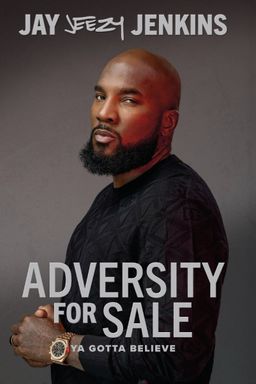
When life keeps handing you closed doors, how do you turn the locks and make the building yours? In Adversity for Sale, Jay “Jeezy” Jenkins contends that belief is the first capital you invest, adversity is the raw material you refine, and disciplined hustle is the engine that compounds both into lasting equity—in the streets, in music, and in the boardroom. He argues that transformation doesn’t begin with a new location or a new outfit; it begins with a new mind. If you can change your mindset, you can change your life—and if you can codify that mindset into principles, you can change your results at scale.
Jeezy’s core claim is deceptively simple: you gotta believe. But belief, as he uses it, isn’t a feel-good slogan; it’s a rigorous operating system that governs identity (who you think you are), agency (what you do with what you have), and alignment (how your actions match your aims). Across three decades—from Hawkinsville’s Poplar Street trap to Patchwerk Studios to the C-suite—he shows you how belief fuses with loyalty, price discipline, frugality, and relentless iteration to turn chaotic struggle into coherent strategy.
What You’ll Learn In This Summary
You’ll see how early lessons—stealing a car radio from Mr. Russell’s shop, flipping Walkmen out of an Okinawa electronics store, and watching a junkie murder his friend Marky Mark—formed a street MBA in ethics, risk, and consequence. You’ll study the $20 moment with Uncle Bo Slick that became seed capital for a new identity. You’ll step into Fort Stewart’s Youth Challenge Program, where a near-suicide on a Navy ship gave way to a life-saving reset and a brotherhood with Kinky B. Then you’ll follow Jeezy as he scales hustle into strategy in Macon: uniting hostile blocks, opening new supply lines, and applying a blue-ocean lens to an urban market (compare: Chan Kim & Renee Mauborgne’s Blue Ocean Strategy).
On the music side, you’ll learn how “product-market fit” for trap music came through mixtapes, not majors—how DJ Drama’s Gangsta Grillz (Trap or Die) worked like a startup’s MVP, with Magic City’s stage serving as a live A/B test. You’ll watch the negotiation playbook unfold with L.A. Reid, Puff, and Boyz N Da Hood; why Jeezy refused a seven-figure duffel from BMF on principle; and how “my price is my price” works in both street corners and conference rooms. You’ll see brand-building done right (Snowman iconography) and wrong (no trademark at MAGIC in Vegas)—and the law of distribution beat product perfection when the “Soul Survivor” leak turned into momentum.
Why This Matters Now
We live in a time where many people inherit broken systems—schools that don’t fit, neighborhoods without safety nets, industries that gatekeep opportunity. Jeezy’s memoir isn’t a celebrity highlight reel; it’s a field manual for converting pressure into presence. His framework is portable: entrepreneurs can swap “Poplar Street” for their niche market, founders can read Trap or Die as a case study in scrappy go-to-market, and anyone battling anxiety can glean tactics from how he replaced paranoia with purpose (compare: Ryan Holiday’s The Obstacle Is the Way on reframing adversity into advantage).
Core Thesis
Belief is your first asset. Discipline protects it. Strategy multiplies it. Leadership redeems it for others.
How The Book Delivers
Jeezy writes in songs and scenes. You’ll feel the small-town courts in Hawkinsville where his cousins pulled up like Magic and Kareem, the Macon car chases on I-75, and the musty bathroom off Shawty Redd’s basement where he wrote verses that would become anthems. You’ll hear boardroom clock ticks in Def Jam’s temporary office while L.A. Reid asks about gold bottles and realize: the room size matters less than the readiness you bring.
By the end, you’ll walk away with a portable set of rules: set your price and don’t take shorts; be loyal and shut up; hustle frugal; test in the wild before you scale; never let the left hand know the right; close deals without closing your integrity; evolve or die. Above all, you’ll be challenged to cash in adversity—not as trauma porn, but as tuition you’ve already paid. If you’ve paid, you might as well collect.