
Idea 1
Humanity as a Planetary Force
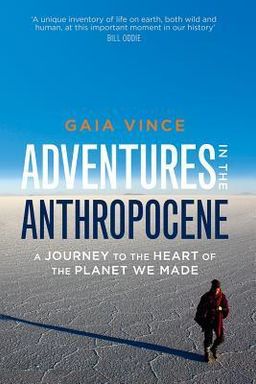
You live in what scientists call the Anthropocene—an era when human beings have become a geological power. Gaia Vince argues that in only a few centuries, humans have altered the planet’s atmosphere, oceans, rocks, and ecosystems in ways comparable to asteroid impacts or volcanic epochs. From the CO2 we release to the plastics embedded in sediments, you and your species are inscribing a new chapter in Earth’s deep history.
What makes this epoch revolutionary is not merely scale but intent. For the first time, a species consciously manages planetary systems. You are no longer a passive passenger on Earth’s journey; you are a co-pilot with dangerous tools and moral choices to make. The Anthropocene exposes both the power and fragility of modern civilization—the same fossil fuels that gave you mobility and light now destabilize the climate that sustains life.
The Geological and Ethical Shift
Vince emphasizes that the Anthropocene is both a scientific diagnosis and an ethical test. Future geologists will see the strata of your time streaked with carbon isotopes from fossil fuels, artificial molecules like plastics and aluminum, and even traces of atomic bombs. These artifacts mark humanity’s permanent geological fingerprint. But more urgently, they pose the moral question: will you act as an exploiter of planetary systems or as their steward?
The timeline of this epoch is debated—some trace it to early agriculture 10,000 years ago, others to the 19th-century Industrial Revolution, and still others to the mid-20th-century Great Acceleration when nuclear fallout, pesticides, plastics, and CO2 surged exponentially. Whatever start date you choose, the result is the same: human systems of energy, land use, and consumption now shape the climate, biosphere, and even Earth’s albedo.
Counting the Costs and Possibilities
The Anthropocene encompasses multiple, intertwined crises—warming, ocean acidification, mass extinction, and water scarcity—but also a proliferation of human ingenuity. Vince journeys across continents to show how people respond. Mahabir Pun wires Himalayan villages for Wi‑Fi using solar power. Chewang Norphel builds artificial glaciers to sustain crops in Ladakh. Rosa Maria Ruiz defends the Amazon from gold miners. President Mohamed Nasheed fights to keep the Maldives above water. Each story demonstrates that adaptation begins locally, but survival ultimately requires global cooperation.
You learn that even air has become a ledger of human activity. Alongside greenhouse gases, it holds particles of soot, lead, and radio frequencies carrying global communication. In the Anthropocene, the line between nature and technology blurs—the same atmosphere that carries monsoon rains now also carries Wi‑Fi signals linking remote doctors and classrooms. The networks that accelerate consumption can also accelerate problem-solving, if you design them for resilience rather than profit alone.
Reimagining the Planetary Commons
Vince reminds you that the Anthropocene’s danger is not inevitability but inertia. You have unprecedented tools—AI, renewable energy, synthetic biology, satellites—to monitor and shape Earth’s systems, yet governance lags behind. The Anthropocene’s defining challenge is coordinating billions of individual decisions into a sustainable pattern of existence. Cities, farms, rivers, and oceans are now nodes in one vast feedback network whose stability depends on collective ethical choices.
Core insight
You are both symptom and solution: the Anthropocene is as much about human consciousness as geology. The crucial task is not escaping our impact but learning to guide it wisely, blending scientific understanding with moral imagination.
By seeing yourself as part of this planetary narrative, you gain perspective: humans have become Earth’s dominant agents, yet your capacity for foresight and empathy may determine whether this epoch becomes a story of collapse or custodianship. The Anthropocene does not demand despair—it demands design.