
Idea 1
Healing the Daughters of Narcissistic Mothers
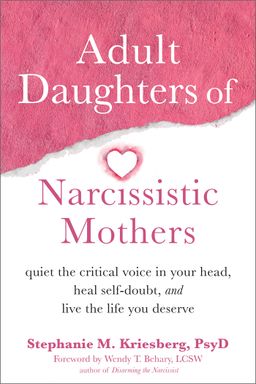
Have you ever felt like the voice in your head that should encourage you is instead your harshest critic? In Adult Daughters of Narcissistic Mothers, psychologist Stephanie Kriesberg explores this haunting experience that many women share—the lifelong impact of being raised by a mother who prioritized her own needs over her child's emotional well-being. Kriesberg argues that daughters of narcissistic mothers carry invisible wounds: anxiety, chronic self-doubt, shame, and a distorted inner voice that echoes their mother's criticism. Her central claim is that while narcissistic mothers rarely change, their daughters can free themselves by understanding those dynamics and learning psychological skills to quiet self-blame and cultivate inner confidence.
Kriesberg contends that growing up with a narcissistic mother often means living in an emotional inversion. Instead of being cared for, the daughter must care for the mother. Instead of developing authenticity, she learns to shape herself around her mother's moods and expectations. The book offers a path out of this distortion—through compassion, assertiveness, and self-healing practices drawn from multiple evidence-based therapies.
The Painful Legacy of Narcissistic Motherhood
Kriesberg begins with a raw truth: narcissistic mothers have an impaired sense of empathy. Their daughters grow up learning to hide emotions and walk on eggshells. The mother's emotional immaturity creates an upside-down family in which the child's job is to stabilize her parent. Kriesberg cites traits such as constant self-focus, emotional volatility, and rigid black-and-white thinking. For daughters, this confusion leads to guilt (“Am I a bad daughter?”), shame (“Something must be wrong with me”), and chronic anxiety. The author shows these patterns through stories like Holly, a successful real estate agent who still hears her mother's critical voice at every turn, and feels she’s never quite good enough.
Such stories reveal that the damage persists long after the mother-daughter relationship has changed or even ended. Even when the mother is gone or has minimal contact, her voice lives on in the daughter's mind—a relentless inner critic masquerading as conscience.
Understanding and Naming Narcissism
To heal, Kriesberg insists, you need to understand what you are dealing with. Narcissistic traits can manifest as grandiose or vulnerable styles. The grandiose mother thrives on domination and attention; she is charismatic but controlling. Josefina’s mother, for example, was stylish and socially powerful but shamed her daughter for being “too emotional.” The vulnerable mother, on the other hand, seems fragile, depressed, or needy—like Sharon, who guilted her daughter Ilana into abandoning her own needs to care for hers. Both types stem from the same insecurity: an inner emptiness that drives a desperate need for validation.
Understanding these styles helps daughters stop personalizing their mothers’ behavior. As Kriesberg puts it, “Her behavior belonged to her, not to you. You did not cause it, and you cannot change it.” This knowledge is liberating—it separates identity from inheritance.
Breaking Free from the Inner Critic
The book introduces a variety of therapeutic tools to quiet the “critical voice”—borrowed from Acceptance and Commitment Therapy (ACT), Cognitive Behavioral Therapy (CBT), Mindful Self-Compassion, and Solution-Focused Therapy. The goal isn’t to erase painful emotions, but to live alongside them with self-compassion. Kriesberg’s exercises—like Grounding with Five Senses or Leaves on a Stream—train you to observe your thoughts without drowning in them. You learn to step back from the mind’s relentless self-talk, recognizing it as noise rather than truth. (In her metaphor of “Ball in the Pool,” pushing negative emotions down only makes them pop up again—the key is to let them drift by.)
Kriesberg weaves mindfulness throughout her narrative, emphasizing that calm self-awareness is not passive acceptance but active reclaiming of internal authority. Healing means trusting your own perceptions instead of your mother’s distorted lens.
Learning Emotional Self-Mastery
Many daughters struggle with emotional regulation because their mothers never modeled it. Kriesberg calls this the “volcano effect”—the eternal fear of explosion or withdrawal. Her practical method SLOW (Slow down, Look inside, Open up, Wait and choose a response) helps readers manage emotions instead of reacting. It teaches that emotions are messages, not enemies, and can be handled without shame. The author compares emotional regulation to being “earthquake-proof”—able to bend without breaking.
Confidence, Boundaries, and Rebuilding Identity
Later chapters teach daughters how to reclaim autonomy. Building confidence starts with recognizing personal strengths—qualities like courage, persistence, empathy, and humor—rather than seeking external approval. Kriesberg encourages reflection through exercises such as identifying character strengths (adapted from Martin Seligman’s positive psychology research). Once self-worth takes root internally, setting boundaries becomes possible. Through assertiveness practices and metaphors like Mountain Pose, she reminds readers that saying “no” is not selfish—it’s survival.
The process culminates in learning to manage relationships and grief. Whether mourning an absent mother’s empathy or fractured sibling bonds, Kriesberg guides daughters through acceptance and post-traumatic growth—transforming pain into resilience. The “Bubble” visualization, for instance, teaches how to protect your peace while staying compassionate and present.
Why These Ideas Matter
This book does more than describe narcissistic parenting—it validates a hidden population of women who feel like outsiders even within their own families. It reframes healing as a lifelong practice rather than a finish line. Kriesberg’s message resonates with works like Running on Empty (Jonice Webb) and Will I Ever Be Good Enough? (Karyl McBride), which address emotional neglect. Her distinctive contribution is her synthesis of compassion, cognitive science, and mindfulness into a pragmatic roadmap.
Ultimately, Adult Daughters of Narcissistic Mothers invites readers to turn inward, not in isolation but in empowerment. You may never change your mother, but you can change your inner dialogue—from one that tears you down to one that lifts you up. This transformation—becoming the voice of calm, confidence, and kindness you always needed—defines Kriesberg’s therapeutic vision and the heart of this remarkable guide.