
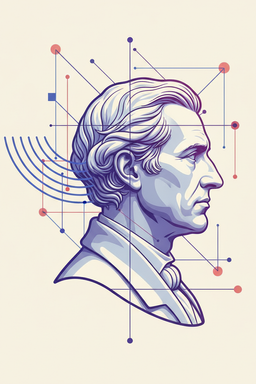
Idea 1
Making Capitalism Humane: Adam Smith’s Hidden Philosophy
How can you live meaningfully—and work with dignity—in a world ruled by markets, corporations, and endless consumption? This is the question Adam Smith invites you to ponder. Though often remembered merely as the father of economics and author of The Wealth of Nations, Smith was far more than an economist. He was a moral philosopher who wanted to make capitalism not just efficient but humane.
Smith contends that the heart of economics isn't greed or competition—it's human happiness. He studied money, trade, and labor because these were the forces shaping people's lives, relationships, and sense of purpose. He believed that understanding the economy was essential for improving society’s moral and emotional well-being. Unlike many of his contemporaries who focused on religion or politics, Smith argued that philosophy must grapple with how people earn, spend, and share money—because that’s where their hopes, anxieties, and identities reside.
The Challenge of Meaning in Modern Work
Modern economies have made nations unimaginably wealthy but also curiously unsatisfied. Smith recognized this paradox early: the same mechanisms that create abundance—like specialization and large-scale production—can leave individuals feeling like mere cogs in a machine. Work becomes efficient yet empty. The key question then becomes: how do we build economies that enrich lives, not just bank accounts?
Smith’s answer starts with the role of meaning. In making economies more specialized, we increase productivity but lose connection to the impact of our labor. He thought that the leaders of large, modern enterprises must take responsibility not only for profits but also for helping workers see the purpose of what they do. A corporation’s task isn’t just to create wealth—it’s to tell a story about contribution and dignity.
Consumer Capitalism and Moral Trade
Smith witnessed the birth of consumer capitalism: the first shopping arcades, fashion magazines, and luxury goods aimed at the growing middle class. Many moralists, like Rousseau, thought this indulgence would destroy virtue and civic spirit. Smith, however, saw an unexpected benefit. Luxury, he argued, created work and wealth that could then support hospitals, schools, and the poor. Frivolous consumerism wasn’t necessarily moral, but it could have moral consequences when structured wisely.
Yet Smith wasn’t naïve. He hoped capitalism could evolve beyond silly desires—for embroidered handkerchiefs or snuffboxes—and begin supplying our deeper needs: education, beauty, and emotional well-being. He imagined future markets serving not just appetites but aspirations. In this vision, capitalism becomes a partner in cultivating the human spirit.
The Emotional Psychology of Wealth
One of Smith’s most profound insights was about the rich. He noticed that wealth accumulation often stems not from material greed but from emotional insecurity—the desire for attention, respect, and status. The rich, he said, want love disguised as admiration. This subtle psychological truth opened a new approach to social reform: instead of guilt or coercion, societies can use honor and reputation to direct wealth toward public good. Rewarding rich people with respect for generosity, rather than luxury, transforms vanity into virtue.
Educating Desire
Smith also turned the moral mirror toward us—the consumers. He argued that the real power in capitalism lies with demand, not supply. If we crave cheap, unhealthy products, companies will deliver them. Reform, therefore, depends on reshaping our appetites. A healthy economy educates its consumers, teaching them to value sustainable goods, fair labor, and ethical production. The market becomes not just a platform of choice but of character.
Why It Still Matters
Smith’s philosophy speaks directly to our era of burnout, materialism, and ecological strain. His goal wasn’t to dismantle capitalism but to civilize it—to combine efficiency with empathy. He invites you to see economics not as an abstract science but as an art of living together. Understanding markets, he says, is ultimately about understanding how we connect, trade care, and shape each other’s well-being.
The ideas explored in this guide—specialization, consumer capitalism, the psychology of wealth, and the education of desire—form a coherent moral vision: capitalism can make us rich, but only moral sophistication can make us happy. Smith teaches us that the economy isn’t just about money—it’s about meaning.