
Idea 1
Activate Your Best Brain for Success and Significance
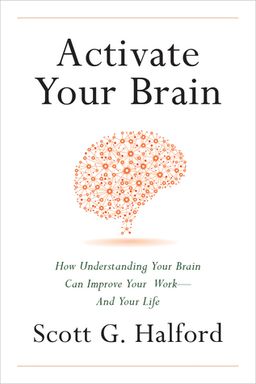
Have you ever looked up from a chaotic day—half-finished emails, endless meetings, constant distractions—and wondered why you feel exhausted yet strangely unfulfilled? In Activate Your Brain, Emmy Award-winning writer and neuroleadership expert Scott Halford argues that success in the modern world is not about working harder but about working with the brain, not against it. He contends that understanding how our three-pound organ operates—biologically, emotionally, and socially—unlocks the key to greater productivity, resilience, and happiness.
Drawing on neuroscience, psychology, and decades of leadership development, Halford builds a practical framework that blends scientific insight with everyday application. He challenges the idea that high achievement must come from stress, overwork, and endless self-discipline. Instead, he offers a new model: activating the brain through conscious choices that foster focus, control, stamina, and connection. His mantra—start small, start now—suggests that monumental change begins with small, consistent actions that align with how the brain naturally functions.
Three Brains, One Purpose
Halford introduces readers to what he calls our “three brains”: the reptilian brain that manages survival instincts, the mammalian brain that governs emotion, and the human brain (or neocortex) that allows reasoning, creativity, and empathy. All three are essential, but most of us get stuck in the reactive mammal mode—dominated by fear, stress, and automatic responses. The goal isn’t to suppress feelings but to understand when the emotional brain hijacks our rational one, then build habits that keep the “human brain” in charge more often.
(This model parallels Daniel Goleman’s work on Emotional Intelligence, which also emphasizes the balance between emotion and reason as the foundation of leadership and effectiveness.)
Neuroscience Meets Practical Leadership
Halford’s distinction lies in translating complex brain science into clear, actionable practices for modern professionals. He weaves scientific insights—from dopamine reward circuitry to cortisol’s impact on stress—into business and lifestyle advice. For instance, he likens the brain to a Stradivarius violin—an exquisite instrument that too many of us mishandle through poor sleep, unmanaged stress, and unhealthy habits. His core thesis: when we understand brain chemistry, we can activate positive states like curiosity, focus, and motivation instead of being pulled into negativity, exhaustion, and reactivity.
In business terms, this means managing the neurochemistry of performance: moving from threat to thrive, from avoidance to approach, and from survival to significance. The book teaches that self-awareness—not talent or willpower alone—is what allows people to lead others and themselves more effectively. Each chapter builds on this foundation with practical techniques such as visualization, deep breathing, reflection intervals, mindfulness, and “awake rest.”
From Success to Significance
The book unfolds in four parts. First, Halford explores the science of being successfully you—how your brain’s structure shapes thought, emotion, and behavior. Next comes controlling your success: why perceived control, confidence, and willpower determine how well you use your time and energy. The third section on building stamina dives into brain health, nutrition, rest, stress, and movement. Finally, the section on finding significance pulls everything together, showing how empathy, trust, collaboration, and ego management elevate you beyond personal success to meaningful influence.
If Activate Your Brain has a rallying cry, it’s that knowledge about the brain should change how we live. Borrowing from neuroscience pioneers like Paul Zak, Daniel Siegel, and Evian Gordon, Halford reveals that control, connection, and compassion are not just nice ideals—they are wired into the brain’s architecture for thriving. When those circuits are activated, our best selves emerge.
Why It Matters
In a world where professionals are overwhelmed by information and burnout, Halford’s model reframes productivity around self-kindness and awareness. He speaks directly to businesspeople used to 70-hour weeks and constant self-critique, suggesting that real achievement begins when you stop abusing your brain like a machine and start treating it as a masterpiece. By learning to manage neurochemistry—through incremental choices like better rest, controlled stress, and social connection—you not only perform better, you also live better.
“Start small, start now,” Halford repeats, echoing behavioral scientist BJ Fogg’s concept that tiny habits yield exponential transformation. One small neural activation—a deep breath, a shift in mindset, ten minutes of rest—sets off a cascade that strengthens positive brain patterns and weakens destructive ones.
Ultimately, Activate Your Brain is both a neuroscientific manual and a humanist manifesto. It invites you to take charge of your brain’s moments—to shift from stress reactions to designed responses, from doing more to being more. Halford’s message is not that you need a new brain—but that you deserve to finally use the one you already have at its full potential.