
Idea 1
Belonging You Build, Bite by Bite
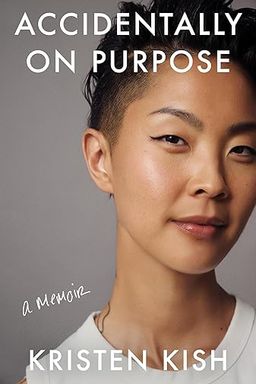
How do you turn the life you’re given into a life you can stand in—and even love? In this memoir, Kristen Kish argues that identity isn’t a fixed inheritance; it’s something you assemble through rituals, relationships, work, and moments of courage. Her claim is simple but radical: belonging becomes real when you design the rooms you live in—your kitchen culture, your circle of care, your public voice—and then keep renovating them as you change.
You enter through an image: a judge on an airport tarmac conferring U.S. citizenship on a four-month-old arriving from Korea. Adoption is not a secret in this home. Judy and Michael Kish show their daughter the photos, tell the story, and make origin part of daily life. Those Midwestern routines—Friday dinners, Saturday laundry games, meatloaf, pot roast, and chicken tenders with Dijonnaise—become early architecture. They create safety and, later, an ache at the thought of losing it. The book sets a baseline: love can be quiet, ritualized, and enormously stabilizing.
Origins, Curiosity, and Cultural Hybridity
Adoption is both ordinary and catalytic. It’s folded into family life, yet it sparks questions—what’s inherited, what’s learned, and what else might be yours if you went looking? Kristen grows up in a neighborhood with other Korean kids and even other adoptees. Representation shows up in small gestures (exchange students gifting dolls that look like her) and in everyday visibility. She doesn’t feel an urgent pull to search for birth parents; she feels whole where she is. But curiosity lingers like a gentle question, not a crisis. (Note: This stance contrasts with adoption narratives like Nicole Chung’s, where secrecy and searching take center stage.)
Queerness, Concealment, and Coping
At fifteen, watching Julia Roberts in Notting Hill, Kristen realizes she’s gay. Relief collides with fear. In the 2000s, queer futures look marginal in her mind, and the thought of disappointing her parents terrifies her. She learns to perform heteronormativity—dating “good on paper” boys, including a college punter, and later building a kind but impossible relationship with Scott. Concealment has a cost, and coping sneaks in as a solution: cigarettes for panic, alcohol for lubrication, cocaine to perform confidence like “the others.” Restaurants, with their long nights and adrenaline, make substances feel normal. The book refuses moralism; it shows you how self-medication can look like survival until it isn’t.
Kitchens as a Place to Stand
Cooking unlocks a competence traditional academics never offered. At Le Cordon Bleu, Knife Skills 101 and a teacher’s quiet “You’ve done this before” become catalytic. Work in mall pretzel shops and smoothie bars trains service rhythm and iteration. Professional kitchens deepen precision: Union League Club; Top of the Hub’s fish station; Sensing under Gérard Barbin. Stir, Barbara Lynch’s intimate demo kitchen, is the turning point—it marries creativity, teaching, and performance. Barbara doesn’t just praise Kristen; she gives her the keys (Little Birds & Burgundy) and, crucially, credits her publicly. The craft becomes language, and language becomes identity.
Breakthroughs Need People
Two relationships—Stephanie Cmar and Barbara Lynch—anchor the leap to visibility. Stephanie’s grit and humor create ballast; Barbara’s sponsorship opens doors. Together they engineer an audition tape (shot by Stephanie’s dad) that ushers Kristen onto Top Chef. Competition becomes both crucible and mirror: it teaches managing anxiety, collaborating under pressure, and telling a story on a plate. Visibility magnifies everything. Messages arrive from Asian Americans, adoptees, and queer folks who “saw themselves” in Kristen. She realizes representation changes audiences and the person on screen. (Compare with David Chang’s reflections on TV and identity; both wrestle with the weight and gift of being seen.)
Power, Culture, and the Kitchens We Make
The chef de cuisine role at Menton reveals what happens when power runs on disrespect. Undermining cooks, rumor-mongering, and theft of authorship corrode the job from day one. An ally (Robeisy Sanchez) and a nudge from Emeril (“I look forward to when it’s your food”) clarify a boundary: perseverance is not martyrdom. Leaving becomes self-preservation. When Kristen builds Arlo Grey in Austin—with the Sydell Group, attorney Jasmine at the table, and sous chef Alex as the first hire—she chooses culture on purpose. She learns to adapt menu and portions for Austin, to recruit for temperament as much as talent, and to enforce standards with kindness. Tattoos of the restaurant’s name show belonging is now mutual, not extracted.
Voice on Camera, Love Off Camera
Television evolves from awkward early hosting (36 Hours’ khaki shorts and “ladylike” hot chicken) to playful confidence on Fast Foodies and authority cohosting Iron Chef with Alton Brown. Kristen learns to use her voice—to push for diverse casting, to set boundaries when humor turns lazy, and to negotiate terms that honor life with Bianca (family travel on Nat Geo). The memoir closes in the ordinary magic of love: a plate stamped “Arlo,” a lingering high-five, a driveway kiss, a backyard wedding with a bedsheet backdrop and Zoom guests. The point isn’t spectacle; it’s steadiness. In public and private, Kristen keeps choosing rooms she can live in and inviting others to belong there, too.
Key Idea
Belonging isn’t found; it’s built—through rituals that ground you, people who sponsor you, work that fits you, and the courage to speak in rooms that once made you small.