
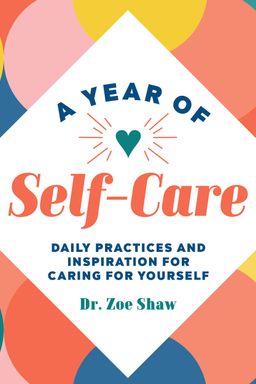
A Year of Self-Care cover

A Year of Self-Care

by Dr Zoe Shaw

A Year of Self-Care by Dr. Zoe Shaw guides you through daily practices that foster self-love and care. Discover transformative rituals that enhance your emotional, mental, and physical well-being, helping you build a resilient, confident, and joyful life.

A Year to Reclaim Yourself Through Daily Self-Care

When was the last time you remembered to take care of yourself—not out of guilt, but out of love? In A Year of Self-Care, Dr. Zoe Shaw invites you to view self-care not as a luxury, but as a habit that anchors your emotional, physical, and spiritual well-being. She argues that true strength, success, and love all begin with taking deliberate care of yourself every single day. Without it, your relationships falter, your goals feel unattainable, and your sense of peace slips away.

Dr. Shaw—a psychotherapist, mother of five, and wellness coach—contends that sustained self-care is the opposite of selfishness: it’s an expression of self-worth. The book acts as a daily guide through an entire year of personal transformation. Across 366 reflections and practices, it helps you build mental resilience, strengthen emotional boundaries, simplify your life, reframe how you rest, and rediscover your deeper purpose.

Why Self-Care Matters More Than Ever

Dr. Shaw opens with a fundamental reorientation: self-care is stewardship. Borrowing from Parker Palmer’s idea that caring for the self is caring for the only vessel through which we serve others, she reminds readers that burnout and depletion aren’t virtues—they’re evidence of neglect. Many people, particularly women, adopt patterns of external caretaking at the expense of their own vitality. Dr. Shaw experienced this firsthand—running on empty, emotionally resentful, and hoping others would fill her depleted tank. Instead, she learned that self-care had to be built into her daily life as a discipline, not a reaction to crisis.

Her solution is simple yet profound: dedicate at least 15 minutes daily to conscious self-care. Over a year, those minutes accumulate into more than 90 hours—a tangible investment in your own growth, focus, and peace. But it’s not about checking boxes or perfunctory pampering. It’s about developing emotional literacy, learning to say no without guilt, and aligning your actions with your deepest values.

The Book’s Structure: A Journey Through Every Season of the Self

The book is divided into twelve themed months, each centered on a key aspect of mental and emotional renewal. January introduces the reader to Reset—creating new habits and replacing traditional resolution-making with mindful goal setting. February explores Relationships, shifting the focus from codependency to emotional reciprocity. March encourages Renewal, highlighting mental health and self-compassion. April becomes the month of Motivation, where readers learn to self-activate and live purposefully.

From May through December, every month deepens this process: Simplicity (decluttering emotional and physical noise), Encouragement (being your own cheerleader), Purpose (finding why you are here), Discipline (committing to consistent wellness), Boundaries (learning to say no), Affirmation (embracing yes), Gratitude (cultivating optimism), and finally, Rest (replenishing your spirit). Each day offers a micro-action—a meditation, reflection, or physical ritual—to make the philosophy of self-care tangible.

From Crisis to Connection: Shaw’s Central Insight

What separates this book from typical “self-help” guides is Shaw’s compassionate realism. She challenges the illusion that one must wait until everything falls apart to begin healing. Throughout her career, she’s seen clients who confuse martyrdom for love and productivity for purpose. Through self-care, she teaches you to recalibrate this long-embedded programming—to see your needs not as burdens, but as sacred truths that deserve attention.

Her guidance combines therapeutic wisdom with spiritual sensibility and neuroscience-backed advice. For example, she explains how consistent journaling rewires cognitive patterns and builds gratitude resilience (similar to practices referenced by Brené Brown and Rick Hanson). She also emphasizes embodiment—connecting to the wisdom of your physical self through breath, movement, and stillness.

Living the Pact: A Commitment to Daily Reclamation

Before beginning the year, Shaw invites readers to recite a “self-care pact,” a promise not to treat self-care as a checklist, but as a deep relationship with oneself. This ritual marks a symbolic turning point. She writes: “I will not simply check off the self-care box. I am far more valuable and complicated than an item to be checked off. I commit to the deep, caring experience of getting to know myself intimately.” The pact reframes self-care as a conscious process of meeting oneself with curiosity instead of judgment.

This vow anchors everything that follows. It’s not about perfection, but progress; not about luxury, but love. Dr. Shaw’s tone blends therapist, mentor, and fellow traveler. She invites you to celebrate small victories—showing up for your doctor’s appointment, journaling a gratitude entry, taking a phone-free morning. Each act becomes both a mirror and a milestone, reflecting your growing self-respect.

Why This Book Matters Now

In an age of chronic burnout, digital overload, and performance pressure, A Year of Self-Care offers a slower, saner path: daily micropractices that collectively transform how you relate to yourself and the world. It positions self-care not as escape but as empowerment—the foundation of courage, purpose, and peace. By the end of the year, you don’t merely survive: you become the grounded, gracious, and radiant version of yourself that was always waiting beneath the noise. Shaw’s message is simple but profound: self-care is not an event. It’s a lifelong conversation between you and your soul.


Resetting Your Life: January’s Fresh Start

The first month, Reset, lays the groundwork for your transformation. January isn’t about numbers on a scale or financial targets—it’s about alignment. Dr. Shaw rejects the traditional concept of resolutions, which often stem from guilt and external validation, and replaces them with the idea of consistent micro-goals rooted in intention. Her advice: focus on how you want to feel, not just what you want to accomplish.

Rethinking Resolutions

Instead of striving for measurable perfection, she prompts you to ask: What will feel different in me a year from now? Then, take inventory of practical goals like more rest, hydration, or mental clarity. This emotional reframing shifts you from pressure-based motivation to heart-centered discipline. Arthur Ashe’s famous quote becomes Shaw’s mantra: “Start where you are. Use what you have. Do what you can.”

Daily Acts of Reconnection

From scheduling a doctor’s appointment to creating a tech-free morning, January’s lessons remind you that resetting is about returning to yourself. Each daily entry asks for small, deliberate acts: saying a morning affirmation, walking a new route, creating a gratitude jar, or wearing your favorite clothes “just because.” These actions may appear simple, but they build neural reinforcement for self-respect.

In psychological terms (echoing habit researcher James Clear in Atomic Habits), such micro-actions increase self-efficacy—the belief in one’s ability to influence outcomes. By weaving mindful practices into daily routines, your brain begins associating care with agency rather than obligation.

Building Structure That Serves You

Dr. Shaw teaches that structure is not limitation; it’s liberation. Scheduling self-care like any meeting demonstrates that your needs matter. Hydration goals, sleep improvements, and morning reflection rituals become anchors. Even creating a self-care nook—a cozy corner for journaling or meditating—symbolizes a physical manifestation of boundaries.

By the end of January, the act of “resetting” feels internalized. You’ve not just introduced habits; you’ve redefined who you are becoming—a person who honors their time, values their energy, and gives from overflow, not depletion.


Loving and Relating: February’s Focus on Relationships

After rebooting your internal world, February shifts to how you connect—with yourself and others. Dr. Shaw defines relationships as extensions of self-regard: the quality of your interactions mirrors the way you value yourself. The month begins by reminding you that you are “the one you’ve been looking for.”

Self-Love as a Prerequisite for Connection

Shaw insists that loving yourself is not narcissistic—it’s preventive medicine for codependency. Through exercises like writing a love letter to yourself, taking yourself on a date, and even dancing vulnerably, she encourages reconnection with your own presence. When you value your needs, you stop outsourcing validation.

Redefining Intimacy and Vulnerability

Vulnerability, sometimes mistaken for weakness, becomes the vehicle for deeper connection. To be open is to be real—and realness breeds trust. Dr. Shaw’s daily reflections help you practice honesty by speaking truths that you’ve withheld, or by releasing your ego during conflict. When you drop the need to be right, you make space to be seen.

Healthy Relationship Habits

This chapter offers beautifully simple rituals—calling an old friend, eating mindfully with loved ones, or complimenting yourself out loud. Each act strengthens emotional reciprocity. In one exercise, she asks you to practice “heart rubbing,” literally placing your hand over your chest and acknowledging the life beneath your palm. It’s a mindful embodiment of love.

By the end of February, you learn that compassionate boundaries and gratitude transform relationships from draining to restorative. You no longer plead to be loved—you radiate it.


Renewing Your Mind: March and Mental Health

March ushers in Renewal—both the literal spring season and an emotional rebirth. Dr. Shaw connects this time of year with the mind-body-spirit reset that occurs when you deliberately nurture mental wellness. She reminds you that renewal is not about reinventing personality, but about releasing patterns that no longer serve your peace.

Mindful Awareness

Through exercises like naming emotions, journaling, and practicing grounding through sensory awareness (“what do I see, hear, feel?”), you transform autopilot reactions into conscious responses. Naming emotions, she notes, does not amplify them—it tames them. Psychological research supports this: labeling feelings decreases amygdala activation and promotes emotional regulation (as noted in studies published by UCLA).

Forgiveness and Guilt Release

This month also dismantles guilt as a useless relic of past thinking. Shaw encourages you to physically act out letting go—shaking off guilt, writing unsent letters, or decluttering mental baggage. Renewal requires space, and you can only create fresh ground once you uproot old habits of self-blame.

Inner Child Play and Self-Compassion

One of the most playful sections invites adults back into childlike wonder: coloring, laughing uncontrollably, or jumping on the bed. This rekindles spontaneity—a vital sign of mental health. Renewal, Shaw emphasizes, is being tender with your imperfection while choosing curiosity over criticism.


Motivation and Purpose: April Through July

By spring, Dr. Shaw moves from inner reflection to outward activation. April through July form a continuum: Motivation, Simplicity, Encouragement, and Purpose. These months build momentum from your reset foundation toward living with clarity and conviction.

April: The Mechanics of Motivation

In April’s Motivation, Shaw redefines willpower as self-relationship: you motivate yourself best when you speak to yourself with compassion. Daily practices range from writing reverse to-do lists (celebrating what you’ve done) to planning rewards that reinforce success. She quotes Wayne Dyer: “Be miserable, or motivate yourself. Whatever needs to be done, it’s always your choice.” Motivation, for Shaw, isn’t muscle—it's mindset.

May: Simplify to Amplify

Simplicity follows naturally. Simplicity is decluttering both your calendar and conscience. Practical tips include digital detoxes, forgiving yourself for mistakes, donating unused clothes, and unsubscribing from noise (quite literally from unwanted emails). Every simplification creates more bandwidth for joy—a principle echoed by minimalist thinkers like Joshua Becker and Greg McKeown (Essentialism).

June: The Power of Encouragement

June marks a milestone for self-appreciation. Shaw reminds you to celebrate progress without perfection. Exercises include creating affirmations, journaling small wins, and rewarding yourself for growth. Encouragement means parenting your inner child—responding with grace, not criticism. As she writes, “You are your own superhero.”

July: The Clarity of Purpose

By July, she introduces the notion of purpose as “the highest expression of your abilities.” Discovering it isn’t something you chase—it’s something you uncover through everyday alignment. Shaw guides you through exercises like writing your 100-word life philosophy or composing your obituary to crystallize meaning. Purpose reveals itself not in grand visions but in patterns of joy, service, and truth-telling.


Discipline and Boundaries: August to September

If the first half of the year strengthens your emotional muscles, August and September teach you how to protect them. Shaw identifies Discipline and Boundaries as nonnegotiable components of mature self-care. Without them, all previous gains evaporate under old habits or external pressure.

Discipline as Devotion

Discipline, for Shaw, is not about rigid control; it’s about devotion to your future self. Daily readings include scheduling sleep, financial planning, finishing unfinished projects, and cutting caffeine slowly. She reframes delayed gratification as love in action—a way of building trust with yourself. “True self-care,” she quotes Brianna Wiest, “is building a life you don’t need to escape from.”

Boundaries as Emotional Architecture

In September, she pivots to Boundaries. Readers learn that boundaries are not walls—they’re warm hedges: soft, living, and renewing. Shaw’s test for healthy limits includes questions about guilt, overgiving, and resentment. Every yes to someone must include an honest check: does this serve me, too? This aligns with assertiveness models in psychology that equate “no” with self-respect rather than rejection.

By the end of this season, you recognize boundaries and discipline as spiritual tools that transform chaos into clarity. They protect peace.


The Affirming Mind and Grateful Heart: October and November

As the year begins to close, October and November teach expansion through Affirmation and Gratitude. Having pruned toxic patterns, you’re now ready to say yes—to yourself, to growth, and to abundance.

October: Affirming Life Through Yes

October is a month of courageously opening. Shaw encourages you to unlearn fear through daily acts of novelty—writing with your nondominant hand, learning something new, facing conflict directly. This practice of saying “yes” ignites neuroplasticity; new experiences create new emotional resilience. Her wisdom echoes Shonda Rhimes’s Year of Yes: openness leads to joy.

November: Grateful Living

Thankfulness becomes the emotional glue of self-care. By noticing everyday miracles—from sunrise to the hum of a warm shower—you shift perception from scarcity to sufficiency. Research supports this: gratitude increases dopamine and serotonin, rewiring the brain toward optimism. Shaw suggests tangible rituals like a “gratitude rock,” daily thank-yous, or journaling positive flips of negative events (“My car broke down, but I’m grateful it did safely”). Gratitude transforms routine into reverence.


Rest and Reflection: December’s Integration

After a year of growth, December centers on Rest—the silent partner of self-care. Rest is not laziness, Dr. Shaw insists, but integration. Muscles strengthen not during exertion but recovery, and the same holds true for the spirit.

Reclaiming Rest as Necessary

You learn to pause consciously: lingering in bed without your phone, scheduling naps, or committing to a day of stillness. By asking “Do I really need to?” before saying yes, you redefine productivity as presence. Active rest—like walking slowly, sipping tea, or mindful stretching—teaches that peace can cohabitate with movement.

Reflection and Renewal

Near year’s end, Shaw invites you to re-read your gratitude jar, write a letter to your future self, and review your year without self-criticism. These rituals close the loop: rest is not the absence of action, but the foundation for more meaningful future action. As she writes, “A slingshot must be pulled back to create the power to spring forward.”

In a culture that glorifies exhaustion, A Year of Self-Care ends by reminding you that replenishment is resistance. To rest is to respect your humanity—and from that stillness, life’s next chapter begins.

Dig Deeper

Get personalized prompts to apply these lessons to your life and deepen your understanding.

Go Deeper

Get the Full Experience

Download Insight Books for AI-powered reflections, quizzes, and more.