
Idea 1
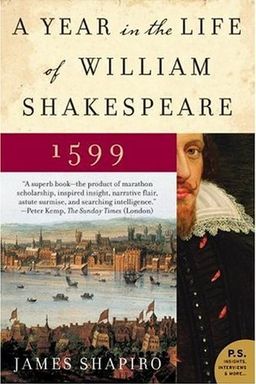
Shakespeare’s 1599: Reinvention through Risk
What does it mean for an artist to reinvent not just his craft but his entire working world? In 1599, William Shakespeare and his company, the Chamberlain’s Men, faced this question with astonishing boldness. They dismantled their old playhouse, crossed the Thames, and built a new one: the Globe. That audacious act of physical and financial reconstruction triggered a creative transformation that would redefine English drama. But this story is not only about architecture—it’s about risk, reinvention, and the entanglement of art, politics, and commerce.
The Economic and Artistic Gamble
The Globe was both a business risk and an artistic bet. Shakespeare and four fellow actors—Heminges, Phillips, Pope, and Kemp—became shareholders, investing roughly £70 each to fund construction. This made Shakespeare more than a writer-for-hire; it made him a partner. Suddenly he was accountable to the company’s debts and profits, free to craft repertory that matched artistic ambition to commercial viability. The Globe’s “Wooden O” became both laboratory and brand, designed for large, mixed audiences who demanded innovation and spectacle.
That new ownership structure symbolized a shift in cultural power: actors became entrepreneurs, and playwrights gained leverage. By assuming financial risk, Shakespeare gained creative control—control that would carry him beyond scripts of clownish improvisation into the mature, psychologically rich plays of his middle career.
Court, Censorship, and Political Tightrope
At the same time, Shakespeare’s company performed for Queen Elizabeth and her courtiers. Court patronage offered visibility but demanded caution. The court could celebrate playwrights one day and censor them the next. In 1599, censorship peaked with Archbishop Whitgift’s Bishops’ Ban, which outlawed satirical print and punished authors of political commentary. Writers like Marston and Nashe were silenced; Hayward’s chronicle was burned. Shakespeare understood the risks and adjusted: he turned to classical sources like Plutarch, disguising topical commentary under historical allegory. Julius Caesar thus became a coded exploration of tyranny and conscience rather than a direct political critique.
He was writing in a time of national volatility: the disastrous Irish wars, Essex’s faltering campaign, the memory of rebellion and divine kingship violated. His plays—Henry V, Julius Caesar, As You Like It, and Hamlet—are saturated with political unease, experiments in how theater might speak truth to power while surviving scrutiny.
From Clown to Character: The Artistic Pivot
Within this pressure-cooker environment, Shakespeare broke ranks with an older theatrical form. His split with Will Kemp—the jig-dancing, improvising clown who dominated the stage—signaled a creative revolution. The new Globe demanded a new kind of acting: psychologically consistent, ensemble-based, and textually driven. Kemp’s departure allowed Burbage to take center stage as a tragic actor, opening the door to the introspection of Hamlet and the psychological realism of As You Like It. Shakespeare shifted from comic-star vehicles to plays of motive and moral ambiguity.
Religion, Ritual, and the Theater as Substitute Church
The Reformation had stripped England’s towns of religious pageantry—the feast days, saints’ processions, and seasonal cycles that once gathered communities. Shakespeare’s theater stepped into that void. The plays turned civic assembly into moral meditation. Julius Caesar opens with a “holiday” disputed; Henry V turns St. Crispin’s Day into heroic myth. These moments reveal theater’s power to manufacture ritual and national memory in a culture that had lost its saints. Shakespeare’s stage became the new pulpit of civic imagination.
Lyric Theft and Authorial Identity
While Shakespeare redefined public drama, his private reputation was hijacked. In 1599, William Jaggard pirated a collection called The Passionate Pilgrim, printing some of Shakespeare’s sonnets and several spurious ones under his name. The theft turned his private verse into a public commodity, forcing him to reconsider authorship itself. When he later revised his genuine sonnets for the 1609 edition, small linguistic changes—such as replacing “I know” with “she knows”—transformed tone and perspective, evolving from self-centered wit into reciprocal understanding. The poet learned what the dramatist had already discovered: intimacy thrives on shared perception.
That same lesson animates As You Like It, where Rosalind disguises herself to teach Orlando emotional truth through role-play. Shakespeare’s love poetry merged with his stagecraft, producing a vision of love as education through performance.
Drama in a Changing England
By year’s end, Hamlet would crown this sequence of experiments. Drawing on the essayistic voice of Montaigne, Shakespeare invented a new kind of inward drama: thought became action. The soliloquy ceased to be monologue; it became inquiry. The Globe’s broad stage and the open air amplified that introspection into public event—everyone in the crowd overheard Hamlet thinking.
So when you think of 1599, think of more than Shakespeare’s “great year.” It was a convergence of commerce, censorship, religion, and psychology. By rebuilding a theater, Shakespeare rebuilt the terms of artistic authorship itself—transforming the market of plays into a medium of intellectual and human exploration that would shape modern literature.