
Idea 1
Navigating a World in Disarray
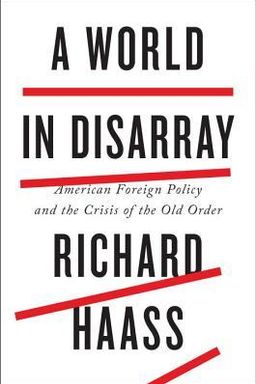
What does it mean to live in a world where old rules no longer apply? In A World in Disarray, Richard Haass argues that the international system—built over centuries of treaties, wars, and diplomacy—is unraveling under the pressures of globalization, power diffusion, and political dysfunction. Haass contends that while the twentieth century was defined by efforts to contain great-power conflict, the twenty-first is shaped by something more elusive: the challenge of maintaining order in a fragmented, interdependent world.
For most of history, world order revolved around states respecting one another’s sovereignty, trading cautiously, and balancing power to avoid direct conquest. That system—the so-called Westphalian order born in 1648—worked for centuries because strong countries agreed to leave one another alone. But as Haass demonstrates, the end of the Cold War upended this clarity. Suddenly, there was no bipolar stability, no clear hierarchy, and no widely accepted set of rules to follow. Weak states collapsed, nonstate actors gained influence, and new global challenges like terrorism, climate change, and cyberwar ignored borders that once mattered.
The Promise and Failure of the Post–Cold War Era
At the dawn of the 1990s, leaders like President George H. W. Bush hoped the Cold War’s end would usher in a “new world order”—a global community guided by law, collective security, and cooperation. For a brief moment, initiatives like the Gulf War coalition against Saddam Hussein suggested such collaboration was possible. Yet, only decades later, Haass observes, the optimism proved misplaced. Instead of a world order, we got a world in disarray: rising populism, fraying alliances, and the deterioration of international norms.
Haass traces this decline through vivid examples: Britain’s vote for Brexit, Russia’s annexation of Crimea, the wars in Iraq and Syria, and the spread of terrorism from Afghanistan to Paris. Each event symbolizes a deeper shift—where national politics, economic stagnation, and distrust of globalization have made cooperation harder. States obsess over domestic challenges while global problems such as pandemics and climate change go unmanaged. The old “balance of power” cannot stabilize a landscape where actors like ISIS, multinational corporations, and cybercriminals can disrupt entire regions without commanding armies or flags.
From World Order 1.0 to 2.0
Haass proposes that the world needs a new operating system—what he calls World Order 2.0. The original world order (“1.0”) emphasized sovereignty: governments’ right to control what happens within their borders. Version 2.0 must focus equally on sovereign obligation—states’ responsibilities to others in an interconnected world. Terrorism, financial crises, cyberattacks, and viral diseases do not respect borders, so the notion of “live and let live” no longer works. Sovereignty, Haass insists, must come with duties: to prevent harm from flowing outward, to cooperate in global health and environmental protection, and to uphold basic international norms.
This ambitious shift from rights to responsibilities reflects a practical realism adapted to globalization. Just as the United States led the creation of post–World War II institutions like the UN and the IMF, Haass believes it must now redefine its leadership around cooperation and restraint. Yet, this leadership faces its own crisis—an America increasingly divided, indebted, and reluctant to bear the burdens of global governance. Haass warns that domestic dysfunction at home and populist nationalism abroad undermine efforts to restore order anywhere.
Why This Matters to You
If you live, travel, or work online, Haass’s argument matters directly to you. Globalization ties your security, economy, and health to events far beyond your town’s borders. When disorder grows—whether through pandemics, market volatility, or conflict—the consequences ripple through everyone’s lives. Haass invites readers to think not only as citizens but as global participants: to recognize how interconnected systems require shared responsibility, not isolation.
Across its historical sweep—from the rise of sovereign states to wars, revolutions, and international institutions—Haass’s book ultimately asks: can we design a new global architecture before chaos becomes the norm? His answer is sober but not fatalistic: we can, if the U.S. redefines leadership through cooperation, if states embrace obligations as well as rights, and if citizens understand that national prosperity now depends on global stability. In short, A World in Disarray is both diagnosis and prescription for an age where everything is connected but nothing is under control.