
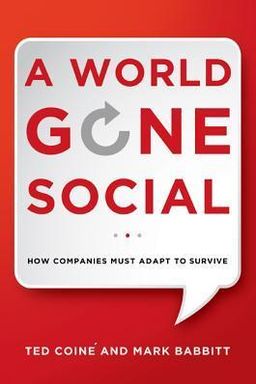
A World Gone Social cover

A World Gone Social

by Ted Coine and Mark Babbit

A World Gone Social explores the transformative impact of social media on business culture, offering insights and strategies for companies to adapt and thrive in this dynamic landscape. Learn how to engage effectively with customers and employees to foster loyalty and innovation.

Leading in a World Gone Social

You step into an era that rewrites how organizations operate—the Social Age. Gone is the Industrial model of hierarchy and control; in its place emerges a system built on transparency, collaboration, and trust. The authors argue that this shift is not optional or incremental—it’s revolutionary. To survive and thrive, you must abandon the currency of power and adopt the currency of trust.

From Command to Collaboration

In the Industrial Age, leaders hoarded information and issued commands downward. In the Social Age, information cascades outward—from employees, customers, and communities—through social platforms. A single dissatisfied customer can reach millions, while one compassionate gesture can spark global goodwill. Influence now depends on conversation, not control.

(Note: This echoes Alvin Toffler’s prediction in The Third Wave that technology would decentralize knowledge and restructure institutions. The Social Age fulfills that prophecy.)

Trust as the New Competitive Advantage

Trust determines survival in this connected world. Peter Aceto, CEO of Tangerine, embodies the idea: he engaged customers on Twitter directly rather than relying on ads, believing personal conversation builds lasting loyalty. When customers trust a leader’s authenticity, they reward the brand with evangelism and forgiveness when errors occur. Conversely, leaders who fail to adapt—like Lululemon’s Chip Wilson or Abercrombie’s Mike Jeffries—see small missteps explode into reputational crises.

The Social Leader and the Blue Unicorn

Jim Claussen’s concept of the Blue Unicorn defines this rare leader—visible, vulnerable, and authentic online. A social CEO listens to signals, engages internally and externally, and models transparency. Brandfog’s research confirms that 82% of employees trust socially active CEOs more. Leadership now demands digital empathy: hearing the voice of the crowd and responding before pressure peaks.

Community and Conversation

Social tools don’t just broadcast messages—they create communities. Engagement is the operational core, where leaders build relational capital over time. Panera’s viral act of kindness, or Frank Eliason’s customer advocacy at Comcast, prove that authentic human connection scales faster than any marketing budget. Communities become the brand’s defense systems and most enduring assets.

OPEN Organizations and the Death of Large

Large corporations built for efficiency crumble under today’s velocity. The book introduces OPENOrdinary People, Extraordinary Network—where small, autonomous teams replace fixed hierarchies. Organizations like Valve, Morning Star, and W.L. Gore show that freedom and self-management breed innovation. Individuals form “nano corps” that gather for a project and disband afterward, echoing the Hollywood production model. Ray Wang’s Constellation Research exemplifies how concentric “rings” of experts create agility without bureaucracy.

Measurement and Momentum

Social doesn’t escape accountability. Analytics across mobile, cloud, and big data provide measurable insights—what the authors call the Social Circle of Life. Tools like Sprinklr or Salesforce Marketing Cloud connect online signals to customer acquisition, retention, and innovation. You must track outcomes, not vanity metrics, and translate social value into business impact that your CFO understands.

Rebel Heretics and the Future

The final message calls you to become a Rebel Heretic—a leader courageous enough to disrupt old norms. The authors forecast trends such as OPEN collaboration, 3D consumerism, and the rise of the contingent workforce. They warn against “digital sharecropping”—depending entirely on platforms you don’t own—and remind you that burnout and noise test authenticity. Rebel Heretics thrive by listening, dismantling bureaucracy, empowering teams, and treating attrition as evolution, not failure.

Core Imperative

To lead in a world gone social, you must shift from command and control to trust and transparency; from transactions to relationships; and from monolithic structures to OPEN networks that listen, adapt, and serve.

This is more than a playbook—it’s a manifesto for how leaders, employees, and customers co-create the next era of business. You learn to build trust, empower voices, measure what matters, and embrace the heretic within. The Social Age rewards openness and punishes opacity, and your legacy will depend on which side you choose to lead from.


Trust and the Social Customer

In the Social Age, customers hold extraordinary power. They can amplify a single experience to affect reputations and revenue worldwide. The book calls social media a neutral amplifier—it multiplies both praise and criticism. Your challenge is not suppressing complaints but earning trust through authentic engagement.

Amplification and Accountability

Dave Carroll’s “United Breaks Guitars” epitomizes this shift. What began as one damaged guitar and a denied refund grew into a viral anthem that hurt United Airlines’ brand overnight. Bank of America’s debit-fee backlash and Verizon’s rapid reversal of a convenience fee underline the same truth: humility and speed now outweigh traditional PR.

Peter Aceto’s one-on-one Twitter conversations show how social leaders turn transparency into loyalty. When customers feel heard, they defend the brand publicly—a phenomenon marketers could never buy in the Industrial Age.

Positive Amplification

Panera’s viral clam chowder moment, where a manager honored a dying grandmother’s request, demonstrates that kindness scales. Half a million likes translated into measurable business growth. Stan Phelps’s concept of the “Purple Goldfish” captures this: small acts of generosity trigger outsized emotional response and financial gain.

Practical Takeaways

  • Respond quickly—hours matter more than press releases.
  • Speak empathetically—avoid defensive language that alienates.
  • Empower frontline employees to act compassionately.

Key Lesson

Social amplifies what you are, not what you advertise. The cost of ignoring customers is now exponential.

When handled properly, social amplification becomes your competitive ally. When ignored, it becomes your downfall. In the Social Age, the customer literally holds the cards.


The Social Employee Revolution

Employees have become powerful broadcasters and brand ambassadors. They shape employer reputation through everyday online activity—both intentional advocacy and unintentional missteps. The authors emphasize preparation over policing: mentor employees, define culture, and create transparent policies before crises arise.

When Employees Amplify Culture

Positive engagement begins internally. When employees love where they work, they naturally recruit, refer, and evangelize. Tangible cases—like HCL Technologies’ crowdsourced hiring or internal social networks such as Tangerine’s Orange Grove—show that empowerment multiplies motivation and trust.

Perils of Unpreparedness

The flip side is perilous: Justine Sacco’s tweet or HMV’s rogue social posts demonstrate how untrained voices can ignite crises. Public dissent, as in Target’s Thanksgiving petition, spreads rapidly. You must listen first; silence reads as indifference.

Coaching, Not Controlling

  • Establish mentorship-based social guidelines.
  • Rotate access credentials to avoid single points of failure.
  • Respond authentically when issues arise; explain decisions transparently.

Rule of Thumb

Treat employee social use as culture in motion—not surveillance opportunity. Coach with empathy, build trust, and employees will become your most credible messengers.

Handled well, your workforce becomes the authentic voice customers believe. Mishandled, it becomes the echo chamber of crisis. The choice rests in your cultural design.


OPEN Networks and Nano Teams

As bureaucracy collapses under speed and connectivity, new models emerge—OPEN networks and nano corps redefine scale and structure. OPEN stands for Ordinary People, Extraordinary Network: a fluid arrangement where individuals collaborate around projects rather than positions.

The Rise of Flexible Collectives

Ray Wang’s Constellation Research exemplifies the model: he maintains a small core team surrounded by concentric expert rings that expand or contract as needed. This structure fuses solopreneur freedom with enterprise capacity. MBO Partners predicted the surge of independent contractors and Carleen McKay coined the contingent workforce—proof that market pressure drives decentralization.

From Death of Large to the Network Era

Companies like Valve and Morning Star show that self-managed systems work. Managers disappear, replaced by COLLEAGUE Letters of Understanding, peer agreements, and shared accountability. W.L. Gore’s 150-person unit rule ensures intimacy and autonomy. This "death of large" yields agility superior to old hierarchies.

  • Pilot self-managed microteams to test outcomes.
  • Run OPEN innovation challenges similar to Innocentive.
  • Quantify managerial overhead and reinvest savings in R&D.

Core Insight

OPEN organizations expand through relationships, not headcount. They substitute network strength for size and trust for control.

When you treat your network as capital and design nimble teams, you gain the ability to scale on demand. This is how the Social Age replaces fixed employment with flexible value creation.


Customer Experience as Leadership

Customer experience becomes the ultimate leadership test. The authors reinterpret Jan Carlzon’s maxim—everyone serves the customer, directly or indirectly—and extend it across digital channels. Whether you make, sell, or serve, your leadership is judged by customer care.

Culture, Empowerment, and Profit

True service cultures originate from leadership example, not manuals. Tony Hsieh’s six-word Zappos credo—"Be real and use good judgment"—captures the ethos. Leaders hire for empathy, celebrate service heroics, and flatten hierarchies so frontline staff solve problems instantly.

Peter Aceto’s Tangerine demonstrates leadership-by-service: he engaged customers directly on social, empowered staff through Orange Grove, and made swift public corrections. Frank Eliason’s @ComcastCares shows that one employee can become a beacon of goodwill, transforming a disliked brand.

Leadership Formula

Leadership + Culture + Service = Profits. This concise formula moves service from department to mindset. When leaders serve employees who serve customers, loyalty and growth follow naturally.

Practical Reminder

Flip your org chart—leaders support the front line. Empower, praise, and reward service that creates shareable wow moments.

Customer experience is not a cost—it’s your loudest marketing channel. In a world gone social, every interaction becomes public performance. Lead through service, or risk being led by complaint.


Content, Measurement, and the Future

Marketing in the Social Age relies on content that earns trust. Instead of broadcasting products, you give expertise, value, and authenticity until audiences grant you permission to ask for business. The book underscores that content marketing is measurable and strategic, not fuzzy altruism.

Content as Relationship Builder

Gary Vaynerchuk’s dictum—"Give, Give, Give, then Ask"—summarizes the method. SAP proved it through Michael Brenner’s Business Innovation blog, which prioritized ideas over ads and boosted conversions dramatically. When you address your community’s needs consistently, you become a trusted resource.

Analytics and the Social Circle of Life

Social value must connect to measurable results. The authors describe how mobile devices gather data, cloud platforms store it, and big data transforms it into insights. IBM’s analytics model demonstrates how employee advocacy data feed directly into product refinement and recruitment. Choose the right Social Media Management Suite (Sprinklr, HootSuite, or Salesforce Marketing Cloud) and track conversions, response time, and retention instead of likes.

Preparing for the Next Wave

Future trends—from 3D consumerism to social fatigue—demand adaptive thinking. “Rebel Heretics” lead by experimentation, owning their platforms to avoid digital sharecropping and collaborating widely via OPEN networks. Their constant evolution defines sustainable leadership.

Key Mindset

In the Social Age, content is trust, analytics is accountability, and courage is strategy.

Combine insight with action. Give value first, measure impact wisely, and remain boldly open to change—the formula that sustains relevance in a world gone social.

Dig Deeper

Get personalized prompts to apply these lessons to your life and deepen your understanding.

Go Deeper

Get the Full Experience

Download Insight Books for AI-powered reflections, quizzes, and more.