
Idea 1
The Moral and Civic Warning of a Fractured Presidency
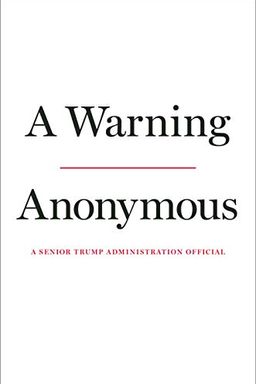
How does a democracy withstand a leader seemingly indifferent to truth, morality, and civic order? In A Warning, written anonymously by a senior Trump administration official, the author argues that the presidency of Donald J. Trump represents one of the deepest moral and institutional crises in modern American history. The book contends that Trump’s behavior—characterized by self-interest, impulsivity, and ignorance—has destabilized the government, endangered democratic norms, and divided citizens against each other. Yet the author warns this is not only about one man in power; it is about the broader civic decay that enabled his rise.
The author, first known for the 2018 New York Times op-ed titled "I Am Part of the Resistance Inside the Trump Administration," expands that revelation here into a full account of life in an administration defined by dysfunction. He describes the moral exhaustion of officials trying to curtail the president’s worst impulses, revealing how America’s institutions barely held under the weight of daily chaos. His key argument is that character—not ideology, not even experience—is the most critical trait for leadership, and that Trump’s lack of character has polluted both his office and the national moral climate.
A Nation Built on Virtue—and Betrayed by Vice
From Cicero to George Washington, the author invokes classical and founding ideas about leadership, claiming that the essence of democracy lies in moral stewardship. The United States was designed for leaders who prize wisdom, justice, courage, and temperance—the cardinal virtues Cicero outlined in On Duties. Trump, the author says, inverts those values: he is rash instead of wise, petty instead of just, cowardly instead of courageous, and crude instead of temperate. This inversion has transformed the executive branch from an instrument of public service into a vessel for ego.
By recounting episodes like Trump’s impulsive decision to withdraw troops from Syria, his insult-laden interactions with allies, and his vindictive attempts to punish critics, the author shows how incompetence and vindictiveness intertwine. He portrays a chaotic White House full of panic, secrecy, and impromptu crisis meetings, where officials scramble to reverse or mitigate harmful orders before they can become policy. These officials, calling themselves the “Steady State”—not the “Deep State”—tried to keep the government stable even as Trump undermined it from within. Their quiet resistance, however, could only buy time.
The Collapse of the Guardrails
In vivid narratives, the book shows how institutional safeguards—long seen as invincible—proved powerless against the daily onslaught of presidential misconduct. As principled figures resigned or were fired, the guardrails disappeared. What replaced them was a culture of apologists: people who smiled, nodded, and justified the unjust simply to retain access to power. The author describes these advisors as “sycophants” and “silent abettors,” whose combination of greed, tribal loyalty, and fear allowed Trump’s corruption to metastasize. Drawing on political theorists like Friedrich Hayek, he warns that when authoritarian personalities rise, the worst people often float to the top.
Why This Matters for You—and for America
The book is not merely an exposé; it’s a mirror held up to citizens. Trump’s presidency, the author argues, reflects not just his character but ours. Our civic life has become so polarized and superficial that we tolerate cruelty, dishonesty, and chaos in exchange for tribal victories. Social media turns citizenship into performance, reducing dialogue into mob-like uproars. The author compares modern America to ancient Athens: a democracy undone by emotional populism and herd mentalities, where demagogues like Cleon thrived because citizens confused strength with virtue. Trump, he implies, is our own Cleon.
Ultimately, the author insists that the real resistance must come not from bureaucrats but from citizens themselves. The electorate must reject the normalization of indecency and rediscover civic humility, truth, and respect for institutions. He calls for a “civic renaissance”—a rebirth of moral citizenship grounded in historical awareness and compassion. Only then, he says, can America reclaim its promise as “an empire of liberty,” rather than devolve into moral tribalism. His warning, therefore, is both moral and democratic: the collapse of virtue in one man can foreshadow the collapse of virtue in a people.