
Idea 1
A Walk through America’s Wild Corridor
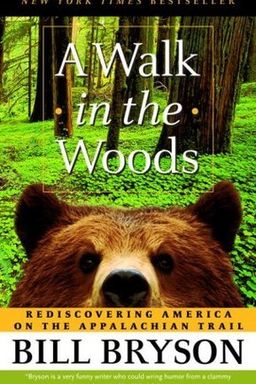
What does it mean to walk across an entire mountain range? In A Walk in the Woods, Bill Bryson transforms the Appalachian Trail into a living metaphor—a line of endurance, ecological wonder, absurdity, and rediscovery that cuts through fourteen U.S. states. His journey, joined intermittently by his old friend Stephen Katz, becomes a portrait not only of physical challenge but of the American landscape’s fragile grandeur. Beneath its humor, the book grapples with questions of stewardship, risk, companionship, and what remains wild in a heavily managed world.
Bryson’s purpose is twofold: to reveal the trail’s material and historical reality, and to explore the personal reawakening that long-distance walking can bring. By linking natural history to human psychology, he shows that the AT is not only a path between Georgia and Maine—it’s a twenty-two-hundred-mile experiment in cooperation, endurance, and humility.
The Dream and the Real Trail
Conceived in 1921 by Benton MacKaye as a “greenway for the human spirit,” and realized by the organizational drive of Myron Avery, the Appalachian Trail (AT) has always embodied competing ideals—spiritual retreat versus human logistics. Bryson’s meticulous retelling of its origins highlights America’s unique volunteerism: the trail, stretching roughly 2,100 to 2,160 miles depending on reroutes, remains one of the largest community-maintained projects in existence. Yet it constantly shifts—length, endpoints, and alignments change with politics and conservation policy. That instability, Bryson suggests, is what keeps it alive.
A Laboratory of Character and Endurance
For hikers, the trail quickly strips away vanity. Bryson’s novice missteps in gear selection—the $250 Gregory pack, endless ounces of unnecessary kit—and Katz’s comic overpacking dramatize how ambition meets material burden. The outfitter’s jargon-filled world (“70-denier, abrasion‑resistant fly”) becomes a symbol of modern obsession with control, even as the wilderness refuses to cooperate. Once on trail, every ounce translates to suffering; Katz shedding Spam and rice from cliffs becomes a parable about learning minimalism in motion. Long-distance walking resets priorities: objects, calories, and comfort all acquire new moral weight.
The Wild, the Dangerous, the Human
Bryson’s humor never masks the perils. Black bears, sudden storms, lightning, disease-carrying ticks, and even rare murders interrupt the ideal of pastoral peace. The AT requires both vigilance and trust—trust that strangers will share shelters or food, that communities like those at Amicalola Falls or Shaw’s in Monson will offer rescue when needed. Violence along the trail, while statistically rare, undermines a sacred social contract of outdoor fellowship. Bryson reports stories of hikers attacked or killed, underscoring how fragile but vital mutual trust is to keep this sprawling communal experiment possible.
Walking as Transformation
Day after day of walking alters both mind and body. Bryson captures the rhythm of “mobile zen”—a meditative absorption where goals shrink to the scale of one footfall after another. Time dilates; comforts become sacred. A can of Coke in town or a dry shelter in a storm feels transcendent because deprivation recalibrates meaning. Physiologically, hikers adapt or fail; psychologically, they learn that freedom lies in voluntary persistence. Bryson reminds you that quitting, paradoxically, is part of the discipline—it proves you’re choosing the effort, not trapped by it.
Nature’s Story and Human Clumsiness
Through digressions into geology, forest policy, and species decline, Bryson situates his hike inside planetary time. The worn-down Appalachians embody hundreds of millions of years of uplift and erosion. Yet what truly threatens them is not erosion but management: pesticides, invasive insects, acid rain, and bureaucratic indifference. Forest Service “multiple-use” policies create paradoxes of conservation where “protected” often means logged. Bryson urges vigilance not against wilderness itself but against our appetite to tame it. He moves from the vanished chestnuts to dying hemlocks, from grassy balds closing up under neglect to the scars left by industrial dereliction in Pennsylvania’s Centralia or Palmerton. Each mile walked is also a mile of history—visible, wounded, and instructive.
The Trail as a Human Ecosystem
Beyond ecology, the AT is a social organism. Shelters serve as storytelling nodes; trail registers as a collective diary of optimism and despair. Encounters with talkative companions like Mary Ellen, or the generosity of innkeepers and drivers, reinforce a recurring motif: the kindness of strangers sustains the thru‑hiker more than food supply ever could. From the hospitality of the Walasi‑Yi Inn to chance rescues by passing drivers, Bryson depicts how “Trail Magic”—spontaneous acts of help—becomes its own faith system.
Commerce, Crowds, and the Ideal of Wilderness
As the trail weaves through national parks and towns, it blurs wilderness with consumer comfort. In Shenandoah, 90 percent of visitors never leave their cars; Big Meadows’ cheeseburgers and gift shops coexist with backpackers seeking solitude. The paradox deepens in the White Mountains, where Appalachian Mountain Club huts charge $50 per bed under the guise of stewardship—a modern echo of MacKaye’s vanished “communal hostels.” Bryson doesn’t resolve this tension but invites you to live with it: the AT’s preservation depends partly on the very commercialization purists decry.
Limits, Weather, and Surrender
In the end—especially through the Hundred Mile Wilderness—Bryson and Katz meet the limits of endurance. Water mismanagement, punishing climbs, and mental fatigue force them to bail shy of Katahdin. Yet this retreat reframes success: survival, humility, and comprehension of scale become their achievements. Similarly, weather in New Hampshire’s White Mountains, particularly near Mount Lafayette, nearly kills Bryson through near-hypothermia—a reminder that even trivial mistakes (forgetting waterproofs) can erase the distance between adventure and death. Human error, not wild menace, defines the trail’s real drama.
By book’s end, Bryson’s journey becomes less about conquest than comprehension. The Appalachian Trail is a study in connection: between walkers and witnesses, history and geology, frailty and endurance. To walk even part of it is to accept how little we command—and how deeply we belong to a landscape that keeps humbling us into gratitude.