
Idea 1
The Fight for Women as Rational Beings
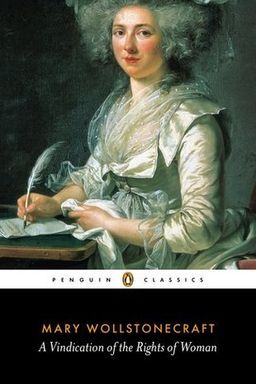
How can a society claim to be free if half of its members are denied reason? In A Vindication of the Rights of Woman (1792), Mary Wollstonecraft dares readers to confront this question head-on. Writing amid the revolutionary ferment that followed the French Revolution, she argues that women are not naturally inferior to men—they only appear so because they are denied education, opportunity, and the use of their rational faculties. Her core argument is radical yet simple: women must be treated as rational beings and allowed to cultivate their minds, for only reason can make them virtuous and free.
Wollstonecraft contends that gender inequality corrupts both sexes. Men become tyrants, idle with power; women, reduced to objects of desire, become cunning and weak. True morality, she insists, requires equality. Virtue cannot flourish when half of humanity is enslaved by ignorance and dependence. A just society must educate women not to merely please men but to improve themselves and the world. Without this revolution in female manners, both sexes will remain trapped in a cycle of domination and deceit.
The Context: Enlightenment and Revolution
The Enlightenment emphasized reason, liberty, and natural rights—but largely for men. When the French philosopher Jean-Jacques Rousseau published Émile, proclaiming that Sophie should be educated to please her husband, Wollstonecraft responded with indignation. Drawing inspiration from John Locke’s ideas of natural rights and rational education, she expanded these principles to include women. Her book became one of the earliest and most enduring works of modern feminism.
Living through social upheaval, she saw that virtue and freedom were preached but not practiced. Britain’s class system and France’s revolution both exposed the hypocrisy of men demanding liberty while chaining women through marriage, law, and custom. This tension fuels her critique throughout the book. For Wollstonecraft, the “rights of woman” are not separate from the “rights of man”; they are the same rights, rooted in reason and moral agency.
Virtue, Reason, and Independence
Wollstonecraft defines virtue as the exercise of reason. A virtuous person chooses right over wrong through rational understanding, not blind obedience. But society treats women as perpetual children—taught to please rather than think. This moral infantilization contaminates both private and public life. She insists that independence is the foundation of virtue: only those free to use their reason can act rightly. Women who depend on men for survival cannot be moral agents; they are reduced to slaves of circumstance.
Her ideal woman is not a beauty queen but a rational companion—one who shares her husband’s respect through intellect and moral strength. Marriage, she argues, should be a partnership of equals, not a master–slave arrangement. When affection gives way to friendship founded on mutual respect, love can mature into something enduring. Without equality, marriage degrades both parties: men become despots, women dissemblers.
Education as the Engine of Revolution
For Wollstonecraft, reform must begin with education. She envisions national schools where boys and girls are taught together from early childhood, learning the same subjects that exercise reason and moral judgment. This would nurture virtue rather than vanity. Young women, instead of fixating on beauty and fashion, would learn to think critically, care for others, and manage their domestic and civic duties with understanding. Education would thus revolutionize both private life and government, since a nation’s character depends on its mothers’ wisdom.
She condemns elite schooling for turning girls into “insipid dolls” and boys into “scheming tyrants.” Her remedy is coeducation and intellectual parity—ideas that foreshadow later reformers like John Stuart Mill and early suffragists. “Make women rational creatures,” she writes, “and free citizens, and they will quickly become good wives and mothers.”
Why These Ideas Still Matter
Few eighteenth-century writers demanded so boldly that principles of liberty be universal. Wollstonecraft’s critique still resonates wherever gender norms confine women’s roles or devalue intellect in favor of appearance. Her call to unite sense and sensibility anticipates modern debates about education, equality, and moral independence. In many ways, she argues not merely for women’s liberation, but for humanity’s: to deny reason to any group is to weaken the moral fabric of all.
By insisting that women think for themselves, Wollstonecraft ignited a philosophical uprising that still burns. Her book asks, in essence: What would happen if women were allowed to become fully human? Her answer remains revolutionary: society itself would be transformed. The path to virtue and progress is not obedience or ornament but reason, education, and equality.