
Idea 1
Power, Secrecy, and the Collapse of Trust
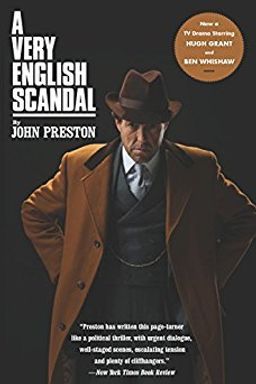
How does private desire become a public downfall? In this book, the author reconstructs the Thorpe affair — a long, painful unraveling of politics, class, sexuality, and power in twentieth-century Britain. Through Jeremy Thorpe, Norman Scott, and their circle, you watch how secrecy, shame, and ambition combine to produce both political tragedy and moral cautionary tale. At every point, private acts meet public systems — letters turn to leverage, loyalty mutates into complicity, and law bends under social deference.
Jeremy Thorpe, the charismatic Liberal MP who rose from promise to leadership, stands at the heart of this story. Norman Scott, then known as Norman Josiffe, a vulnerable young man with no social anchors, becomes his emotional and sexual partner. The affair unfolds in Britain’s pre- and post-decriminalisation years — a setting where desire can still constitute a crime. That context matters: exposure to scandal could destroy a life, yet repression only sharpens risk. The result is not a single sin but a chain reaction of secrecy, shame, and fear that draws in ministers, police, and ordinary intermediaries.
A relationship born of inequality
The initial intimacy between Thorpe and Norman begins with what seems generosity: a card, a visit, an offer of help. Yet that gesture crystallises an asymmetry — a powerful politician and a lost young man. The relationship that follows is as much about dependence as affection. Thorpe dominates Norman materially and emotionally; the younger man, unstable and sexually insecure, becomes trapped between gratitude and fear. Once trust erodes, the letters exchanged between them take on an explosive life — they are evidence, threat, and emotional currency all at once.
(Note: The letters, sometimes sentimental or coded, come to represent both the tenderness and ruin of their tie. Their later circulation becomes the narrative’s forensic record of deceit.)
Law and culture as forces of containment
To grasp why these private exchanges could implode into national scandal, you need to remember the climate of fear that surrounds 1960s Britain. Sexual reform arrives late and cautiously. Figures like Leo Abse and the Earl of Arran manage to pass the Sexual Offences Act 1967, but deep prejudice endures — reinforced by public figures such as Field Marshal Montgomery, who described same-sex love as moral degeneracy. In such a world, Thorpe’s terror of exposure has rational grounds: it threatens not only prison but the annihilation of reputation. Even after reform, institutional actors — Special Branch, ministers, civil servants — prefer secrecy to sunlight. The culture of concealment protects privilege while imprisoning those without access.
Ambition entangled with fear
Thorpe’s climb through the Liberal Party transforms this private jeopardy into a collective liability. With Peter Bessell — an opportunistic but devoted colleague — as his fixer, Thorpe builds alliances that mix charisma with expediency. When Jo Grimond retires, Bessell’s defection from Emlyn Hooson’s camp delivers Thorpe the leadership. What follows is both success and entrapment: as the party’s fortunes briefly rise in the early 1970s, Thorpe’s visibility makes potential scandal catastrophic. Politics, spectacle, and secrecy knit so tightly that to preserve one’s image becomes a matter of political survival.
From fear to criminal fantasy
After the accidental death of his wife Caroline and renewed rumours about Scott, Thorpe’s panic curdles into something darker. The euphemism “the Scottish matter” begins circulating among his confidants — a chilling shorthand for killing Norman Scott. David Holmes, his loyal aide, and Bessell find themselves hearing plans that oscillate between farce and horror: poison, chloroform, remote mine shafts, or American swamps. The slide from gossip to intention mirrors how fear, unchecked, can make respectable men imagine unthinkable crimes. By the time intermediaries hire Andrew Newton to “deal with” Scott, subjective dread has hardened into an operation that ends in a dead dog, a failed murder, and a scandal impossible to contain.
Collapse through exposure
From 1973 onward, accidental discoveries — a briefcase behind a wall at 41 Pall Mall, letters traded by doctors and solicitors, and payoffs traceable by cheque — connect private misdeeds to public institutions. The press becomes both detective and executioner: the Sunday Mirror and Sunday Times turn fragments into front pages, while Private Eye satirizes what Parliament tries to ignore. Each attempt at suppression only multiplies evidence. The cover‑up itself becomes the story. By the mid‑1970s, Thorpe’s enemies and loyalists alike know that the issue is no longer morality but survival within a system skilled at protecting insiders until protection fails.
Trial and fallout
Eventually the story converges at the Old Bailey. Peter Bessell re‑enters as witness, his loyalty transmuted into testimony purchased with immunity and later tainted by paid interviews. Norman Scott, battered yet brave, recounts his ordeal. Defense lawyer George Carman demolishes their credibility, and Judge Cantley’s summing‑up — sarcastic toward the witnesses, indulgent toward the defendants — ensures acquittal. Yet the verdict provides legal closure, not moral resolution. The affair exposes how intimacy, class, and secrecy fuse inside British institutions. Thorpe walks free but never regains his station; Scott lives on as both victim and symbol; Bessell dies in exile; the Liberal Party reels. What remains is a mirror held to power — showing that when politics depends on silence, truth will eventually speak through catastrophe.
Across its arc, the book forces you to reckon with moral drift: how institutions prize reputation over justice, how friendship mutates under fear, and how charisma without integrity corrodes every structure it touches. It is not merely a political scandal story — it is anatomy of the moral costs of secrecy, tracing, step by step, how a leader’s desire to conceal becomes a system’s willingness to conspire.