
Idea 1
A Universe That Created Itself
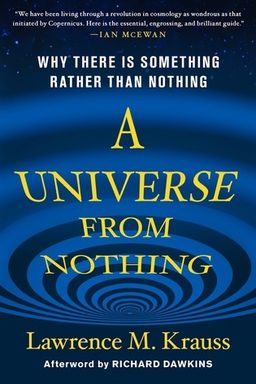
Why is there something rather than nothing? Lawrence Krauss’s A Universe from Nothing begins with this age-old question—not as theology, but as physics. He challenges the idea that existence demands a creator or a cosmic plan. Instead, he proposes that the universe could have spontaneously emerged from “nothing” purely through the laws of physics. This radical claim draws on cosmology, quantum mechanics, and relativity to argue that nothingness itself is unstable—that “nothing” inevitably gives birth to “something.”
This book is not just about cosmology—it’s also about overturning centuries of philosophical and religious thought. Krauss examines the Big Bang, the nature of space and time, and the unexpected finding that most of the universe’s energy lies in empty space. His argument? Science now provides plausible explanations for our cosmic origin that don’t require divine intervention or metaphysical speculation.
The Science Behind “Nothing”
For Krauss, “nothing” isn’t a philosophical void—it’s a quantum vacuum: a frothing sea of virtual particles that appear and disappear according to quantum laws. This “vacuum” is teeming with potential energy. Modern physics shows that space itself can spontaneously expand and create matter. In other words, empty space is not truly empty; it has energy. This energy’s fluctuations, over billions of years, could lead to the formation of galaxies, stars, and eventually us.
Krauss uses the discoveries of Einstein, Hubble, and Stephen Hawking to demonstrate how the laws of relativity and quantum mechanics allow for universes to appear without prior cause. Gravity plays a surprising role here—it enables negative energy, which can cancel out positive energy to create a universe with a total energy balance of zero. In this framework, the universe is literally a “free lunch,” emerging from nothing and costing no energy to exist.
A Challenge to Theology and Philosophy
Krauss directly confronts centuries of religious inquiry. The belief that creation demands a creator falls apart when physics shows that infinities, quantum instabilities, and spontaneous fluctuations can explain existence. He argues that the theological “God of the Gaps”—invoked whenever science hasn’t explained something—is unnecessary. Physics continues to narrow those gaps, leaving increasingly little room for divine intervention.
Philosophers who define “nothing” as absolute nonbeing criticize Krauss for misusing the term. He retorts that science deals with measurable reality, not word games. “Nothing,” as understood physically, has properties that can be tested and observed. The dynamic nature of empty space—the quantum vacuum—replaces mystical speculation with tangible investigation.
Why This Matters to You
Krauss’s ideas redefine your place in the cosmos. If something can arise from nothing, then meaning isn’t built into the universe—it’s created by you. Knowledge replaces faith as the foundation of wonder. You don’t need divine design to appreciate existence; you can find beauty in being part of nature’s spontaneous creativity. For Krauss, science doesn’t make life bleak—it makes it astonishing. As Richard Dawkins notes in his afterword, the book’s argument does for cosmology what Darwin’s Origin of Species did for biology: it removes the supernatural from our understanding of creation.
Across eleven chapters, Krauss takes you from Einstein’s equations to the fate of the expanding universe, exploring how dark matter, dark energy, inflation, and quantum fluctuations shape reality. The journey culminates in a profound idea: not only could something arise from nothing, but perhaps nothing had to give rise to something. In this sense, existence may be inevitable. And that makes our fleeting moment in the cosmos even more precious.