
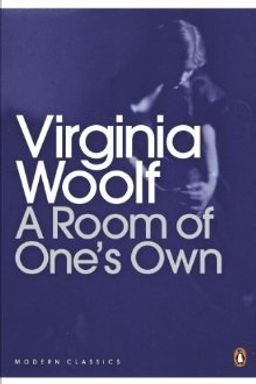
A Room of One''s Own cover

A Room of One''s Own

by Virginia Woolf

Virginia Woolf''s ''A Room of One''s Own'' delves into the societal barriers that have hindered women''s artistic expression. Through compelling arguments and vivid imagery, Woolf advocates for financial independence and personal space as vital for creative freedom, inspiring generations of women to break free from constraints and redefine their creative landscapes.

A Woman’s Freedom to Create: Money, Space, and Voice

What does it take for a woman to write freely, truthfully, and creatively? Virginia Woolf’s A Room of One’s Own answers this timeless question with startling simplicity: a woman must have money and a room of her own. Yet behind this famous dictum lies a profound meditation on art, gender, and the structures that have long defined who gets to create history—and who remains its subject.

Woolf’s argument, formed out of two lectures delivered at Cambridge in 1928, is deceptively practical. She frames her essay as a wandering search for truth about “women and fiction.” Through lyrical prose, imagined scenes, and incisive analysis, Woolf reconstructs the world in which women have lived, written, and dreamed—or been prevented from doing so. Her exploration travels from Oxbridge lawns to London libraries, from the lost genius of Shakespeare’s sister to the future of writers yet unborn.

Why Money and a Room?

At the heart of Woolf’s book is the recognition that intellectual and creative freedom require material independence. Throughout history, men’s artistic achievements were built upon wealth, education, and leisure. Universities, libraries, and fellowships were founded by male benefactors for male use. By contrast, women lacked not only economic means but also privacy—essential to sustained thought and self-expression. Woolf defines this deprivation as both symbolic and literal. A woman could not step on the manicured grass of a college without reprimand, nor could she enter its library without a letter of introduction. From the very beginning of her essay, she makes us feel what exclusion does to the life of the mind.

Money becomes a metaphor for agency: it shields one from fear, dependence, and bitterness. When Woolf inherits £500 a year from an aunt, she experiences her own liberation—not merely financial but mental. Freedom from need, she says, erases the corrosive effects of hatred. For the first time, she can think and write disinterestedly, without flattering men for patronage or fearing their disapproval. “No force in the world,” she notes, “can take from me my £500 a year.”

Women and Fiction—An Unsolved Equation

Woolf begins by questioning what “women and fiction” even means. Does it refer to women as readers, as writers, or as fictional characters themselves? She concludes that these categories are inseparable, for the way women have been represented in literature reflects how little they have appeared in life. While fictional women—from Cleopatra to Desdemona—burn brightly in men’s works, the real women of their eras were silenced, illiterate, and legally insignificant. This paradox—imaginary prominence alongside factual invisibility—reveals how male authors shaped women in their image, not as full beings.

The essay turns this paradox into a method: fiction tells us what fact obscures. Woolf paints scenes that are both imagined and true—the Oxbridge beadle shooing her off the grass, the “tailless cat” that silently mirrors female mutilation, the meager dinner at Fernham College compared to men’s opulent feasts. Through such images, Woolf evokes the centuries of deprivation that made genius almost impossible for women. Her storytelling becomes an act of critical inquiry: an argument written in scenes rather than syllogisms.

Shakespeare’s Sister and the Tragedy of Lost Genius

One of the essay’s most affecting passages imagines that Shakespeare had a sister equally gifted, named Judith. While William attended school and made his way to the theatre, Judith remained confined, denied education, forced into marriage, and ultimately driven to despair. Her story—ending in suicide—symbolizes the annihilation of female potential by patriarchy. If talent in women often seems absent from the historical record, Woolf insists, it is not because it never existed, but because every system was set against its survival.

This thought reframes what literary tradition means. Masterpieces like Shakespeare’s plays or Keats’s poetry are not isolated miracles; they arise from networks of cultural support—from the company of other writers, from the leisure to experiment. Women, by contrast, lacked both company and continuity. They wrote in solitude, without predecessors to rely upon, inventing their sentence and form from scratch. This, Woolf says, is not only history’s injustice but its ongoing burden: for women writers, tradition begins almost anew with each generation.

The Androgynous Mind

By the essay’s end, Woolf has transcended the binary of male versus female writing. The most fertile mind, she argues, is androgynous—containing both masculine logic and feminine intuition, intellect and empathy, reason and receptivity. She finds this ideal in Shakespeare, whose imagination was “incandescent and undivided.” A writer must not write consciously “as a woman” or “as a man,” for self-consciousness is fatal to art. What matters is an inner marriage of opposites, where energies mingle freely to produce creation untainted by grievance or dogma.

Why It Matters

Woolf’s ideas remain radical because they link material reality with intellectual and emotional freedom. A woman needs not only external independence but inner wholeness—a room with locked doors and open windows of the mind. Her vision calls for a future where women write not to prove equality, but to express reality itself, drawing from centuries of suppressed life. The “room” thus becomes an enduring metaphor for creative space, privacy, and power. It asks every reader—especially women—to claim a place from which they can think, create, and live fully on their own terms.


The Economics of Creativity

Virginia Woolf insists that creative liberty is built upon financial independence. She recounts her visits to Oxbridge, where the comfort and wealth of men’s colleges contrast sharply with women’s meager institutions. The splendid luncheons of the men—complete with partridges and wine—symbolize centuries of endowment, while the women’s austere dinners of prunes and custard reveal how systemic poverty has starved women’s intellectual lives.

Money as Freedom from Fear

When Woolf inherits £500 a year, she feels the first real taste of freedom. That steady income frees her from bitterness and dependency, transforming her relationship with the world. She no longer needs to flatter, to beg, or to succumb to fear—the mind, like a lamp, can now burn steadily. “No force in the world can take from me my five hundred a year,” she writes. For Woolf, money is not an end in itself; it is the material foundation of peace, the means by which thought becomes autonomous.

The Invisible Labor of Poverty

Woolf’s anecdote of Mrs. Seton—a mother of thirteen children with no property rights before 1880—illustrates how women’s poverty has been inherited rather than chosen. Generations of women poured their labor into homes, creating life but leaving no legacies. If they had “learned the great art of making money,” Woolf muses, perhaps their daughters could have dined on “a bird and a bottle of wine” while discussing physics or poetry. Poverty, she argues, doesn’t merely limit comfort; it crushes the continuity required for art. Without inheritance, women start from zero each time.

The Class and Gender Divide

Woolf draws a direct line between the flow of gold and silver into men’s universities and the intellectual authority they command. Male privilege is built upon centuries of wealth accumulation, while women’s colleges struggle to fund even basic amenities. Her economic argument anticipates modern feminist economics: that creativity, education, and even “genius” are financed social constructions, not disembodied gifts. To write, women need not romantic inspiration, but structural equality—time, money, and privacy.


Patriarchy and the Mirror of Women

In exploring the sexism encoded in literature and society, Woolf makes a penetrating claim: for centuries, women have functioned as mirrors reflecting men at twice their natural size. This metaphor anchors her analysis of patriarchy as a psychological system that maintains power through self-delusion.

The Angry Professors

At the British Museum, Woolf finds shelves upon shelves of books written by men about women—almost all declaring their moral or intellectual inferiority. She notes that these judgments are not scientific but emotional, fueled by male irritation and insecurity. Professors and critics attack women not for what they are but for what they threaten: men’s sense of superiority. Like a wounded ego, patriarchy lashes out to preserve its reflection.

The Mirror Effect

Woolf's metaphor of the mirror reveals the emotional economy of patriarchy: men rely on women to affirm their greatness. By feeling superior to half the human race, the patriarch bolsters his own confidence—an illusion essential to his public achievements. Remove that mirror, Woolf warns, and the foundations of power tremble. When women speak truthfully about men’s failings or question male authority, they “crack the glass” that inflates the masculine image. This, Woolf suggests, explains men’s defensive anger toward women’s education and independence.

From Anger to Compassion

Once Woolf achieves financial independence, she transforms her anger into insight. Freed from resentment, she sees that patriarchy harms men too—binding them to illusions of dominance and appetite. Her tone shifts from outrage to pity: both sexes, she concludes, suffer from civilization’s lack of balance. True freedom demands that both man and woman relinquish the need for superiority and meet, at last, as equals in creation and in truth.


The Lost Voices of History

Woolf laments that history books, written by men, scarcely mention women except as queens or wives. What, she asks, were ordinary women doing during Shakespeare’s time? Her answer exposes the deliberate silence of the historical record. Women’s lives—childbearing, housework, poverty—were deemed unworthy of inscription, though they formed civilization’s base.

Shakespeare’s Sister

Through the imagined figure of Judith Shakespeare, Woolf gives historical absence a human face. Equally talented as her brother, Judith is denied schooling, beaten for her independence, barred from the theater, and ultimately crushed by a world that mistakes her genius for madness. Her suicide, buried at a crossroads, symbolizes the countless women whose talents died unexpressed. Yet Woolf insists her spirit “lives still”—waiting for the day when conditions will allow her to be reborn.

Anonymous: A Woman

Woolf speculates that “Anon,” author of many folk songs and ballads, was often a woman. Her voice survives disguised and uncredited, humming beneath the official canon. This idea reframes authorship as collective rather than individual: art isn’t born from solitary genius but from communal expression. Women’s names were erased, but their creativity continued through shared culture.

Rewriting the Record

By inviting future scholars to “rewrite history,” Woolf calls for a supplementation of the archive. The lives of wives, servants, teachers, and spinners must be recovered, not as curiosities but as the true texture of civilization. (Modern feminist historians such as Gerda Lerner and Sheila Rowbotham would later fulfill this vision.) History, Woolf insists, must include the unseen labor and intellect that male narratives have ignored.


The Burden and Triumph of Early Women Writers

Tracing the emergence of women’s literature from the seventeenth century onward, Woolf portrays writing as both a rebellion and a refuge. Early women writers such as Lady Winchilsea, Margaret Cavendish, and Aphra Behn faced ridicule for daring to write; yet their courage forged the path for Austen, Brontë, and beyond.

The Struggle to Write

Lady Winchilsea’s verse burns with frustration at women’s “mistaken rules” and the exclusion from intellect. Her poetry, though lyrical, is twisted by bitterness—a reminder of how anger poisons artistry. Margaret of Newcastle, brilliant but eccentric, poured her untamed mind into chaotic volumes, laughed at by her peers. Their failure was not lack of talent but lack of “mental freedom,” crushed by isolation and mockery.

Aphra Behn: The First Professional Novelist

With Aphra Behn, Woolf identifies a turning point. A middle-class woman who wrote to survive, Behn was the first Englishwoman to earn money by her pen. However scandalous her reputation, she proved that writing could feed a woman. “All women together,” Woolf declares, “should let flowers fall on her tomb.” Without Behn’s example, there could have been no Austen or Brontë. Economic pragmatism, not Victorian morality, became the foundation of artistic possibility.

From Constraint to Creation

By the nineteenth century, female authorship flourished—yet still warped by social pressures. Charlotte Brontë’s Jane Eyre pulses with passion but is marred, Woolf argues, by “a mind in conflict with itself.” Anger and constraint deform her genius. Only Austen and Emily Brontë attain full “incandescence,” writing freely from within their experience. Their triumph was not in imitating men, but in writing as women unashamedly—and thereby setting literature alight.


Rethinking Gender and Creativity

As Woolf’s meditation unfolds, she moves beyond “women’s rights” toward a revolution in thought: the truly creative mind must be androgynous. Borrowing from Coleridge’s notion of the “great mind,” she argues that artistic fertility arises from the union of masculine and feminine energies within.

The Androgynous Ideal

The “man-womanly” and “woman-manly” mind transcends sex-consciousness. Shakespeare is her emblem: a genius untouched by bitterness or gendered grievance, whose imagination embraced all experience. By contrast, writers who obsess over gender—patriarchal assertors or protesting feminists alike—cripple their art. “It is fatal,” Woolf warns, “to think of one’s sex while writing.”

Unity of the Mind

The scene of a man and woman entering a taxi together becomes Woolf’s emblem for psychological balance. When masculine and feminine faculties flow harmoniously, the mind achieves serenity—the state of “incandescence” necessary for creation. Sex-war consciousness divides the intellect; only unity gives birth to art. In this sense, her feminism transcends politics: it is a vision of wholeness necessary for humanity itself.

Against Extremes

Woolf rejects both male bombast and militant feminism when they become self-conscious. The goal is not for women to dominate men, but to free imagination from every chain—economic, emotional, or ideological. Only then can the next “Shakespeare’s sister” rise, writing not to prove equality but to express truth in her own voice.


Reimagining the Future of Women and Art

Woolf ends her essay with prophetic optimism. Though women have had only a few generations of education and barely half a century of property rights, she sees the possibility of transformation ahead. The future she envisions belongs not to agitation but to creation.

A Call to Write Everything

To young women writers, Woolf’s advice is simple yet expansive: write all kinds of books. Travel journals, biographies, scientific treatises—let none of these remain monopolized by men. The act of writing itself, in all forms, enlarges intellectual freedom. Fiction will grow stronger when nourished by the knowledge disciplines once closed to women. She urges her listeners: “So long as you write what you wish to write, that is all that matters.”

A New Tradition

If women continue to live independently—to have rooms, incomes, and imagination—then Shakespeare’s sister will “put on the body she has so often laid down.” Creative spirits dormant for centuries will awaken through their descendants. The collective task, Woolf says, is not fame but continuity: to create a lineage where women think in company, not in isolation.

The Measure of Progress

Woolf gauges freedom not by political equality alone but by the capacity to perceive “reality”—that fleeting illumination behind the everyday. Writers, men and women alike, serve humanity by revealing this deeper truth. Her final exhortation recasts feminism as a human aspiration: to live in the presence of reality, unafraid, self-reliant, and whole. “A room of one’s own,” then, is not just a metaphor for women’s writing—it is a blueprint for every person’s creativity and integrity.

Dig Deeper

Get personalized prompts to apply these lessons to your life and deepen your understanding.

Go Deeper

Get the Full Experience

Download Insight Books for AI-powered reflections, quizzes, and more.