
Idea 1
The Long-Term Logic of Markets
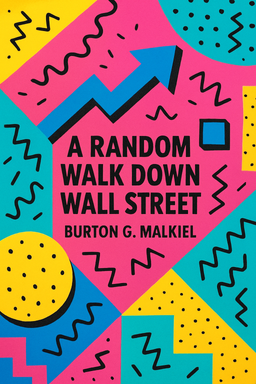
Why do markets move the way they do, and what does that mean for you as an investor? In A Random Walk Down Wall Street, Burton G. Malkiel argues that markets are more efficient and less predictable than most investors want to believe. His central claim is that stock prices follow a random walk—short-term changes are random and largely impossible to forecast. This view challenges both professional forecasters and ordinary investors who rely on price patterns or stock-picking skill.
Malkiel’s journey takes you through centuries of financial manias and the evolution of investment theory—from tulips to the Internet bubble, from Benjamin Graham to Daniel Kahneman. He weaves history, mathematics, psychology, and common sense into one message: markets reward patience, discipline, and diversification—not prediction.
Market Efficiency and the Random Walk
The random walk idea means that because all available information is already reflected in prices, tomorrow’s price is as likely to go up as down. You can’t reliably predict it from yesterday’s data. Malkiel illustrates this with coin-flip charts that mirror real stock price graphs—our minds see patterns even when none exist. The implication is sweeping: technical analysis can’t consistently deliver results after costs.
He also introduces the Efficient Market Hypothesis (EMH) in three forms: weak (past prices useless), semi‑strong (all public info already priced), and strong (even private info incorporated). While real markets aren’t perfectly efficient—bubbles happen—the evidence shows that predicting mispricings consistently is harder than it looks. Index investing, therefore, gives most investors a superior long-term outcome.
The Architecture of Value: Foundations and Castles
Malkiel explains two mindsets about valuation. The firm‑foundation theory seeks an intrinsic value based on future cash flows; this is the Warren Buffett and Graham & Dodd school. The castle‑in‑the‑air theory, phrased by Keynes, focuses on crowd psychology—what the next buyer will pay, not what the asset is fundamentally worth.
Both lenses matter. Fundamentals anchor your analysis, while crowd behavior explains bubbles. The smart investor uses foundation logic for valuation and castle awareness for timing and risk control—recognizing that markets often swing between sober appraisal and speculative euphoria.
Behavior, Bubbles, and Investment History
From Tulipmania and the South Sea Bubble to the dot‑com and housing crashes, financial history repeats psychological patterns: a seductive story, easy credit, and herd enthusiasm lead to unsustainable prices and eventual collapse. By revisiting episodes like the “tronics” boom, the Nifty Fifty, and Bitcoin surges, Malkiel shows that while each technology changes, human behavior doesn’t.
His conclusion is clear: you can’t rely on others’ greed or fear to build wealth. Instead, accept volatility as the price of long-term growth. The perspective echoes Charles Kindleberger and Robert Shiller, who document the social contagion of speculation—people buy not because they’ve analyzed but because others are buying.
The Rise of Behavioral Finance
Traditional finance assumes rational decisions; real people don’t behave that way. Malkiel integrates behavioral research—overconfidence, representativeness, herding, and loss aversion—to show how biases skew judgment. Experiments by Kahneman, Tversky, and Asch reveal how emotion and group pressure shape perception and risk-taking. You often trade too much, hold losers too long, and panic at precisely the wrong moments.
Recognizing these biases doesn’t just explain mistakes; it points to remedies: automation, rebalancing, and rules that protect you from yourself. Behavioral finance adds humanity to the textbook models, acknowledging that discipline—not genius—is the scarce edge.
From Theory to Practice
The later sections translate theory into action: modern portfolio theory and CAPM teach diversification and risk; smart beta and risk parity propose refinements. Yet Malkiel’s prescription stays pragmatic—build a diversified portfolio of low‑cost index funds, rebalance periodically, and leverage tax-advantaged accounts. He appreciates innovation but warns that no fancy model replaces discipline or patience.
Ultimately, the “random walk” becomes both a warning and a promise. Markets may be unpredictable, but they have rewarded consistent investors who follow simple rules. The lesson is humility: accept uncertainty, diversify intelligently, control costs, and let compounding do the work. Those who seek shortcuts—through forecasts, fads, or overconfidence—mostly stumble along the same well-trodden path of speculation and regret.