
Idea 1
Becoming: The Arc from Identity to Leadership
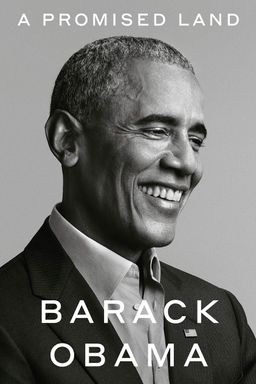
How does a private search for identity become a public exercise in leadership? In this sweeping narrative, Barack Obama blends self‑examination with political craft to show that personal roots, moral curiosity, and deliberate organization all converge to shape governing judgment. The book’s central argument is that political resilience begins not in ambition but in the disciplined habit of asking how ideals meet experience—a lifelong pattern that starts in family stories and culminates in national decisions.
From mixed roots to civic purpose
You start with family and books: a mother who teaches empathy, grandparents who model civic duty, and the absence of a father that provokes a quest for belonging. Obama learns early that race and heritage aren’t puzzles to solve but mirrors to read—tools to understand fairness and aspiration. His teenage refuge of self‑education through Ellison, Hughes, and Dostoyevsky teaches him that reflection can be a practical skill. (Note: like James Baldwin’s approach, he reads to forge a moral vocabulary.)
Turning ideals into practice
Community organizing in Chicago becomes the bridge between empathy and structure. Knocking on doors and building coalitions reveal how compassion needs tactics. Failure teaches strategy; listening breeds trust. In these experiences he learns the lifelong tension between principle and machinery: theory without practice turns brittle; practice without reflection loses meaning.
Politics as scaling mechanism
Transitioning from organizer to legislator, he recognizes that institutions—committees, budgets, procedural rules—are where ideals scale. The Harold Washington era in Chicago is a lesson about translating movement vigor into governance. Electoral politics, despite its compromises, offers the leverage to embed moral commitments into laws. You see practical mastery emerge: petitions, caucuses, and ethics reform as components of moral progress.
Marriage and moral tradeoffs
Personal life intertwines with public vocation. Michelle’s grounded realism and occasional resistance force Obama to interrogate motives—ego or service. Family scenes reveal political ethics in miniature: ambition costs time, trust, and emotional labor. You realize leadership requires consent within intimacy; the political stage rests on domestic negotiation.
Rhetoric and momentum
The 2004 Democratic Convention keynote transforms moral argument into national narrative. Collaboration with Axelrod, Kupper, and Favreau refines substance into form. That speech doesn’t only elevate Obama; it inaugurates a movement architecture that connects vision, organization, and authenticity—a reminder that language can structure institutions when systematically followed through.
Tested by race and crisis
From the Reverend Wright episode to the 2008 financial collapse, moral clarity collides with risk. The Wright controversy forces public honesty about race; the crisis forces prioritization of national stability over campaigning advantage. In both, Obama frames choice as civic lesson: empathy must be paired with courage to act responsibly even when politically costly.
Governance philosophy
Power, in this view, means balancing ideals against constraints. Staffing choices—Summers, Geithner, Rahm—illustrate pragmatic faith in competence under duress. Legislative achievements—the Recovery Act, Affordable Care Act, Dodd‑Frank—demonstrate how design and compromise coexist. Leadership here isn’t purity; it’s a craft of context: know the rules, use them for reform, and defend principle amid implementation frictions.
Global and moral dimensions
Through Afghanistan, Cairo, and the G20 you see an operational realism—history, alliances, and risk calculations. Abroad, he entwines moral aspiration with cautious execution, seeking broad legitimacy for intervention and diplomacy. Domestically, climate and equality initiatives mirror the same logic: incremental courage rather than rhetorical absolutism.
Legacy through institutionalism
The book ultimately portrays leadership as an act of persistent design. Obama’s story argues that moral curiosity, disciplined organization, and respect for institutional process generate durable change. You come away with a portrait not of charisma but of method—a modern manual for ethical pragmatism in the face of national complexity.