
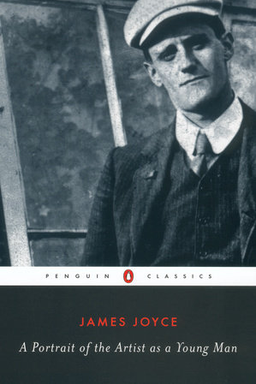
A Portrait of the Artist as a Young Man cover

A Portrait of the Artist as a Young Man

by James Joyce

James Joyce''s ''A Portrait of the Artist as a Young Man'' follows Stephen Dedalus''s journey of self-discovery, grappling with identity, faith, and artistic ambition. This timeless coming-of-age story explores the courage needed to defy societal norms and embrace true self-expression.

The Journey Toward Artistic and Spiritual Freedom

What does it mean to become yourself when everyone around you insists on telling you who you must be? James Joyce’s A Portrait of the Artist as a Young Man wonders exactly that. The novel traces the life of Stephen Dedalus—from his dreamy, timid boyhood to his eventual rebellion as a self-proclaimed artist determined to shape his own soul. Joyce argues that finding one’s voice requires breaking free from the institutions—family, church, and nation—that seek to define you. Only through self-awareness and creative defiance can one move from mere existence to true artistry.

Through Stephen’s experiences, Joyce dramatizes the struggle between conformity and individuality, faith and doubt, paralysis and freedom. The book is not just the story of one young man’s growth; it’s an artistic manifesto in story form. Joyce invites you to look at your own life and ask: are you living as others demand, or as your authentic self demands?

Childhood Innocence and the Birth of Consciousness

The novel begins from within a child’s perception, with Stephen’s earliest memories rendered through fragmented, rhythmic language—“Once upon a time and a very good time it was…” Through this child’s-eye narration, Joyce plunges us into what it feels like to awaken to language, rules, and the confusing social hierarchies of family and school. This awakening of consciousness is as much about confusion as illumination. The young Stephen starts to question authority—the rough prefects at Clongowes, the priests, his family’s quarrels over politics and religion—without yet understanding what rebellion might mean.

Joyce uses stream-of-consciousness to recreate the inner development of a human mind, showing how language itself grows along with Stephen’s self-awareness. Each chapter’s prose matures alongside him: from the musical babble of childhood to the precise, abstract arguments of a young intellectual. In doing so, Joyce gives you a visceral sense of how identity and consciousness evolve through experience.

Faith, Guilt, and the Crisis of Belief

As Stephen grows, his world becomes dominated by the twin powers of Irish Catholicism and family expectation. In adolescence, his awakening sexuality leads to a consuming guilt that mirrors the dogma of the Church. The long sermon on Hell in Chapter III—delivered with terrifying vividness by Father Arnall—is the most visceral expression of spiritual fear in modern literature. It fills Stephen not only with mortal terror but with a sense that faith demands total submission of the self. He tries to repent and live a pious life, yet finds that submission destroys his vitality.

Here Joyce asks a timeless question: can real spiritual freedom exist within systems that demand obedience? For Stephen, the answer is no. To serve such an institution would be to betray his individual conscience—the inner voice that demands truth over conformity. Thus, the priesthood he is offered later becomes a temptation that he must refuse. (Readers may note the parallel to Joyce’s own crisis of leaving Catholic Ireland behind.)

Art as an Act of Rebellion

From this personal struggle emerges Stephen’s calling: to become an artist who will, as he famously declares, “forge in the smithy of my soul the uncreated conscience of my race.” Art becomes a new form of religion—one devoted not to God or country, but to truth and individual expression. Joyce’s detailed portrayal of aesthetic development in Chapter V—through Stephen’s conversations with his friend Lynch—unfolds like a philosophical treatise disguised as fiction. Drawing on Aquinas, Aristotle, and modern aesthetics, Stephen defines beauty as the moment when the mind is arrested by harmony and radiance, a kind of spiritual stillness.

Yet this theory is not only intellectual. It mirrors Stephen’s experience: the artistic vision that redeems life’s confusion through form. For Joyce, to create art is to rise above both lust and guilt, both patriotism and parochialism. The artist must be free of all nets—those of nationality, language, and religion. This quest for freedom culminates in the novel’s final word: “Amen.” It is not a prayer of submission, but a declaration of self-sanctified faith in creation itself.

Why Stephen’s Journey Matters to You

Stephen Dedalus’s journey is both intensely personal and universally human. Whether or not you are an artist, his struggle mirrors anyone’s effort to define themselves against the pressures of conformity. His rebellion echoes every act of self-liberation—from leaving a stifling home to rejecting ideological dogmas. Joyce suggests that true maturity is not submission to authority but the courage to listen to your own conscience—even if that voice isolates you from others.

By turning autobiography into art, Joyce redefined what literature could do. A Portrait of the Artist as a Young Man is not just a coming-of-age story; it’s a masterclass in how inner experience becomes the raw material of creation. Reading it, you do not just follow Stephen’s journey—you live the slow, painful, exhilarating process of becoming fully conscious, fully human, and, finally, free.


The Mirror of Childhood

Childhood in Joyce’s novel is not nostalgia—it’s disorientation. Through the opening pages, you experience Stephen’s world as a blur of sensory impressions: the warmth of the bed, the smell of damp sheets, the fear of older boys. This perspective replicates what it’s like to be newly conscious in a world already full of meaning you can’t understand. It’s a literary innovation that trained readers to see through the eyes of a child long before stream-of-consciousness became standard modernist practice.

Language as Awakening

Every story Stephen hears—the family’s political quarrels, the rhymes of childhood songs, the mythic names of Irish heroes—creates a linguistic world that both shapes and cages him. When Dante and his father fight over Parnell at Christmas dinner, we witness how politics and religion carve divisions even within love. To the small boy hiding from their shouting, political language and family affection are tangled together. Joyce reminds you that identity is not chosen; it’s spoken into you long before you find your own words.

Innocence Meets Authority

At Clongowes Wood College, Stephen experiences both cruelty and discipline. From being shoved into a foul ditch to being unjustly beaten by Father Dolan for “idleness,” he begins to feel that justice is arbitrary. When he courageously complains to the rector, winning a symbolic victory, you feel the germ of the artist’s defiance taking root. This act becomes Stephen’s first exercise of self-assertion through words—a precursor to his later rebellion through language itself.

Ultimately, the portrait of childhood is not sentimental. Joyce paints it as the crucible of consciousness, where sensations, words, and fears coalesce into a personality. Through the lens of young Stephen, you remember how your own earliest moments of confusion and curiosity became the foundation of who you are today. The child observes, questions, and finally speaks—and through that speech the artist is born.


Faith, Sin, and the Shadow of the Church

Few novels capture religious fear as vividly as A Portrait of the Artist as a Young Man. Joyce immerses you in the psychological terror of sin—not as an abstract doctrine, but as a lived experience that shapes every thought, desire, and movement of the body. Stephen’s adolescence becomes a battlefield between lust and salvation, sensuality and sanctity. Through this struggle, Joyce exposes how religious institutions claim the soul by teaching it to fear its own freedom.

The Seduction of Sin

Stephen’s first sexual encounter—his visit to a prostitute—is not described as wicked but as liberating. He experiences carnal pleasure as both ecstasy and damnation. Yet even in sin, he feels alive. The forbidden world of Dublin’s streets offers him not only physical sensation but spiritual intensity. His fall from grace becomes his first act of rebellion against moral rigidity. Joyce forces you to ask: is this sin, or simply an assertion of life?

The Sermon on Hell

Perhaps the most unforgettable scene in the novel, Father Arnall’s sermon on eternal damnation embodies religious fear at its peak. The priest’s words create sensory horror—worms gnawing, fire searing, screams echoing through eternity. For Stephen, this rhetoric doesn’t awaken love for God; it awakens self-loathing and dread. Joyce here critiques a theology that rules by fear rather than compassion. The adolescent’s vision of Hell parallels Ireland’s cultural paralysis—a nation terrified of its own impulses.

From Guilt to Awakening

Haunted by guilt, Stephen attempts to renew his devotion. For a time, he lives ascetically, confessing constantly and suppressing desire. But the more perfectly he obeys, the more lifeless he becomes. When he is invited to join the priesthood, he realizes that such perfection would mean spiritual death. His rejection of the priest’s offer marks a turning point. He chooses vitality, imperfection, and art over the false purity of obedience. In that moment, Joyce transforms sin into a catalyst for self-knowledge—the origin not of damnation but of freedom.


The Artist as Rebel and Creator

When Stephen Dedalus declares that he will “not serve that in which I no longer believe,” he becomes one of modern literature’s defining rebels. His path toward becoming an artist is not a triumphal ascent but a painful act of separation—from his country, religion, family, and even his own past self. Joyce presents art not as escape but as self-confrontation: a disciplined attempt to redeem experience through form.

Forging the Self

The metaphor of forging recur throughout the final chapter. Stephen envisions his life as a blacksmith’s workshop: “I go to forge in the smithy of my soul the uncreated conscience of my race.” Every humiliation, desire, and revelation of his youth becomes raw material for artistic creation. Joyce turns autobiography into philosophy—suggesting that the role of the artist is to transform personal suffering into universal meaning. (Comparable to Goethe’s notion of Bildung: the formation of the self through struggle.)

Aesthetic Theory as Liberation

In his discussions with Lynch, Stephen develops a theory of beauty based on Thomist philosophy but reshaped into modern terms. He distinguishes between kinetic emotions (desire and repulsion) and static ones (aesthetic arrest). True art, he claims, arrests the mind and reveals the object’s essential wholeness, harmony, and radiance—what Aquinas called claritas. This idea frees him from both moral and utilitarian definitions of art. Beauty is not moral instruction or propaganda; it is revelation.

This intellectual freedom mirrors Joyce’s own rebellion against Victorian realism and Catholic guilt. By merging scholastic rigor with sensual perception, Stephen invents a modern aesthetic that honors feeling without submission to dogma. Through art, he achieves what theology could not: an experience of transcendence grounded in human perception.


The Nets of Family, Faith, and Nation

Among Joyce’s most enduring metaphors is Stephen’s claim that he will not serve “home, fatherland, or church.” These three institutions, which shaped him from birth, become the nets he must escape if he is to fly. Joyce saw in them the interlocking forces that bound Ireland in paralysis. The personal and political merge: Stephen’s self-liberation mirrors Ireland’s longing for renewal.

Family Ties and Emotional Debt

Stephen’s father, Simon Dedalus, embodies both affection and failure. His charming nostalgia for his lost youth mirrors Ireland’s sentimental attachment to its past. In contrast, his mother represents religious devotion and moral pleading, urging Stephen to return to the Church. The emotional tug-of-war between filial duty and personal conviction is one of Joyce’s most empathetic conflicts. To create, Stephen must estrange himself from the people he loves—a painful truth that any artist or independent thinker eventually faces.

Ireland and the Politics of Paralysis

Through petty debates about Parnell, the failures of his schoolmasters, and the hypocrisy of priests, Joyce portrays a country trapped in moral stagnation. For Stephen, nationalism is another religion—a collective ideal that replaces faith in God with faith in the tribe. By rejecting both, Joyce poses a radical alternative: the artist as self-exiled truth-teller. Like Ibsen’s and Nietzsche’s thinkers, he must live “beyond good and evil,” serving only the ideal of honest creation.

Joyce ends the novel with Stephen’s journal entries as he prepares to leave Dublin. His tone alternates between exhilaration and fear—a reminder that freedom comes with solitude. Yet his departure is also hopeful: an affirmation that creation requires departure from the old order. To save his soul, he must leave the nets behind.


Language as a Tool of Liberation

In Portrait, language is both prison and key. Stephen’s growing command of words mirrors his liberation from social control. Joyce demonstrates how language forms thought—and by mastering its rhythms, one can reshape both self and reality. The novel’s evolution from childish phrases to lyrical introspection embodies the awakening of consciousness itself.

The Weight of Borrowed Words

Every tongue Stephen speaks is inherited—English, the language of colonizers; Latin, the language of the Church; Gaelic, the language of an idealized past. Each bears ideological weight. When he spars with the English dean over the word “tundish” versus “funnel,” Stephen realizes how even vocabulary shapes subservience. To think freely, he must first unsnare his mind from inherited speech. (Note: This linguistic rebellion anticipates modern decolonization theory in literature.)

The Artist’s New Word

Joyce’s own artistry parallels Stephen’s struggle. By rendering Dublin life in the very English that once conquered it, he transforms the language from tool of oppression to instrument of revelation. In doing so, he shows that mastery comes not from purity but from transformation. The artist frees language by forcing it to express the inexpressible—to capture thought before it hardens into cliché. This insight lies at the core of Joyce’s literary revolution and of Stephen’s emerging voice as a creator of worlds.


Toward a Universal Consciousness

By the novel’s close, Stephen’s struggle transcends his personal story to imagine the role of the modern artist as visionary exile. He must live, as he says, “aloof and unheeded, disregarded and sought by no man.” Yet his solitude is not withdrawal but preparation—a necessary detachment to perceive truth without distortion. Joyce’s Stephen echoes figures like Prometheus or Daedalus, whose creative defiance carries both burden and freedom.

The Myth of Daedalus

Stephen’s surname recalls the mythical craftsman who fashioned wings to escape his labyrinth. The imagery of flight—appearing first as a child’s song about birds and culminating in his final exultation—becomes a metaphor for imagination itself. Every step toward consciousness is a wing-beat away from the ground of tradition. Yet, like Daedalus, Stephen knows flight demands risk: isolation, potential failure, even tragedy.

Art as Sacred Calling

The closing words of Stephen’s diary—“Old father, old artificer, stand me now and ever in good stead”—bind myth and modernity in one prayer. He now worships not God, but creativity itself. The artist as “old artificer” replaces the priest as mediator of meaning. Joyce thereby elevates art to the highest spiritual act—an attempt to give form to the human soul as religion once did. In this vision, Joyce unites all his themes: the struggle against conformity, the sanctity of perception, and the courage to create in defiance of fear.

Dig Deeper

Get personalized prompts to apply these lessons to your life and deepen your understanding.

Go Deeper

Get the Full Experience

Download Insight Books for AI-powered reflections, quizzes, and more.